Why Does a Strawberry Swell?
Read the transcript of “Why Does a Strawberry Swell?”
Film transcript: Why Does a Strawberry Swell?
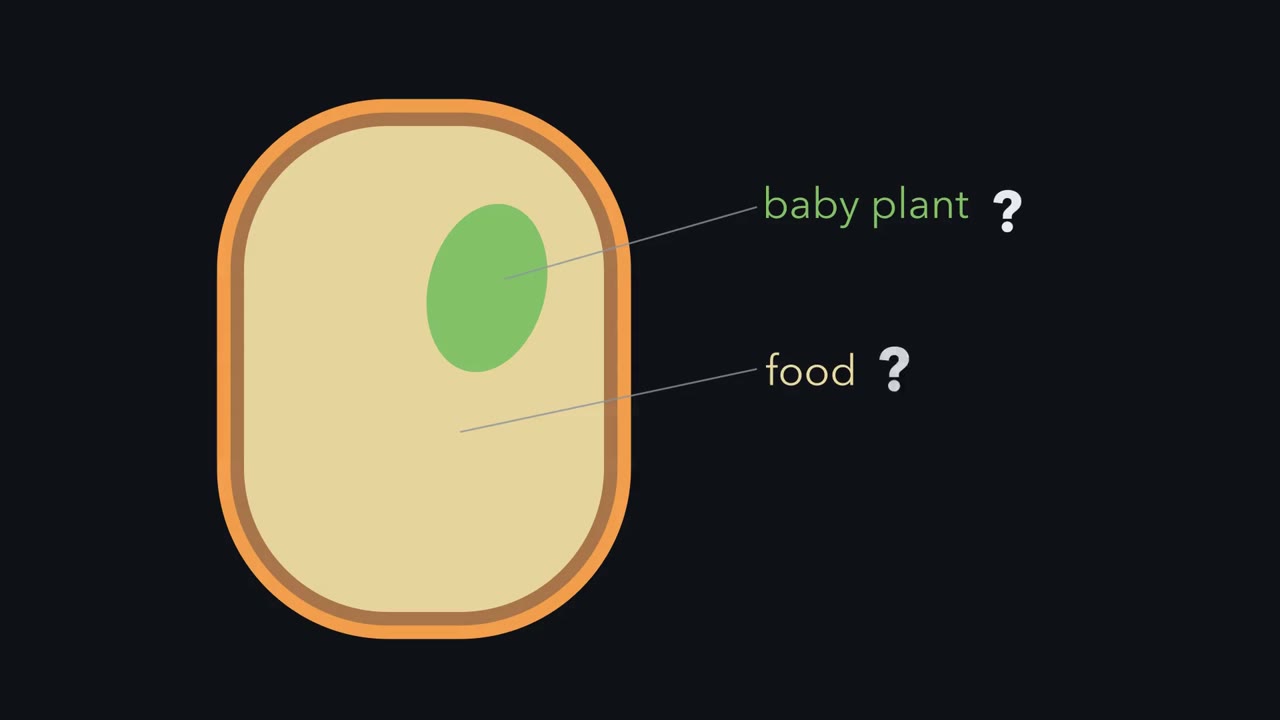
A strawberry's red flesh is the mother's own tissue, with no chromosomes from the father. So why does it swell only after the flower is pollinated? The first film counted the sets in a seed. It ended with the seed coat and fruit wall as the mother's tissue. This film asks what tells her tissue to grow. Start with the general rule. After fertilization, the ovule becomes the seed. In most flowering plants, the ovary around it becomes the fruit. A strawberry flower is unusual. It has many separate ovaries sitting on a dome. The dome is the receptacle, the swollen tip of the flower stalk. After fertilization, each ovary becomes an achene, a small dry fruit holding one seed. Those specks on the surface are the true fruits.
The red flesh is swollen receptacle. A fruit whose flesh comes from tissue other than the ovary is called an accessory fruit. Compare a tomato. Its flesh develops from the ovary itself. In 1950, Jean Paul Nitsch asked what makes the receptacle grow. He worked on young receptacles from pollinated flowers, each studded with achenes. One idea is that the receptacle grows on its own once the flower is pollinated. If so, the achenes should not matter. So Nitsch removed every achene from some young receptacles. If pollination alone were enough, what would happen to a stripped receptacle?
It did not enlarge. The intact receptacles grew, but the stripped ones stayed small. Growth needed the achenes, not just pollination. Next, Nitsch coated some stripped receptacles with a paste containing an auxin, a plant hormone. Those receptacles grew. Put the three results together. The developing achenes supply a growth signal.
Applied auxin can stand in for that signal. Notice what this does not show. Auxin was enough to restore growth. That does not prove the natural signal is auxin alone. Nor does it show how the signal moves. Back to the ledger. The flesh is all mother, two magenta blocks. In a normal fruit, it grows on a signal from the developing achenes. This is one experiment, in one kind of accessory fruit. The receptacle is the mother's tissue. But the developing achenes tell it to grow.
Dust a white-kernelled maize plant with pollen from a true-breeding yellow one, and its own ear fills with yellow kernels this season. How can the pollen parent change seeds on the mother's plant?
Continue in the lesson: Double Fertilization: How a Flower Makes a Seed →
3:03 · Free, with captions and a transcript. The lesson has the full text, the questions and the sources.
More films from this lesson
How this film was made. Narration: an AI narrator voice (Kokoro, af_heart) reading narration written from this lesson's text. Animation: AI-generated in code (Manim) by Claude, a schematic with no drawn molecular structures. Captions come from the narration script. See something wrong? Report it.