Why More Light Stops Helping
Read the transcript of “Why More Light Stops Helping”
Film transcript: Why More Light Stops Helping
The first film followed matter into sugar and wood. Now ask how fast that building can go. If light powers sugar-building, why can brighter light stop helping? Place the same plant inside a clear chamber. Its light dial starts low. A sugar meter waits beside it. We will change one condition at a time.
A rate tells how fast something happens. Here it tracks sugar made over time. Turn the light dial upward from dim. The gold beam brightens, and the green meter climbs. More light helps because light is holding the process back under these starting conditions. Keep turning the light dial. The curve still rises, but each equal turn adds less. Soon it bends toward a level stretch. The beam brightens again while the sugar meter barely moves. Light is plentiful now, so more light is no longer the main help. Predict before the next turn. If the light is already bright, will doubling it double the photosynthesis rate? Watch the curve and choose.
Here the rate changes little. Something else is now the tighter limit. A limiting condition holds a process back. When one condition becomes plentiful, a different one may matter more. The level curve reveals a limit, but it does not name that limit by itself. Carbon dioxide can limit the rate. Raising it may help after light stops helping.
Temperature also changes the rate. Warming can speed the process up to a point. Too much heat slows it down. These conditions interact, so the important limit can change. Light powers sugar-building from carbon dioxide and water; conditions limit its speed. This rule keeps two questions together. The first asks what supplies energy and matter. The second asks what controls the rate under these conditions.
Answering one does not answer the other. Real blueberry leaves show the same useful shape. At low light, added light raised carbon dioxide uptake strongly. At high light, much more added light changed uptake only a little. Those measurements show where light stopped being the main limit. They do not identify the next limit. Use a curve as a clue, not a slogan. A steep rise says the changed condition mattered strongly. A level stretch says more of it helped little. Then test another condition while holding the others steady. That is how a simple chamber becomes a fair investigation. When more light stops helping, something else is holding the rate back.
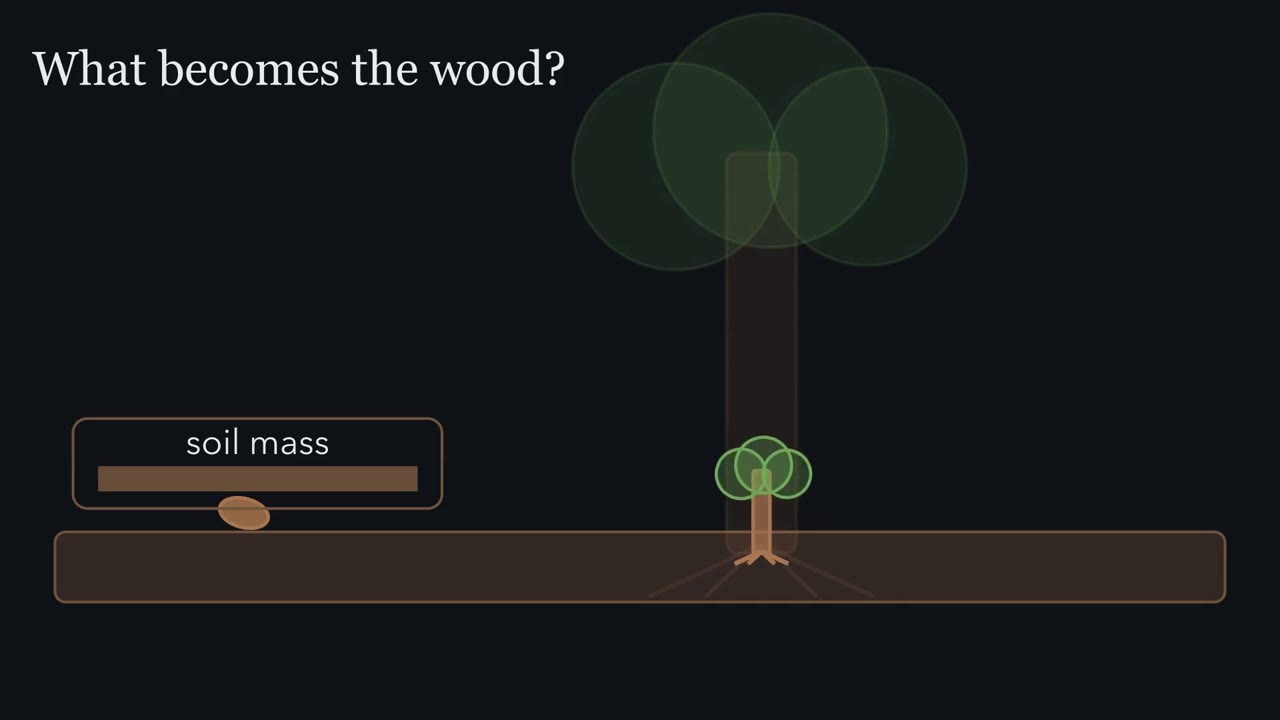
How can a tiny seed become a giant tree without the soil shrinking by the same amount?
Continue in the lesson: Photosynthesis Feeds the World →
3:15 · Free, with captions and a transcript. The lesson has the full text, the questions and the sources.
More films from this lesson
How this film was made. Narration: an AI narrator voice (Kokoro, af_heart) reading narration written from this lesson's text. Animation: AI-generated in code (Manim) by Claude, a schematic with no drawn molecular structures. Captions come from the narration script. See something wrong? Report it.