One Change, Many Ripples
Read the transcript of “One Change, Many Ripples”
Film transcript: One Change, Many Ripples
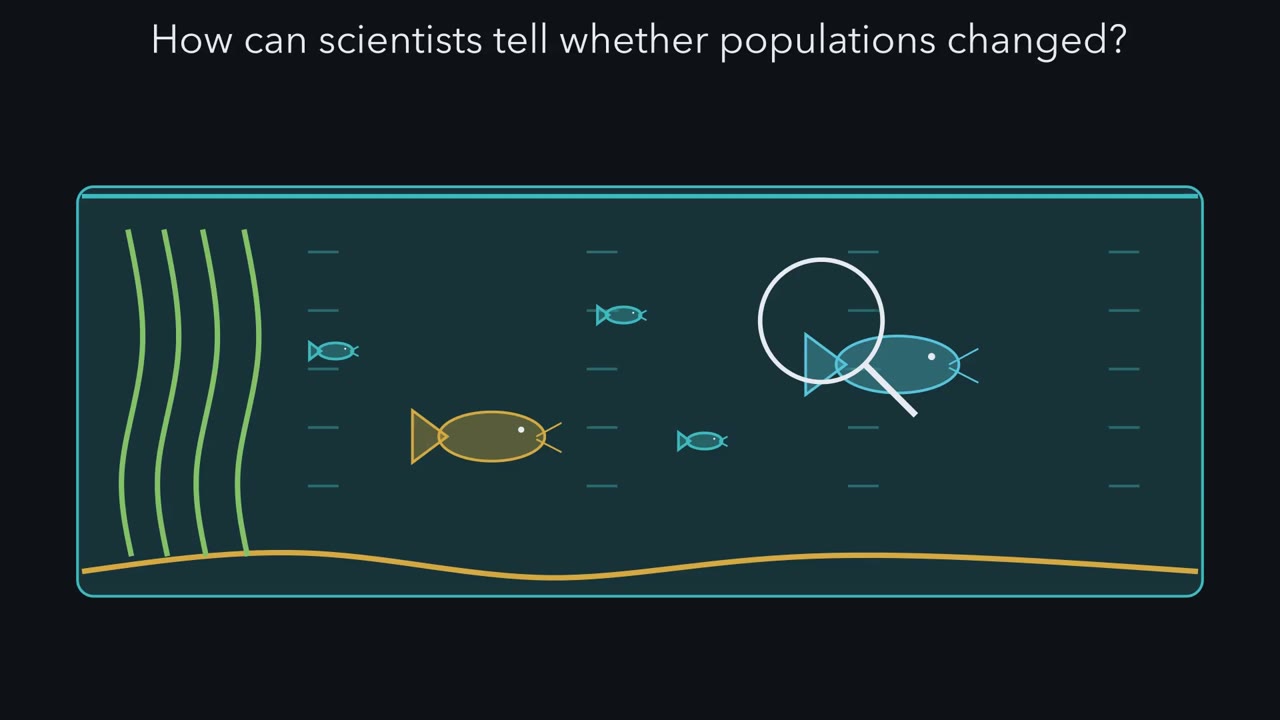
How can one human choice make one river population rise while another falls? Watch one Virginia river as people change who lives there and what each population can use. Start with one river edge. Green marsh plants provide habitat along the bank. Teal crabs and small fish move below. Gold white catfish are native here. All the white catfish in this river form one population. The shoreline shelters animals while the moving water carries food. People belong inside this ecosystem, too. They depend on it for food, water, energy and other resources. Their choices can change habitat, available resources, or which species are present. A habitat is where an organism finds the food, water and shelter it needs.
Now people release blue catfish, shown in blue. These fish came from waters outside Virginia's Bay rivers. Here they spread and cause harm, so they are invasive, not merely new. Being new is not enough. Blue catfish eat plants and animals, including fish and sometimes blue crabs.
Scientists report that white catfish eat similar prey. When species need the same limited resource, they may compete, even without a fight. One fish can simply eat food another fish needed. Both catfish now use the teal prey pool. If the blue population grows, what do you predict happens to the food remaining for white catfish?
More blue catfish feed, and the shared prey pool may shrink. Less food may remain for white catfish. That is a possible competition pathway, not proof of what caused a real population change. Other habitat changes may matter at the same time. People also fill part of the green marsh for homes.
Habitat disappears, so some animals must move or die. Runoff enters the water, and extra fertilizer can later lower oxygen. Both changes may affect several local populations. Watch the whole river, not one arrow. Blue catfish rise.
Shared prey and shoreline habitat change. Crabs, small fish and white catfish may respond differently because food-web effects spread. A change can reach species people catch and eat. Human actions can help, too. People can restore habitat or remove some invasive fish. How far each population recovers is a question to test. A model lets us change one thing at a time. Here is the rule to carry forward. When people change an ecosystem, populations may rise or fall. The rule guides predictions, but evidence must show what changed in a real river.
People put blue catfish into Virginia rivers for fishing, so what could that mean for the crabs and native fish already living there?
Continue in the lesson: People Change Habitats →
3:22 · Free, with captions and a transcript. The lesson has the full text, the questions and the sources.
More films from this lesson
How this film was made. Narration: written from this lesson's text and read by an AI narrator voice (Kokoro, af_heart). Animation: AI-generated in code (Manim) by Claude, a schematic with no drawn molecular structures. Captions come from the narration script. See something wrong? Report it.