Protecting Cut Axons Did Not Rescue This ALS Model
Read the transcript of “Protecting Cut Axons Did Not Rescue This ALS Model”
Film transcript: Protecting Cut Axons Did Not Rescue This ALS Model
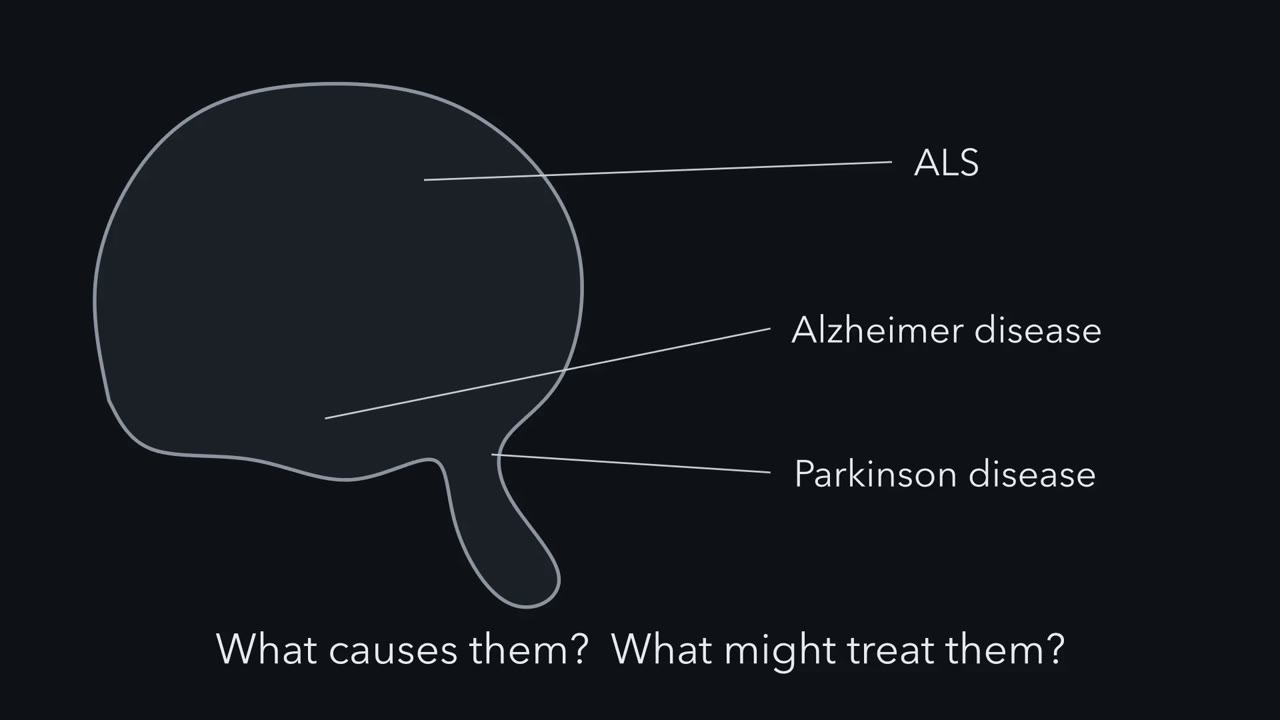
Why do some neurons fail while their neighbours survive? No one yet knows. So how do you test one idea about it? Start with injury. When an axon is cut, the piece cut off from the cell body breaks into fragments within days. This was long thought of as passive wasting. It is not. The cut-off piece runs an active destruction program. In flies and mice, removing one gene, Sarm1, keeps the cut-off piece intact for weeks. Axons also degenerate in ALS. So the obvious next test is to remove Sarm1 from a mouse model of ALS. These mice make a mutant human SOD1 protein, and they develop motor neuron disease. Predict. Without Sarm1, will these mice live longer?
No. Survival did not improve. Nor did the behavioural, nerve recording or tissue measures. Needed after a cut does not mean needed in this disease. The motor neurons may die by another route. And one mouse model is not human ALS. The result stays inside this model. Does this show axon loss does not matter in ALS? No. That claim goes too far. A better test measures axons, nerve-muscle contacts and cell bodies, as well as survival, in the same mice. The scorers should not know each mouse's genotype. Then the test is repeated in a second model. Here is what each result supports. Losing Sarm1 protects cut axons. In this model, losing it did not improve the disease measures.
State what each result supports, and what it leaves open. Then design the next experiment to test what is still open.
Lecanemab slowed worsening in early Alzheimer disease by about 27%. The treated group still got worse.
Continue in the lesson: When Mature Neurons Fail: Neurodegeneration →
2:11 · Free, with captions and a transcript. The lesson has the full text, the questions and the sources.
More films from this lesson
How this film was made. Narration: an AI narrator voice (Kokoro, af_heart) reading narration written from this lesson's text. Animation: AI-generated in code (Manim) by Claude, a schematic with no drawn molecular structures. Captions come from the narration script. See something wrong? Report it.