Rhythm Without a Conductor
Read the transcript of “Rhythm Without a Conductor”
Film transcript: Rhythm Without a Conductor
When you walk, your legs bend and straighten in turn. Who keeps the beat? In the early twentieth century, a common view held that walking is a chain of reflexes, like falling dominoes. Graham Brown tested this in cats, in 1911. He cut the spinal cord to remove input from the brain. He also cut the dorsal roots carrying sensory signals from the hind legs. If walking is a chain of reflexes, what should be left?
Nothing rhythmic should remain. Instead, the ankle flexors and extensors still contracted in alternation. The rhythm arose within the cord. A network that can do this is called a central pattern generator. Modern work often uses a newborn rodent's cord in a dish. Drugs in the bath give a steady push, like holding down an accelerator. They carry no timing. Yet the flexor and extensor roots fire in alternating bursts. The beat comes from the cord. Graham Brown proposed two groups of neurons, one driving flexors and one driving extensors. Each group inhibits the other. Activity switches when the active group's inhibition fades, or the held-down group escapes.
It is reciprocal inhibition laid out in time. Whether real rhythm comes from such a simple pair is still debated. Sensory input still matters. In newborn mouse cords, ankle nerve pulses between flexor bursts could start a flexor burst early.
The cord makes the rhythm, and the senses adjust its timing. Which spinal neurons make the rhythm is still open. So is how much of this holds for human walking. The cord can keep the beat by itself. That beat reaches muscle as current, pushing pools up and down in turn.
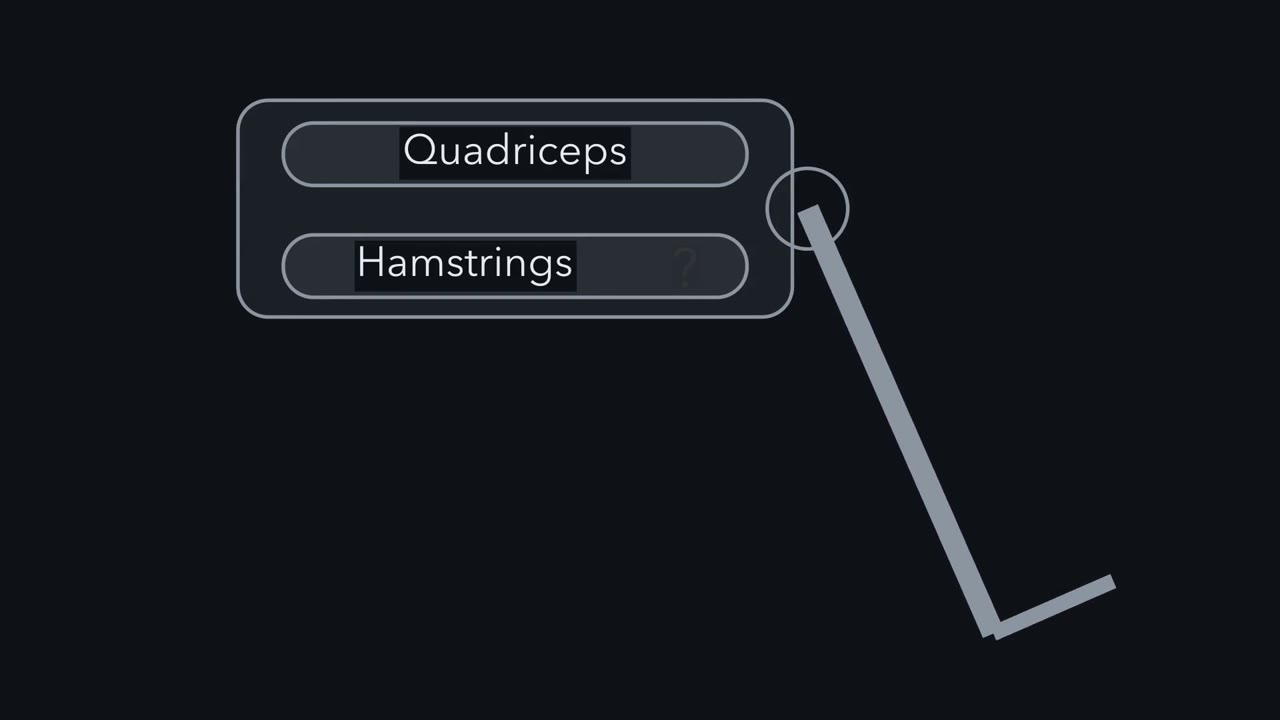
A knee tap makes the quadriceps kick and inhibits the hamstrings, yet the sensory axon that starts both only ever excites. How?
Continue in the lesson: Motor Units, Reflexes and Locomotion →
2:16 · Free, with captions and a transcript. The lesson has the full text, the questions and the sources.
More films from this lesson
How this film was made. Narration: an AI narrator voice (Kokoro, af_heart) reading narration written from this lesson's text. Animation: AI-generated in code (Manim) by Claude, a schematic with no drawn molecular structures. Captions come from the narration script. See something wrong? Report it.