When the Killer Is a Recycler
Read the transcript of “When the Killer Is a Recycler”
Film transcript: When the Killer Is a Recycler
Some pathogens kill the very cells they infect, and viruses often do. That arrow from the first film ran one way, from host to pathogen. But when a virus kills a cell, where does that cell's matter go? Picture a virus bursting a cell in the ocean. A moment ago, that cell held nitrogen. Where is that nitrogen now? Ocean water holds enormous numbers of viruses. A virus that infects bacteria is called a bacteriophage, or phage for short. Other ocean viruses infect algae. Researchers built a lab model ecosystem. It was a flask of seawater with an ocean alga called Phaeocystis. Then they added a virus that infects it. The viruses infected the algae.
Then the cells burst, spilling much of what was inside them into the water. The algae were dead. Was their nitrogen gone too? No. Bacteria swarmed the remains and broke them down. The water gained nitrogen and phosphorus, in forms other living things could use. Algae and bacteria can take them up. So the nitrogen was not destroyed. The virus killed the cell, but much of the cell's matter went back into the water. A killer can also be part of a recycling chain.
Virus, then bacteria, then other living things: each step moves matter on. Now zoom out to a whole landscape, the Serengeti in East Africa. Rinderpest is a virus disease of cattle and of wild grazing animals, such as wildebeest. In the 1960s, vaccinating cattle wiped rinderpest out of the Serengeti. The virus was gone. What happened to the land? Here is a question to try. With rinderpest gone, will the Serengeti end up with more trees, or with fewer trees?
More trees. Researchers traced the chain using decades of records and computer models. First, wildebeest numbers rose. More wildebeest ate more grass. Less dry grass meant less fuel for fires. Fewer fires burned, so more young trees survived. Their analysis supported this chain, from the loss of one virus to more trees. Two scales, two lessons. In the flask, matter from the dead cells went back into the water for other living things. On the savanna, losing one virus changed which populations grew.
Viruses that burst cells can recycle matter. Pathogens can reshape ecosystems.
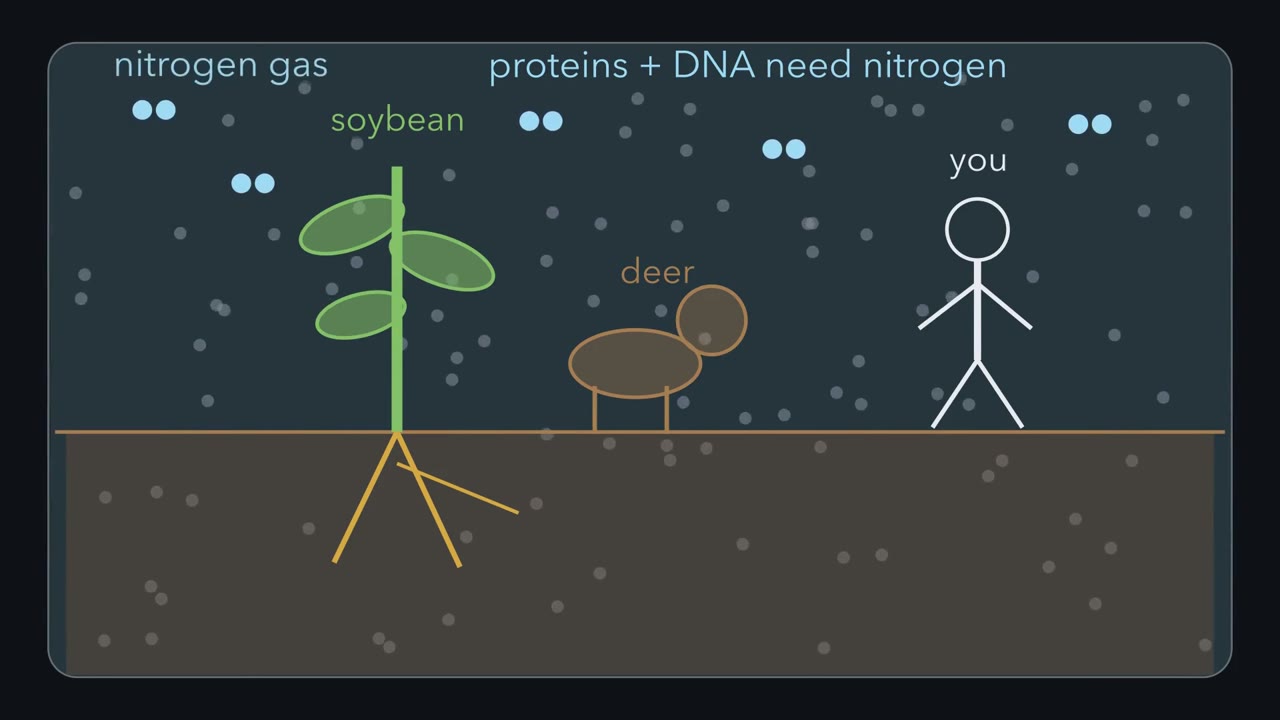
Why do the roots of a healthy soybean plant carry small bumps full of bacteria, and what would the plant lose without them?
Continue in the lesson: Microbes in Bodies and Ecosystems →
3:12 · Free, with captions and a transcript. The lesson has the full text, the questions and the sources.
More films from this lesson
How this film was made. Narration: an AI narrator voice (Kokoro, af_heart) reading narration written from this lesson's text. Animation: AI-generated in code (Manim) by Claude, a schematic with no drawn molecular structures. Captions come from the narration script. See something wrong? Report it.