Who Unlocks the Matter?
Read the transcript of “Who Unlocks the Matter?”
Film transcript: Who Unlocks the Matter?
Every protein in your body needs nitrogen, and so does every strand of DNA. The air around you is mostly nitrogen gas. So why can't a soybean, a deer, or you use a single breath of it? Nitrogen gas is locked for plants and animals. They cannot build with it in that form. Two other stores are locked for many living things. One is a dead leaf on the ground. The other is fiber, which your own body cannot digest. So who could possibly use nitrogen gas? Make your guess before we look inside a soybean root.
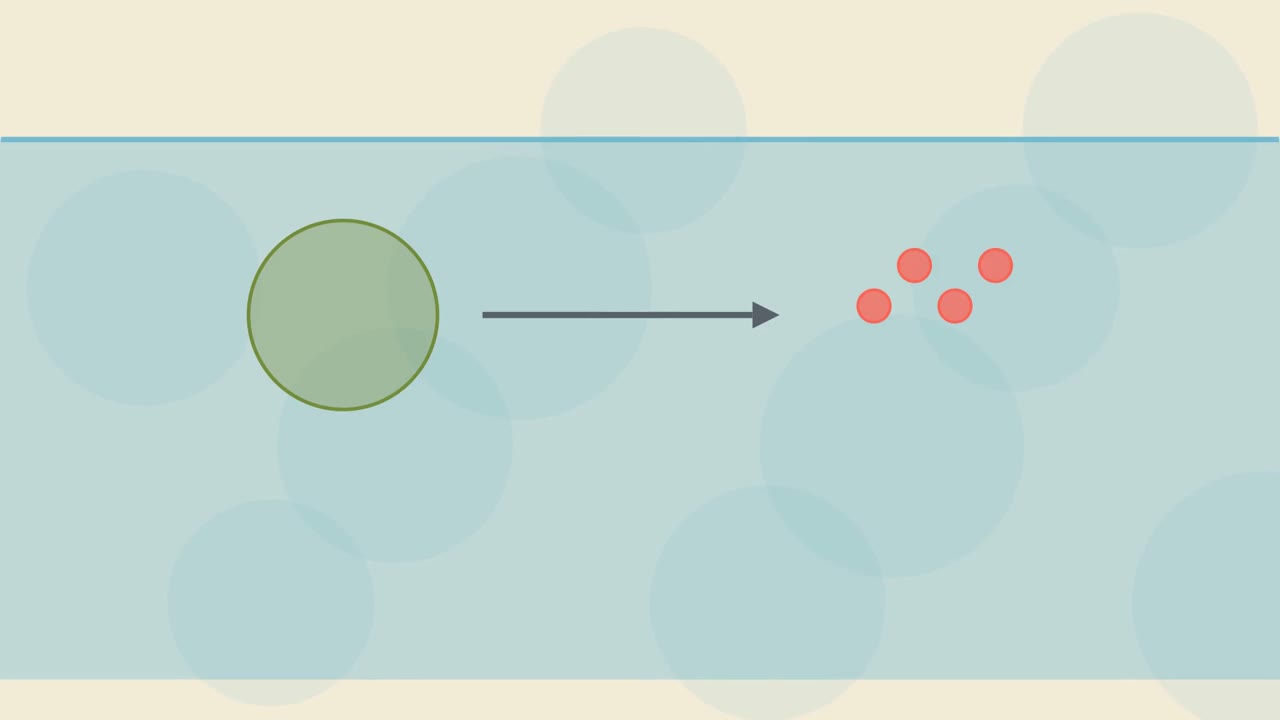
Some bacteria can. They live inside small bumps on soybean roots, called nodules. There they turn nitrogen gas into ammonium, a form the plant can use. This is called nitrogen fixation. The plant pays them back. Sugar made in the leaves by photosynthesis runs down the stem to the nodules. Each partner gets something it needs. A partnership in which both species benefit is called mutualism. Now the soybean dies, and its stem lies on the soil. Bacteria and fungi grow on it. They release enzymes that break its large molecules into smaller ones. Nutrients return to the soil. These microbes are decomposers. The third store is inside you. Bacteria in your large intestine break fiber down by fermentation, without oxygen.
They make small acids your body can absorb for energy. Three locked stores, three microbes that unlock them. Each time, the microbe takes matter apart, and some of it is handed on to other living things. That is why life depends on microbes. Now look at a grapevine. A bacterium called Xylella grows in its water-carrying tubes and blocks them. The arrow runs one way, from vine to bacterium. A microbe that causes disease in its host is a pathogen. The host is the living thing a pathogen lives in or on. Here, the pathogen grows inside its host and harms it. The vine gives, and gets nothing useful back. So is a kind of microbe a helper or a harm?
Take E. coli. Most strains live quietly in your large intestine. Other strains carry extra genes that make them harmful. People who swallow enough of them in food or water can get sick. Here is the pattern. Some microbes unlock matter that others cannot use alone, and hand it on. Life depends on them. Pathogens cause disease in their hosts. Whether a microbe helps, harms or does neither can depend on its strain and where it lives.
Why do the roots of a healthy soybean plant carry small bumps full of bacteria, and what would the plant lose without them?
Continue in the lesson: Microbes in Bodies and Ecosystems →
3:21 · Free, with captions and a transcript. The lesson has the full text, the questions and the sources.
More films from this lesson
How this film was made. Narration: written from this lesson's text and read by an AI narrator voice (Kokoro, af_heart). Animation: AI-generated in code (Manim) by Claude, a schematic with no drawn molecular structures. Captions come from the narration script. See something wrong? Report it.