Why Heat Gives a Peak
Read the transcript of “Why Heat Gives a Peak”
Film transcript: Why Heat Gives a Peak
Why does fresh pineapple keep gelatin runny, while canned pineapple lets it set? The first film gave us two dials: how many active sites are working, and how fast each one works. Heat turns both of them. Gelatin is a protein. As it cools, its long chains link up into a net that traps water, and the dessert turns firm. Fresh pineapple contains bromelain, really a small family of protein-cutting enzymes.
Bromelain cuts the chains, so the net cannot form. So the question is what heat does to bromelain. Hold equal tubes of it at different temperatures, each for the same time. Then compare both dials from tube to tube. Warmer molecules move faster, so more of them have enough energy to get over the activation-energy hill. The speed of each working site climbs. Up to a point, a warmer reaction runs faster. But a protein enzyme is a folded chain, held in shape by many weak attractions. Too much heat shakes those attractions apart. To denature is for a protein to lose the folded shape it needs to work. A denatured enzyme is not dead. It is a molecule whose active site no longer fits.
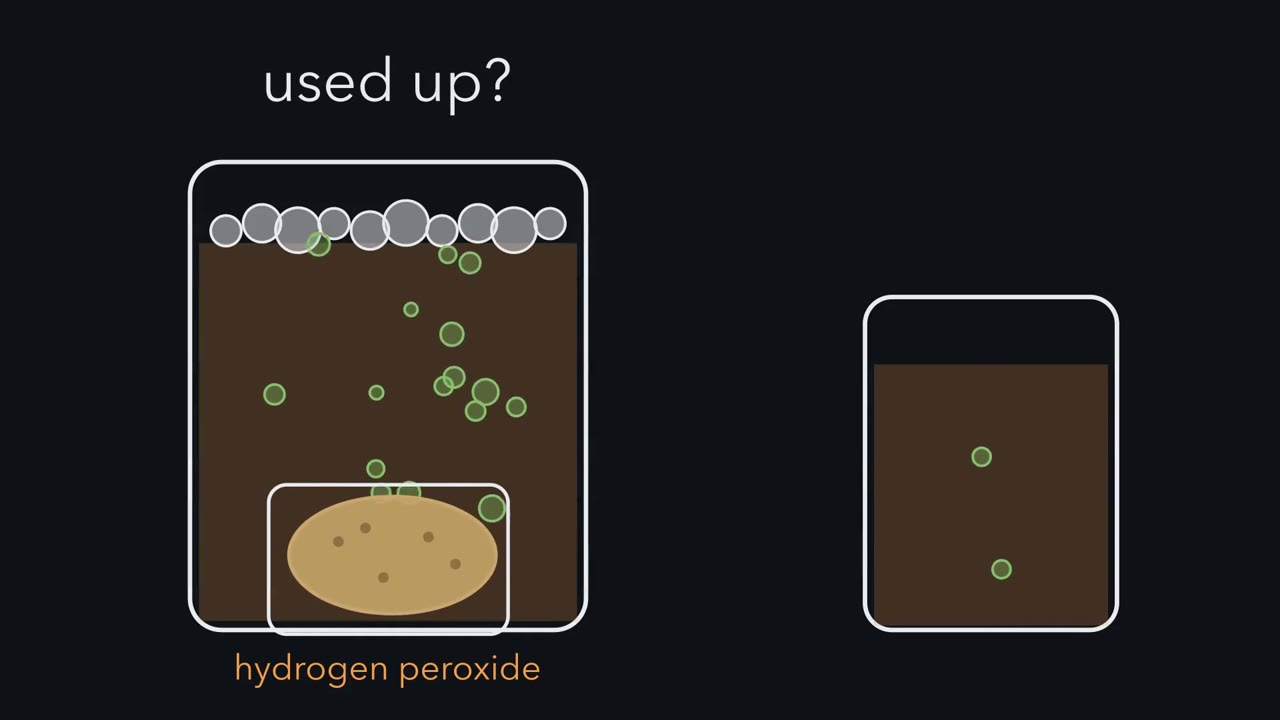
So, in the hotter tubes, the working-sites counter starts to fall. Now multiply the two dials at each temperature. At first the rising speed wins, and the rate climbs. Then the falling counter wins, and the rate drops. The top of the curve is the optimum, the temperature at which the enzyme works fastest. Above the optimum, the rate often falls because sites are being lost faster than the rest speed up. Back to the pineapple. Canning heats the fruit enough to denature bromelain. The counter falls toward zero. Too little is left to cut the gelatin chains, so they link up into a net, and the gelatin sets. Now a harder one. Hold fresh pineapple juice as hot as canning does, long enough to denature most of its bromelain.
Then cool it and add it to gelatin. Will the gelatin set? It is likely to set. Cooling does not usually fold the enzyme back up. A few proteins can refold, but heat damage like this is often permanent, like a cooked egg white. Heat speeds up each working site, and it can take sites out of work. In this model, the rate peaks at the optimum, where faster sites are offset by lost working sites. Real optima can have other causes, and depend on the test.
Why does fresh pineapple keep gelatin from setting, while canned pineapple lets it set?
Continue in the lesson: Enzymes at Work →
3:11 · Free, with captions and a transcript. The lesson has the full text, the questions and the sources.
More films from this lesson
How this film was made. Narration: an AI narrator voice (Kokoro, af_heart) reading narration written from this lesson's text. Animation: AI-generated in code (Manim) by Claude, a schematic with no drawn molecular structures. Captions come from the narration script. See something wrong? Report it.