The Receptor That Does Not Come Back
Read the transcript of “The Receptor That Does Not Come Back”
Film transcript: The Receptor That Does Not Come Back
How can a cell destroy a membrane-spanning receptor without leaving part of it behind? In chapter one, the receptor escaped. It released its LDL in acid and left before the end. But some receptors are meant to be destroyed.
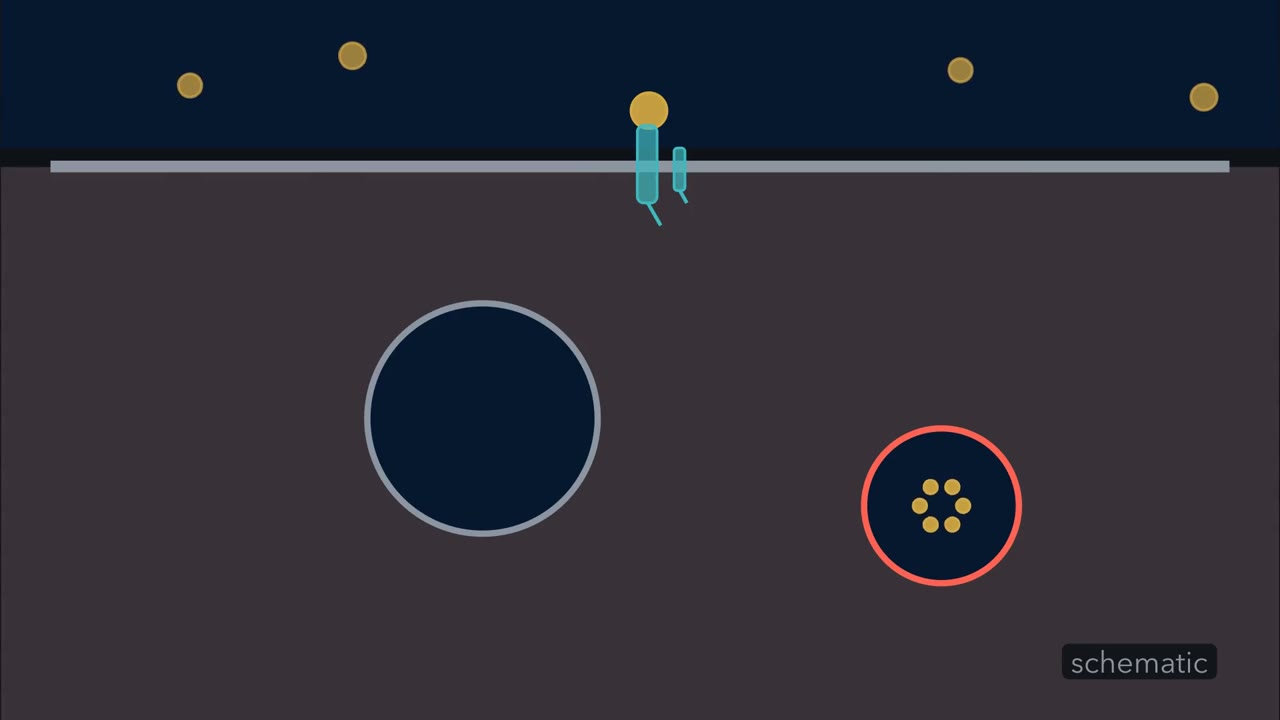
Many activated growth-factor receptors are like this, shown here in sky blue. Activation can add ubiquitin, a small protein shown in green. The tagged receptors enter an early endosome. Ubiquitin helps mark them for lysosomal degradation. Here is the problem. The receptor sits in the endosome's own membrane, with its tail out in the cytosol.
Suppose this endosome simply fused with a lysosome. Could the enzymes inside reach the whole receptor? Not all of it. The enzymes work in the lumen, so only the part facing the lumen is within their reach. The cell gets around this by moving the receptor off that outer membrane.
From the early endosome on, patches of its outer membrane, the limiting membrane, bud inward into the lumen. Each bud pinches off as a small vesicle inside. An endosome full of them is a multivesicular body. What decides which proteins go into the buds?
Complexes called ESCRT, in coral, recognize the ubiquitin tag. They sort the tagged receptors into the inner vesicles. In this comparison, an untagged protein stays behind. The multivesicular body then fuses with a lysosome. Each inner vesicle now floats whole in the lumen, receptor and all, and the enzymes digest it. This is how those receptors are switched off.
So the endosome sorts more than cargo. A receptor left in the limiting membrane can still return. A ubiquitin tag can select a receptor for inward budding. The lysosome can then digest all of it. Even a looping receptor can be pulled out of its loop.
PCSK9, in cyan, is a protein that cells secrete. It binds one small part of the LDL receptor's outer region. Cultured human cells show what happens next. A receptor bound this way goes to the lysosome instead of returning to the surface. Its loop has become a one-way trip. The receptor does not come back to grip again.
So a cell can destroy a receptor, not just its cargo. A ubiquitin tag can select the receptor for inward budding at the endosome. Inward budding puts the whole receptor within lysosomal enzymes' reach.
Why can a patient's cells grip cholesterol-carrying LDL normally and still leave most of it on the surface?
Continue in the lesson: Endocytosis, Recycling and Degradation →
3:26 · Free, with captions and a transcript. The lesson has the full text, the questions and the sources.
More films from this lesson
How this film was made. Narration: an AI narrator voice (Kokoro, af_heart) reading narration written from this lesson's text. Animation: AI-generated in code (Manim) by Claude, a schematic with no drawn molecular structures. Captions come from the narration script. See something wrong? Report it.