Wells Share One Scoop
Read the transcript of “Wells Share One Scoop”
Film transcript: Wells Share One Scoop
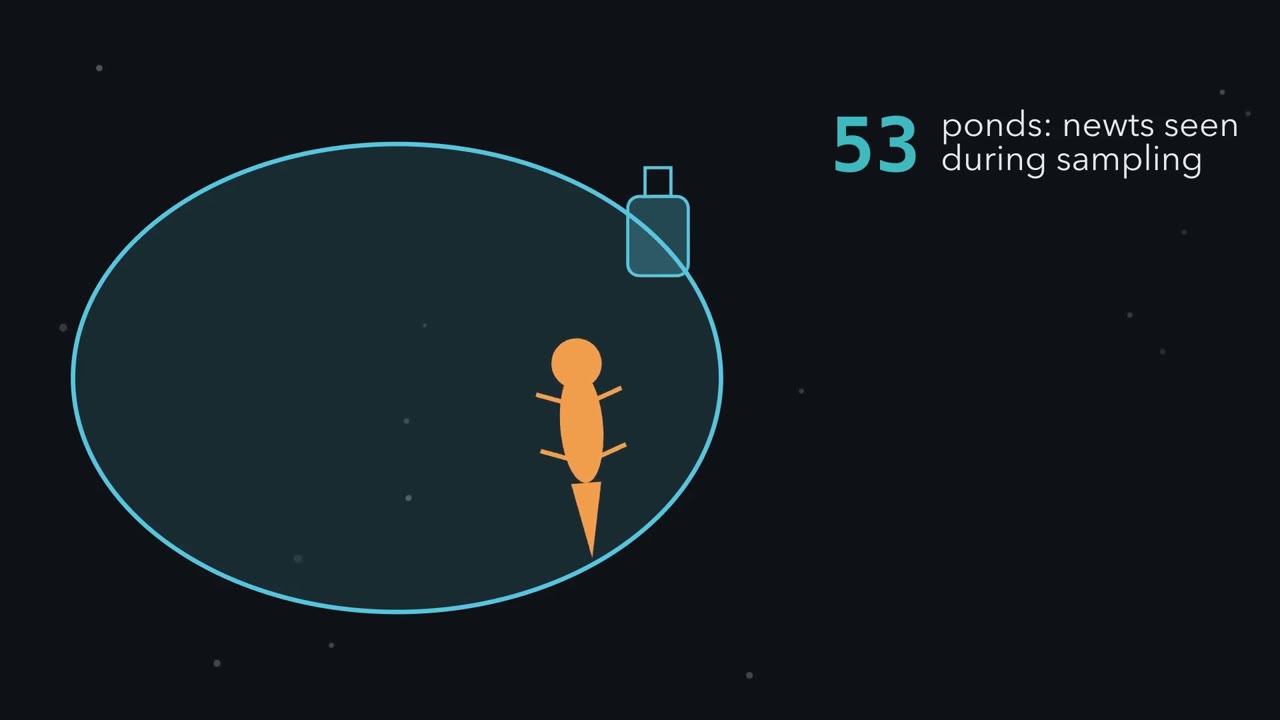
More wells cost an afternoon in the lab, not a field trip. Pond S2 already gave twenty negative wells. Are those twenty tries, or only two? Draw S2 as a tree. The pond gives two blue water bottles. Each bottle gives two green extraction tubes. Each tube feeds five gold wells. So all twenty wells hang from just two scoops of water. Use the workshop's numbers. A scoop holds DNA 60% % of the time. That is theta, the blue line. The capture and well values are borrowed from a wild pig study in Texas, as illustrations only. Try adding wells. Pour more gold wells under the same two bottles. The gauge for one sample climbs at first. Then it levels off, still below the blue line.
It never crosses theta, however many wells you add. The reason is simple. If the scoop held no DNA, every tube and every well from it is testing empty water. No number of wells can find DNA that the sample does not contain. Watch the bar for the chance that S2 is still occupied. With unlimited wells on two samples, it stops at 7.2%. That is still above the 5% percent line. Now add a third blue bottle instead, a new scoop of water from the pond. With the usual five wells per extraction, the bar drops to 4.8%. That is below the line. Here is a tempting mistake.
Suppose we pretend the twenty wells were twenty separate trips to the pond. Will the pond look emptier, or fuller, than the evidence allows? Emptier. Redraw the tree as twenty bottles, each with one well. Each one now looks like its own try. The bar plunges to about two percent, and you would stop. But you would stop on an error in the model, not on evidence. Counting repeated measurements of one unit as if they were separate units has a name. It is called pseudoreplication. So wells and extractions from one sample all test the same water. They are second chances at the lab steps, not new tries at the scoop. Here, adding wells cannot cross the line.
A third water sample does.
Twenty negative PCR wells from one pond. Is the newt gone?
Continue in the lesson: Integrative Evidence Workshop →
2:54 · Free, with captions and a transcript. The lesson has the full text, the questions and the sources.
More films from this lesson
How this film was made. Narration: an AI narrator voice (Kokoro, af_heart) reading narration written from this lesson's text. Animation: AI-generated in code (Manim) by Claude, a schematic with no drawn molecular structures. Captions come from the narration script. See something wrong? Report it.