What a Negative Is Worth
Read the transcript of “What a Negative Is Worth”
Film transcript: What a Negative Is Worth
When every test from a pond comes back negative, what have you learned? Is the species gone? At 53 English ponds, newts were seen while the water was being sampled. Yet 13% % of those samples, about seven, showed no newt DNA.
A survey is a series of nets with holes. First, DNA must be in the water you scoop. That chance is theta. Second, the extraction must capture it. That chance is gamma. Third, one qPCR well must amplify it. That chance is delta. Together, the nets give one number, q. It is the chance that one water sample detects a pond that really is occupied. Here we use a round number: q is one half. Now picture a hundred ponds like yours. Before sampling, we think twenty of them hold the species. Those are teal. The other eighty, in grey, are empty. With no false positives, an empty pond always tests negative. Sample every pond once. Half the occupied ponds light up as detections and leave the pile.
Ten occupied ponds stay hidden among eighty empty ones. The share of negative ponds still occupied drops to eleven percent. Now take a second, independent sample from every pond that is still negative. How many hidden occupied ponds will remain? And what share of the negative ponds will still hold the species?
Half of the ten hidden ponds are caught. Five stay hidden, among 85 negative ponds. The share falls to about 6%. percent. A third sample leaves 2.5 hidden ponds on average, about 3%. percent. The side bar tracks the chance that a negative pond is still occupied. It falls with every independent sample, but never reaches zero.
The grid is the equation. On top sit the hidden occupied ponds: the prior, times the chance an occupied pond misses every time. Below sit all the negative ponds: the empty ones, plus those hidden ones. Two numbers here are set by us, not measured by this survey. One is the prior, how likely occupancy was before sampling. The other is the stop line, here five percent. Change either, and the samples you need change. The count also assumes no false positives. Each pond stays occupied or empty for the whole survey. And each sample is an independent try. So a negative never proves absence. Each negative sample multiplies the hidden ponds by the miss chance.
The empty ponds stay put. But is every test you run a new try?
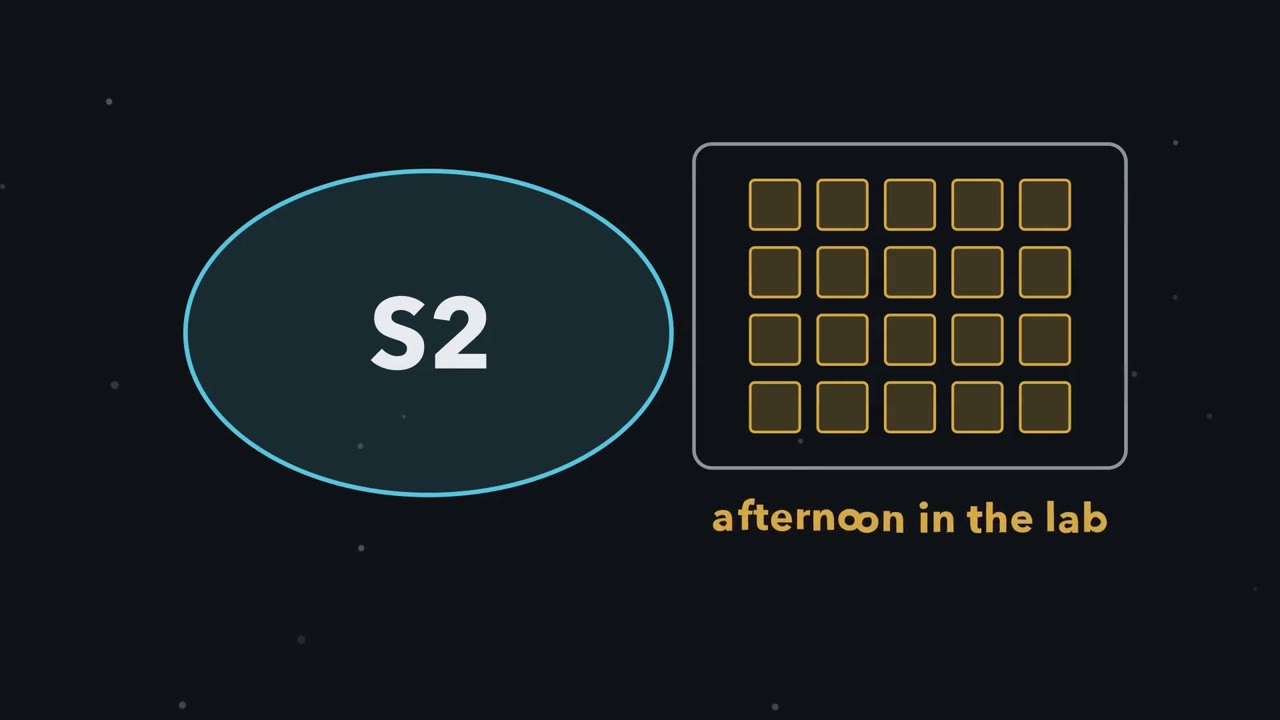
Twenty negative PCR wells from one pond. Is the newt gone?
Continue in the lesson: Integrative Evidence Workshop →
3:28 · Free, with captions and a transcript. The lesson has the full text, the questions and the sources.
More films from this lesson
How this film was made. Narration: written from this lesson's text and read by an AI narrator voice (Kokoro, af_heart). Animation: AI-generated in code (Manim) by Claude, a schematic with no drawn molecular structures. Captions come from the narration script. See something wrong? Report it.