Which Part of DNA Is the Code?
Read the transcript of “Which Part of DNA Is the Code?”
Film transcript: Which Part of DNA Is the Code?
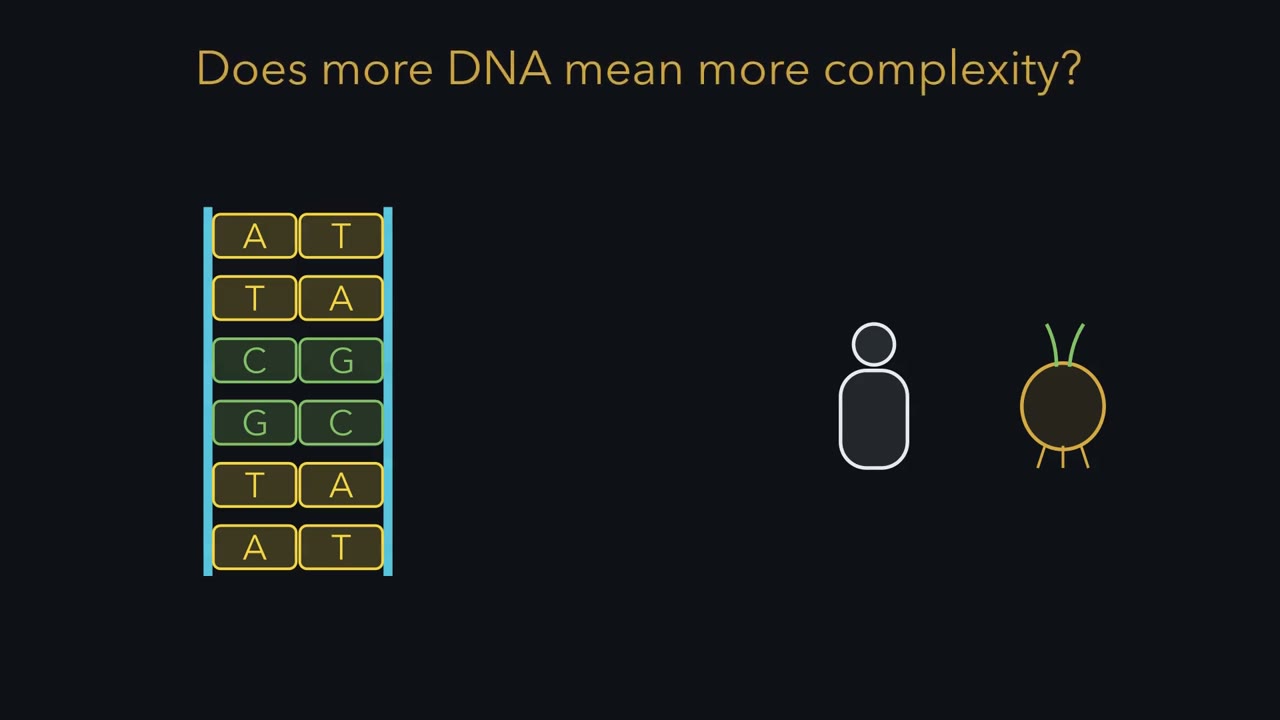
A strawberry and a person use the same kind of DNA. What inside that molecule can help make them different? Both lead into cells, then toward the same twisting ladder. The puzzle is where differences sit. DNA is a double helix, like a ladder twisted along its length. Sugar and phosphate form both sides. Those side parts are the same kinds in every living thing. The useful difference is not the frame around the rungs. The rungs carry base pairs. Each base has a letter name: A, T, C, or G. In ordinary double-stranded DNA, A pairs with T. C pairs with G. Pairing lets either side tell us the partner across each rung. Two ladders have matching blue sides.
Their rung letters appear in different orders. Which part can carry different instructions: the shared sides or the changing base order? Hold your answer while a small reader waits at the first rung. The changing order carries information.
Sequence means base order along DNA. Traits are features of living things. Here is the rule connecting both films. DNA sequence helps shape traits; DNA amount does not rank organism complexity. This film builds the sequence half. A highlighted sequence sits within a gene, a section of DNA. A chromosome is packaged DNA and carries many genes. Many genes carry instructions used to build proteins. Other genes carry code used in other ways. Follow one pea example. A working protein is needed to make purple flower colour. A change in its gene can stop that protein working. The flower can then be white. This case connects gene sequence, protein, and trait without making every trait simple.
The path is a first model, not a promise that each gene makes one trait. Many traits depend on several genes. Surroundings can matter too. Some base changes alter nothing you can see, so scientists test changes instead of guessing from letters alone. Almost every skin and muscle cell in one person carries the same DNA.
Yet each cell type uses different genes. Different proteins follow, so the cells look and work differently. The code matters together with how each cell uses it. Follow base order through a gene, protein, and trait. Shared parts can carry different sequences, and cells can use genes differently. So DNA sequence helps shape traits. Counting whole chromosome sets is a different question, for the second film.
If strawberries, mushrooms, bacteria and people all have DNA, why are they so different?
Continue in the lesson: DNA: The Code of Life →
3:20 · Free, with captions and a transcript. The lesson has the full text, the questions and the sources.
More films from this lesson
How this film was made. Narration: written from this lesson's text and read by an AI narrator voice (Kokoro, af_heart). Animation: AI-generated in code (Manim) by Claude, a schematic with no drawn molecular structures. Captions come from the narration script. See something wrong? Report it.