From One Day to One Year
Read the transcript of “From One Day to One Year”
Film transcript: From One Day to One Year
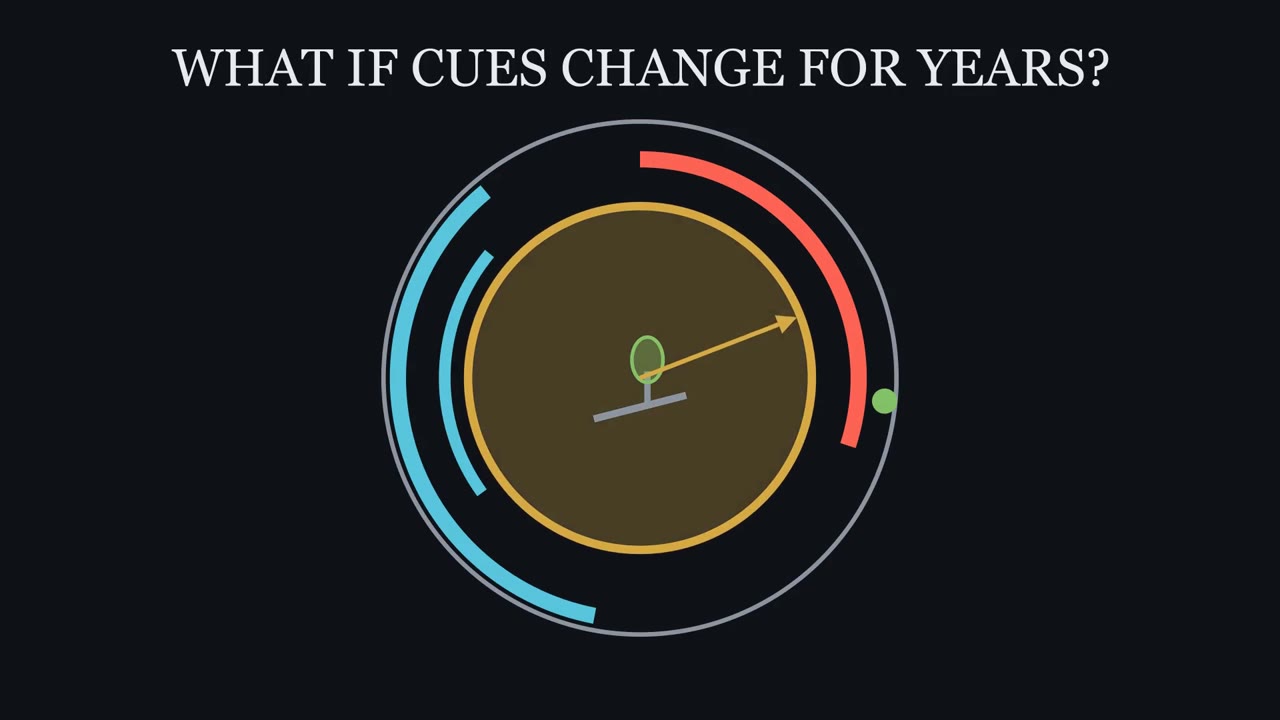
How can a tree or butterfly act on time without a calendar? Watch one dial carry a day inside a year. Its blue light band turns. Its red temperature band rises and falls. The living things change with it. Start with the inner dial. A circadian rhythm repeats about once each day. Light and darkness help keep many rhythms aligned. Many owls and many bats hunt at night. Tree squirrels and most songbirds are active by day. Yet the rhythm is not simply a reaction to each sunrise. Here is your prediction. The blue light band disappears, leaving steady darkness. Will the gold activity rhythm vanish at once, or keep circling for a while? Watch the gold marker carefully.
Choose before the dial moves. In many animals, it keeps circling for a while. That tells us some timing comes from inside the body. Outside light still matters because it keeps that inner rhythm lined up with the day. Inner timing and outside light work together. Not every response is a rhythm. A tropism is plant growth toward or away from something. Light moves beside a bean shoot.
Cells lengthen more on the shaded side, so new growth bends toward light. Roots can also curve toward wetter places. Now widen back to the year. Shorter days and cooler air can time seasonal responses. Monarchs migrate. Tree buds become dormant.
Groundhogs hibernate, lowering body temperature and using less stored energy. Deciduous trees also drop leaves as winter approaches. These responses meet a hard season in different ways. Migration changes place. Dormancy slows growth while life continues.
Hibernation is animal dormancy, not one unbroken sleep. Groundhogs briefly warm, then cool again. Each response helps the organism meet hard conditions. Outside cues are not the whole story. Some animals also have inner yearly timing. With day length held steady, groundhog eating and weight cycles kept repeating about once a year. Many seasonal behaviors are inherited. A first-time monarch can fly south without being taught, although some animals do learn routes. Species combine cues differently. Many tree buds need winter cold before later warmth can open them. The order of cues can matter. So one warm day is not a universal start button. The response depends on the organism's timing system.
The picture now has two kinds of timing. Gold inner rhythms keep turning. Blue and red cues help line up responses with the world. No single cue controls every organism. Across days and seasons, the useful response arrives at a useful time.
How does a cherry tree with no calendar know when to bloom, and why might that day change?
Continue in the lesson: Daily and Seasonal Rhythms →
3:38 · Free, with captions and a transcript. The lesson has the full text, the questions and the sources.
More films from this lesson
How this film was made. Narration: written from this lesson's text and read by an AI narrator voice (Kokoro, af_heart). Animation: AI-generated in code (Manim) by Claude, a schematic with no drawn molecular structures. Captions come from the narration script. See something wrong? Report it.