Paying to Go Uphill
Read the transcript of “Paying to Go Uphill”
Film transcript: Paying to Go Uphill
In the first film, whatever could cross ran downhill for free. So how does a cell keep so much sodium outside, and so much potassium inside? Look at an animal cell's membrane. Sodium shown in orange, is much higher outside the cell. Potassium shown in purple, is much higher inside. Each ion sits at the top of its own hill. A few channels in the membrane leak.
Sodium trickles in, and potassium trickles out. Each ion runs downhill, and the two differences start to shrink. A leak channel is an open tunnel, so ions pass through it only downhill. For ions, the hill also depends on the membrane's voltage.
Biology II covers that part. A pump is different. It grabs ions, changes shape, and spends energy to carry them uphill. Watch one cycle of the sodium-potassium pump. First, three sodium ions bind to the pump on the inside of the cell. The pump spends one ATP, the molecule that carries usable energy around the cell. The pump changes shape and releases the three sodium ions outside. Now two potassium ions bind on the outside. The pump changes shape again and carries them in. Both trips went uphill, against each ion's gradient. Every cycle, one ATP spent, three sodium out, two potassium in. While the pump keeps running, the meters hold steady, even though the leaks never close.
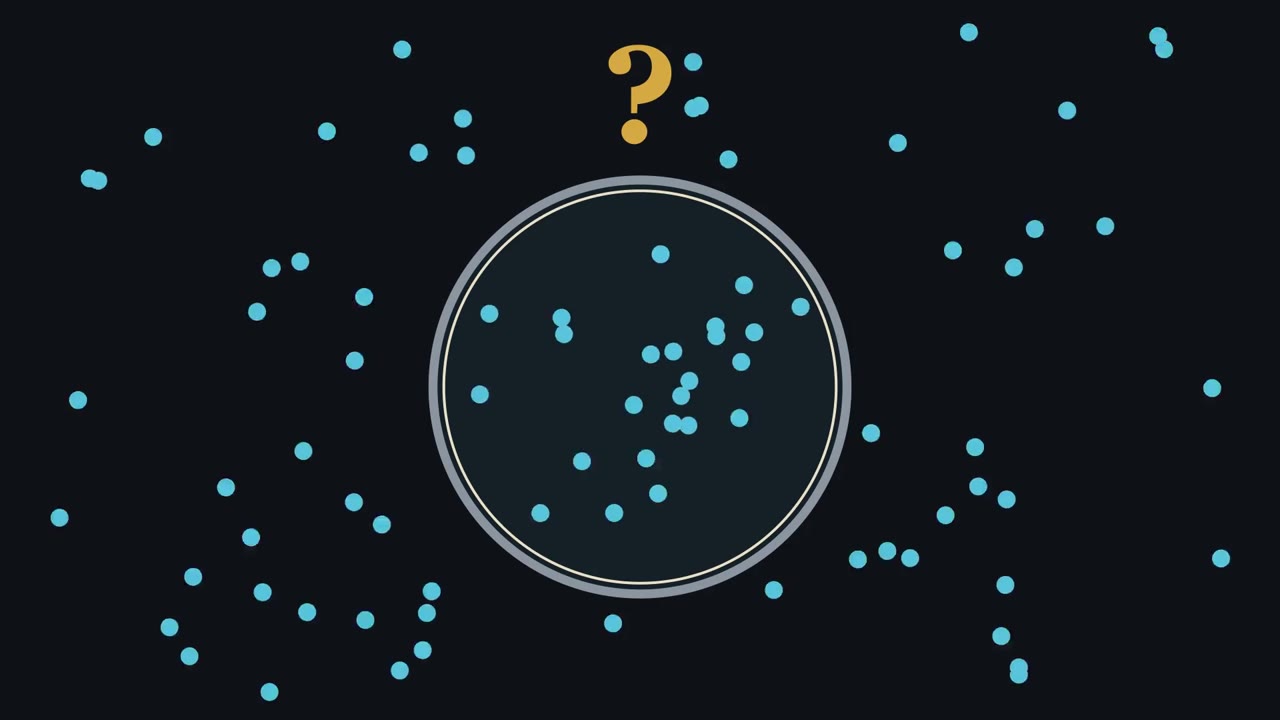
Movement that uses the cell's energy, often from ATP, is active transport. It can move a substance against its gradient. Diffusion and osmosis are passive transport, and need no energy from the cell. Now the cell runs out of ATP. The leak channels stay open. Which way will sodium move now? And which way will potassium move? Pause and predict.
The pump freezes. Sodium leaks in and potassium leaks out, both downhill. The two differences slowly shrink. The first film's rule has taken over again. So holding a difference is not a one-time payment. The leaks undo the pump's work all the time. The pump must keep spending ATP, cycle after cycle. Stop paying, and the differences drain away. That gives you one test for a substance crossing on its own. Is it going downhill? Then it is passive and free. Is it going uphill? Then the cell is paying.
Why does a slice of cucumber left in salty water get lighter and go limp, while a slice in plain water gets heavier?
Continue in the lesson: Crossing the Membrane →
3:11 · Free, with captions and a transcript. The lesson has the full text, the questions and the sources.
More films from this lesson
How this film was made. Narration: an AI narrator voice (Kokoro, af_heart) reading narration written from this lesson's text. Animation: AI-generated in code (Manim) by Claude, a schematic with no drawn molecular structures. Captions come from the narration script. See something wrong? Report it.