Eight Females from Texas
Read the transcript of “Eight Females from Texas”
Film transcript: Eight Females from Texas
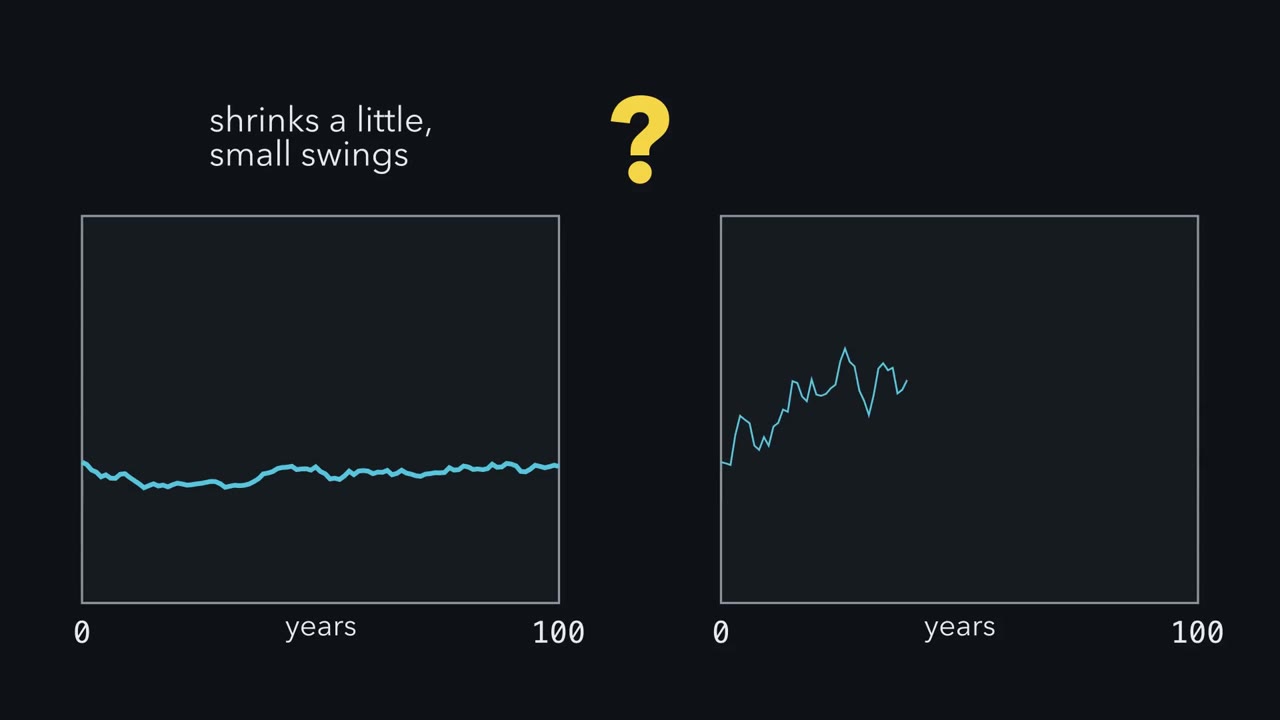
A model that holds survival fixed can miss something. If inbreeding keeps building, survival or fertility can fall, and the trend tilts down. Can adding new genes tilt it back up? Southern Florida held a small, isolated population of Florida panthers. Its animals showed signs linked to inbreeding: kinked tails, heart defects and poor sperm. Put them on the first film's chart.
Numbers sit close to the floor. Inbreeding can lower survival, so the gold arrow tilts down. The vortex is turning. In 1995, managers tried a genetic rescue. They released eight female pumas from Texas into the Florida population.
Texas pumas belong to the same species, from a separate population. Adding animals to a population that still exists is called reinforcement. The aim was genetic: to reverse inbreeding by bringing in new gene versions. Over the following years, more and more panthers carried both Florida and Texas ancestry. Biologists call such animals admixed. To judge the rescue, track two things. One is the head count. The other is heterozygosity: the share of gene positions where an animal carries two different versions. In 2010, a team led by Warren Johnson reported the result.
Numbers had about tripled. Heterozygosity had doubled. Survival and fitness measures had improved. On the chart, the arrow tilts up. The same report warned that habitat loss and persistent inbreeding remained concerns. So, if habitat keeps shrinking, will the climb continue?
In 2024, a team led by Dave Onorato returned, with records from 1,192 panthers. The genetic benefits had lasted through five generations. Yet the population stabilised, and then declined, during 2016 to 2020. The genetic benefits held, yet the climb stopped. A population gain from genetic rescue may not last if other causes of decline remain. How did the teams judge the rescue? They compared admixed with non-admixed animals, and the years after the release with the years before. Both comparisons came from a single population. So genetic rescue can ease inbreeding and lift survival and births. But it does not by itself remove other causes, such as habitat loss or road deaths.
Address those too, or the gain may fade. Genes and habitat work together.
In 1995, eight female pumas from Texas were released into the Florida panther population. What did that change, and how would you know?
Continue in the lesson: Conservation and Restoration →
3:16 · Free, with captions and a transcript. The lesson has the full text, the questions and the sources.
More films from this lesson
How this film was made. Narration: an AI narrator voice (Kokoro, af_heart) reading narration written from this lesson's text. Animation: AI-generated in code (Manim) by Claude, a schematic with no drawn molecular structures. Captions come from the narration script. See something wrong? Report it.