When Evidence Redraws a Branch
Read the transcript of “When Evidence Redraws a Branch”
Film transcript: When Evidence Redraws a Branch
Archaea moved because a repeated pattern challenged one old group. How do we decide whether another branch should move? Start with the current tree as a claim. Then ask which relationship each new comparison supports. Fungi once seemed plant-like because they grow in place and have cell walls. On our tree, a mushroom icon begins beside a plant. That placement is a hypothesis about ancestry.
Looking alike can suggest a group, but the branch must survive other tests. Protein comparisons supplied another test. Several protein trees grouped the sampled fungi with animals. Shared added or missing stretches supported the same relationship. The mushroom branch slides beside the animal branch. This does not mean animals came from modern mushrooms. A result can be a clue, not a final verdict.
Confidence grows when different comparisons support the same branch and sampling is broad enough. Conflicting results send scientists back to methods, markers and organisms. The tree stays open to testing. A new evidence card supports the branch already drawn, and no strong comparison challenges it. Should scientists move that branch, keep it, or erase the whole tree?
Choose before the card reaches the joint. Keep it. New evidence does not require movement. It may strengthen the present relationship instead. Revision belongs where the evidence changes the picture. Scientists should not rebuild every branch because a well-supported branch was tested. The same logic reaches species.
Nuclear DNA supported treating forest and savanna elephants as separate species. Yet one large study sampled very few animals of each kind. Broad stretches of DNA strengthened the split, while the small sample kept a limit visible. DNA comparisons also placed whales among even-toed hoofed mammals, with hippos as their closest living relatives.
Gene sequences split the old Protista kingdom into many branches. These changes differ in scale, but each asks which tree fits the evidence. Each change still needs its own evidence and its own limits. Reclassification changes the scientific model. It does not make organisms switch ancestors, and it does not prove earlier scientists careless. They used the evidence available. Better tools can reveal patterns that shape, habitat or a short comparison could not show. Ask these questions whenever a group changes. What relationship did the old tree claim? What new pattern challenges it? What important limits remain? Those questions turn a changed label into a clear evidence-based scientific explanation.
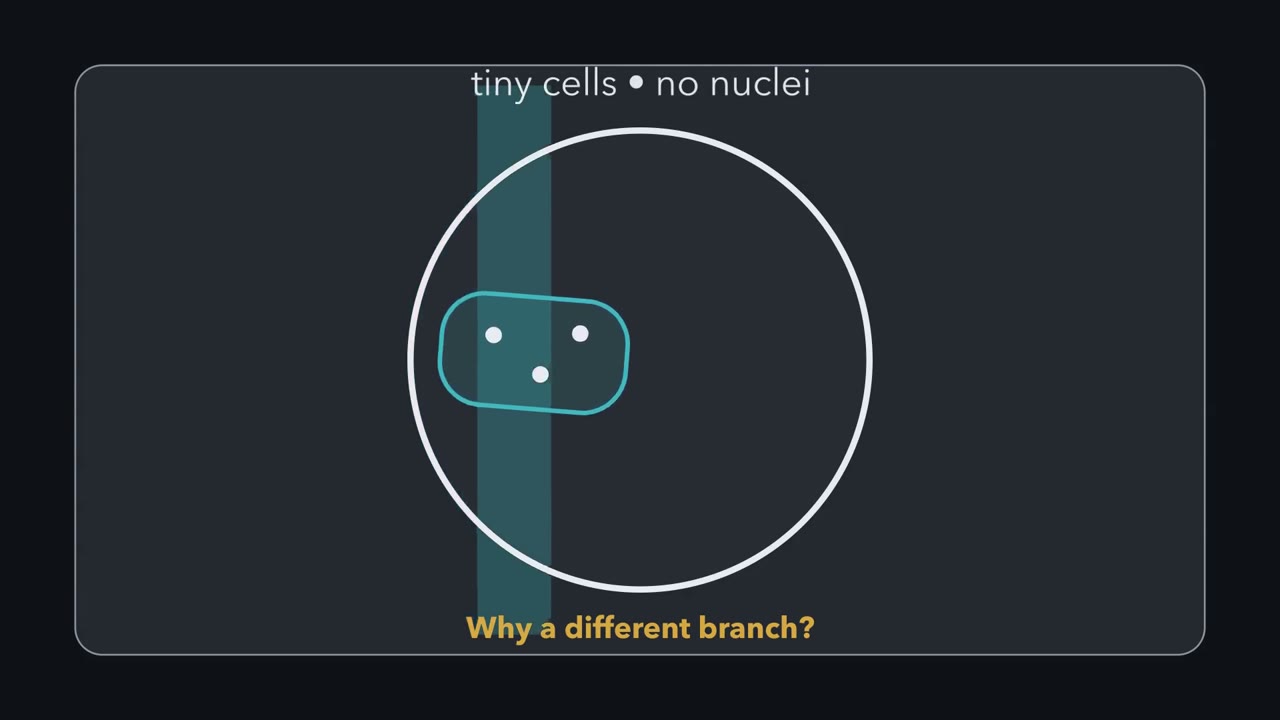
If some microbes look just like bacteria under a microscope, how could a molecule inside them show they belong to a different domain of life?
Continue in the lesson: Classification Changes →
3:32 · Free, with captions and a transcript. The lesson has the full text, the questions and the sources.
More films from this lesson
How this film was made. Narration: an AI narrator voice (Kokoro, af_heart) reading narration written from this lesson's text. Animation: AI-generated in code (Manim) by Claude, a schematic with no drawn molecular structures. Captions come from the narration script. See something wrong? Report it.