A Predictor That Learns from Error
Read the transcript of “A Predictor That Learns from Error”
Film transcript: A Predictor That Learns from Error
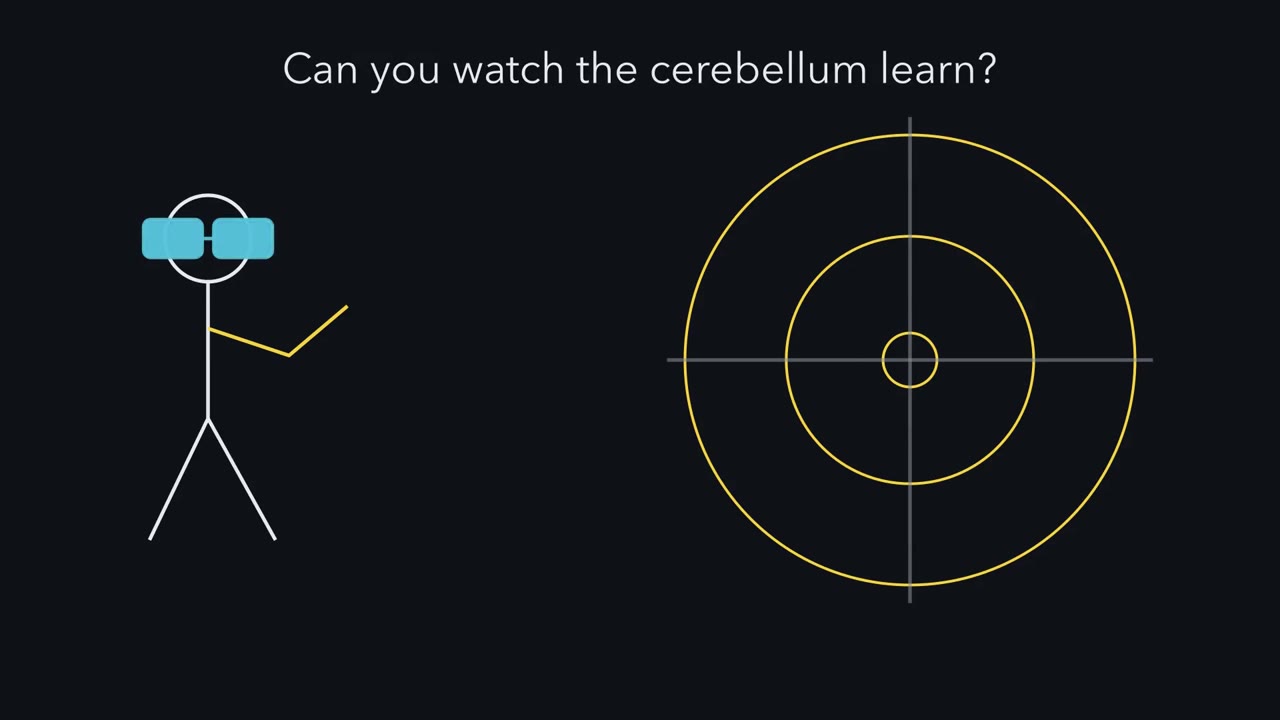
Damage the cerebellum, and a person can still move. So what is lost? Watch someone with cerebellar damage reach for a cup. Is the movement weak, or clumsy? And where does it go most wrong? Clumsy, not weak. The reach overshoots, and the hand shakes as it nears the cup. Feedback is slow. A visual error arrives a tenth of a second or more after the movement went wrong. In one model, a hand steered by late feedback, with strong corrections, overshoots and swings. So the cerebellum predicts. It estimates what a command will do, before the senses report the result. To learn a prediction, you need two things. A description of what is happening. And a signal that says wrong.
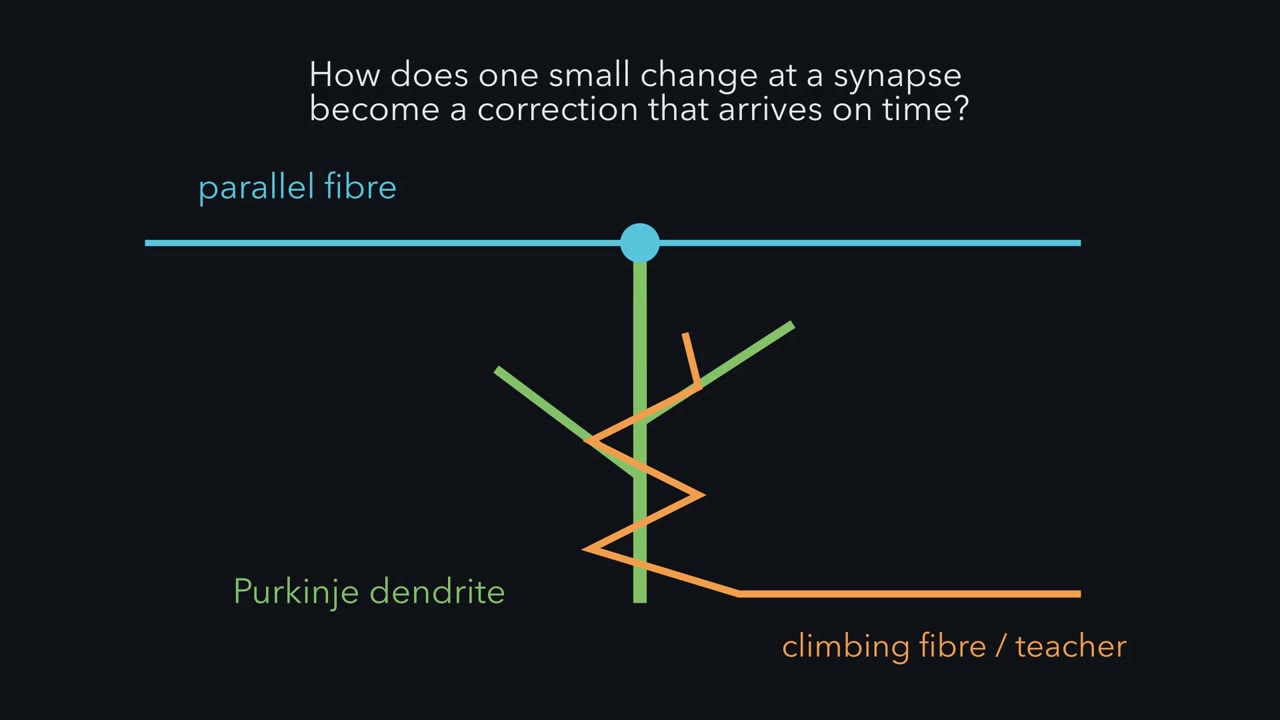
Mossy fibres bring the context, including a copy of the commands the cortex is sending. Granule cells relay it as parallel fibres, which run like telephone wires through many Purkinje cells. In the classical model, one climbing fibre carries the error, from the inferior olive. Each adult Purkinje cell gets just one. Purkinje cells are the only output of the cerebellar cortex, and they inhibit. They press a brake on the deep or vestibular nuclei. Many nuclear cells fire steadily, like a car with its engine running. Ease off the brake, and the car speeds up. Here is the rule. The cerebellum learns to predict, and it learns from error. In this model, a well-timed error signal can weaken the parallel-fibre synapses active at the right moment.
With other inputs unchanged, weaker input to the brake means more output there, the next time that context comes round. Parallel-fibre activity without a paired climbing fibre can strengthen the same synapses. So corrections can run either way. This is the classical Marr-Albus-Ito model: well supported for some tasks, but not the whole story. The takeaway: the cerebellum is a predictor, and errors are how it learns.
Most of the neurons in one count of the human brain sit in the cerebellum. Damage it and you can still move. What do you lose?
Continue in the lesson: The Cerebellum →
2:25 · Free, with captions and a transcript. The lesson has the full text, the questions and the sources.
More films from this lesson
How this film was made. Narration: an AI narrator voice (Kokoro, af_heart) reading narration written from this lesson's text. Animation: AI-generated in code (Manim) by Claude, a schematic with no drawn molecular structures. Captions come from the narration script. See something wrong? Report it.