Before the Data Arrive
Read the transcript of “Before the Data Arrive”
Film transcript: Before the Data Arrive
Did stretch cause these cells to divide, or did the experiment only make more cells glow green? And how many experiments are hidden inside one dish? Watch one bench before any results appear. Place two competing models beside the dish.
Model A says stretch is enough for division. Model B says stretch starts the cycle, but another signal is needed for completion. Both predict more green cells. The green snapshot cannot choose between them. A useful prediction sits where the models disagree. A shared prediction cannot test the choice. Here, the disagreement is completed division. The first gold lock closes: write each model's numerical prediction before collecting an image. Now predict. Both paths are real observations, but only one separates these models. Is it more green cells now, or more tracked divisions later? Hold your answer while the two paths move.
Fucci is a two-color cell-cycle reporter. In its simplest picture, green marks entry into S phase, not completion of the cycle. The camera must follow one cell's identity across time. Follow that cell until it becomes two daughters. For division claims, track cells to division instead of counting green cells. Next, ask what received treatment independently.
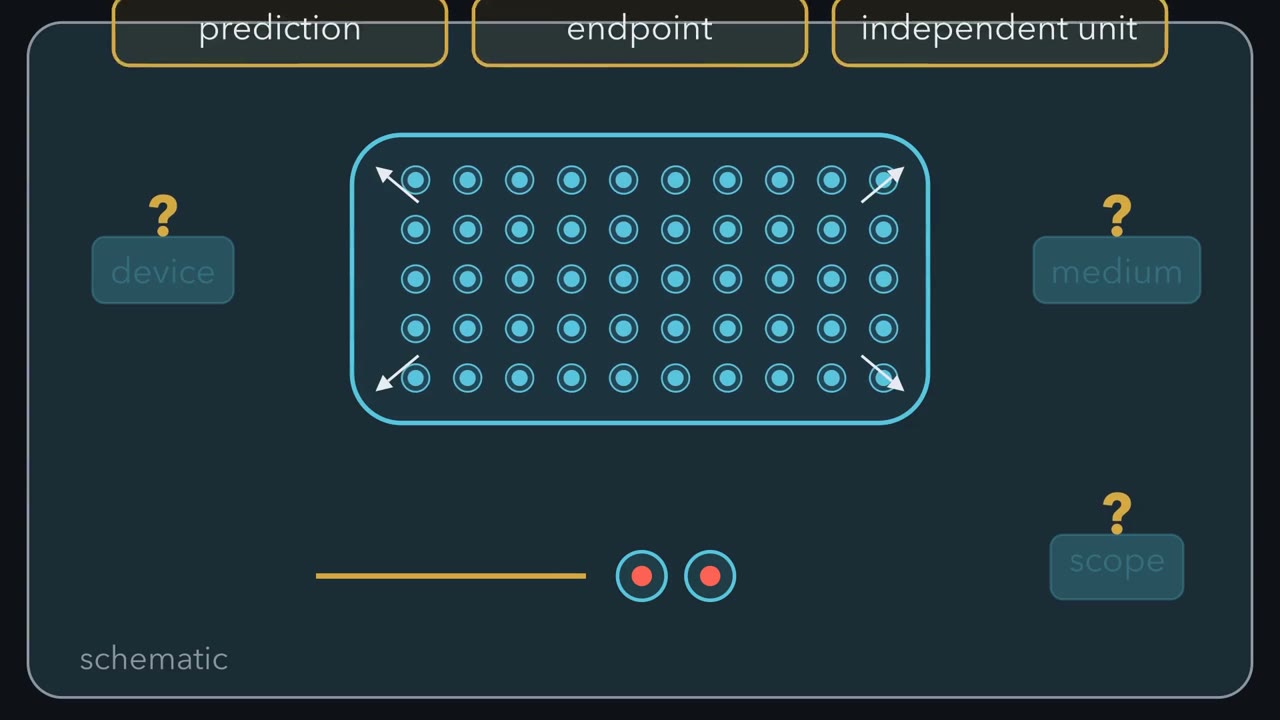
Every cell here shared one dish, one pipetting, and one stretch. If the dish is odd, every cell carries that oddity. When treatment is applied to a whole dish, the dish is the experimental unit. Measuring more cells describes that dish more precisely, but it does not repeat treatment. Fresh runs do. A new day with new dishes can expose run-to-run variation. Three separately treated dish pairs give three independent summaries per condition. A SuperPlot keeps both levels visible. Small dots show cells, while large symbols show run summaries. Run two now stands out instead of disappearing in the pool. A SuperPlot keeps cell variation visible while comparing independent runs.
The three locks now align. In shared-dish cell experiments, lock the prediction, endpoint and independent unit before the data arrive. Break one link, and the conclusion changes meaning. With all three aligned, the claim, measurement and analysis answer the same question. Controls then test whether a dull explanation could produce that answer. Return to the opening dish.
Six hundred glowing cells can be valuable observations. They are still one treated unit, and green still marks S-phase entry. More dots cannot repair a mismatched endpoint. Trust the conclusion only when all three locks fit.
Stretched cells glow green. What would it take to show that stretch made them divide?
Continue in the lesson: Designing a Cell Biology Experiment →
3:28 · Free, with captions and a transcript. The lesson has the full text, the questions and the sources.
More films from this lesson
How this film was made. Narration: written from this lesson's text and read by an AI narrator voice (Kokoro, af_heart). Animation: AI-generated in code (Manim) by Claude, a schematic with no drawn molecular structures. Captions come from the narration script. See something wrong? Report it.