The Air Is a Tub
Read the transcript of “The Air Is a Tub”
Film transcript: The Air Is a Tub
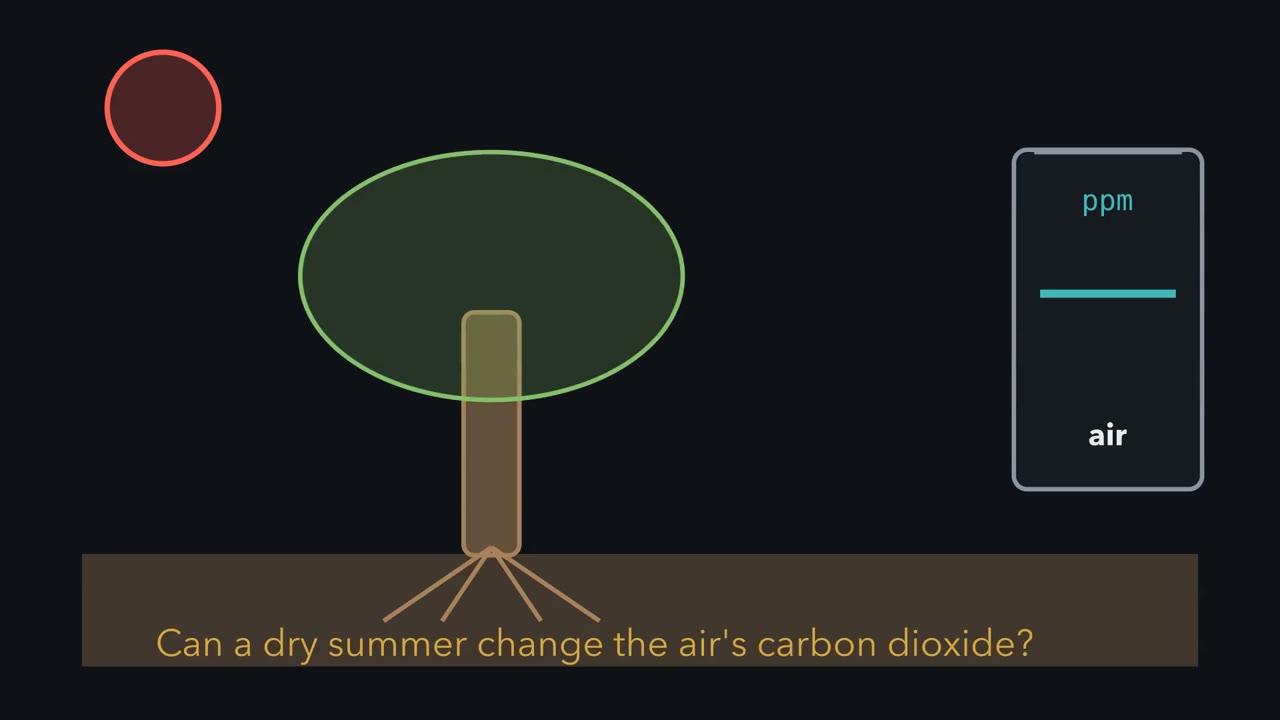
What pulls the carbon dioxide in the air down every summer, and what pushes it back up? Scientists on a Hawaiian volcano, Mauna Loa, have watched it happen every year since 1958. They count carbon dioxide in parts per million. Four hundred parts per million means four hundred carbon dioxide molecules in every million molecules of air. So it is only a tiny part of the air. Here is a way to think about it. Picture the air as a tub that holds carbon. A marker on the side shows the level, in parts per million. One process drains the tub. Photosynthesis takes carbon dioxide out of the air. The oak in a Virginia yard builds that carbon into sugar. Other processes fill it.
The oak and the deer both respire, day and night. Decomposers in the rotting log do too. Burning fuel adds more, and the ocean takes some in and gives some back. Now the rule. The level goes up only when more flows in than flows out. It goes down only when more flows out than flows in. Watch one year. In spring the oak's leaves open, and photosynthesis speeds up. The oak still respires, and the log still rots. But out beats in, so the tub's level falls, month after month. In fall, photosynthesis slows and the oak drops its leaves.
Respiration and decomposition keep going. Now in beats out, so the level rises through fall, winter and spring. Real air shows the same pattern. The line beside the tub is the record from Mauna Loa, for 2025. The station measures the air itself, not each flow. The highest month is May. After that, the level falls all summer. From July to August, the monthly average dropped the most. So is August the lowest month? Pause and decide.
No. The monthly average kept falling into September, the lowest month. In October it was higher again. A tub keeps draining as long as out beats in, so the bottom comes after the biggest drop. Now step back to many years. Burning coal, oil and gas adds old carbon from underground.
Each year, a little more flows in than flows out. So the whole record climbs. To see the climb, compare the same month across the years, May with May. May against September only shows the yearly swing. One tub, two patterns. The yearly swing comes from plants taking out more, then less, than is put back. The long climb comes mostly from burning.
Why does the air over a Hawaiian volcano lose carbon dioxide every summer and win it back every fall and winter?
Continue in the lesson: The Carbon and Water Cycles →
3:20 · Free, with captions and a transcript. The lesson has the full text, the questions and the sources.
More films from this lesson
How this film was made. Narration: written from this lesson's text and read by an AI narrator voice (Kokoro, af_heart). Animation: AI-generated in code (Manim) by Claude, a schematic with no drawn molecular structures. Captions come from the narration script. See something wrong? Report it.