Why Is the Second Time Faster?
Read the transcript of “Why Is the Second Time Faster?”
Film transcript: Why Is the Second Time Faster?
Suppose an infection leaves you a thousand times more cells that fit a virus. Is your second response a thousand times faster? The first film ended with an antigen choosing the few cells that fit. But a few cells cannot fight an infection. How do a few become enough? A chosen cell divides into two. Each of those divides again. With every round of division, the clone doubles.
So the number of cells is the starting number, doubled once for every round. Enough rounds turn a few cells into millions. Now draw it as a graph. Days run along the bottom. Cell number runs up the side. Each gridline is ten times the one below.
On this axis, steady doubling is a straight climb. A first response starts from a few cells, so it needs many doublings. It takes days to build. When the infection is cleared, most of the expanded cells die. But memory B cells and memory T cells remain. There are many more of them than the clone started with. Suppose the memory pool is a thousand times bigger than the starting clone. How many fewer doublings does a second response need?
About ten fewer. A thousandfold head start covers only about ten doublings. So it saves those rounds, not a thousandfold of the time. So the second curve starts high and reaches the line sooner. This second, secondary response needs fewer rounds of division.
Real secondary responses are usually larger too, for reasons this simple model leaves out. This doubling picture is a simplified model. It leaves out cell death during the climb. And many memory cells, though not all kinds, respond faster than first-time cells. Where does a head start come from?
Compare two mice. One gets a harmless viral protein, as a vaccine. Its own fitting cells expand, and memory cells stay behind. The other mouse gets antibody taken from an immunized mouse. It is protected at once. But the antibody is broken down, and no memory cells were made. Protection your own lymphocytes make is active immunity. Protection by antibody from another body is passive immunity. Six months later, both meet the virus. The vaccinated mouse starts high on the curve. The other starts from the bottom, like a mouse that never met it.
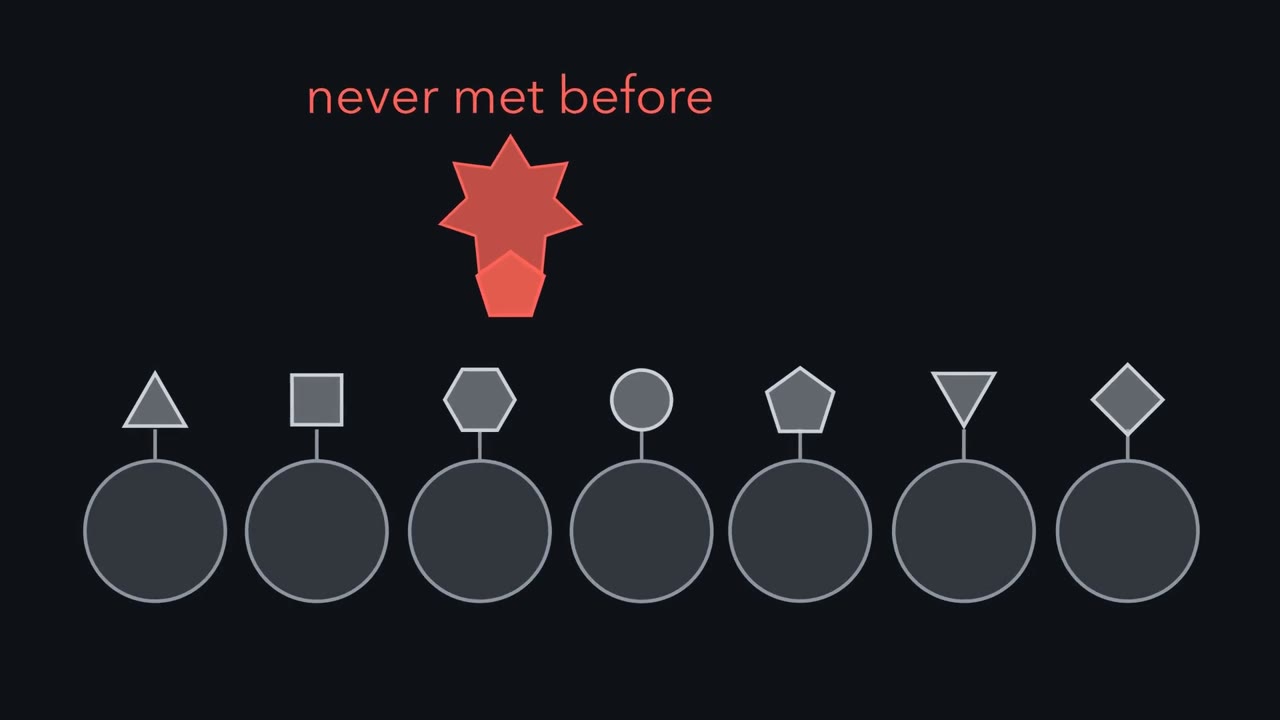
How can your body already hold cells that fit a virus you have never met?
Continue in the lesson: Adaptive Immunity →
3:11 · Free, with captions and a transcript. The lesson has the full text, the questions and the sources.
More films from this lesson
How this film was made. Narration: an AI narrator voice (Kokoro, af_heart) reading narration written from this lesson's text. Animation: AI-generated in code (Manim) by Claude, a schematic with no drawn molecular structures. Captions come from the narration script. See something wrong? Report it.