Life Science · Skim version
Releasing Energy from Food
Read the full lesson → Skim the whole course →
The guiding idea
Why do sprouting peas in a thermos get warmer than the room?
Respiration releases stored food energy; temperature, oxygen, and sugar change its rate.
From the film: Why Do Sprouting Peas Get Warm?
- Respiration releases stored food energy for cell work and as thermal energy.
- In respiration with oxygen, glucose and oxygen give rise to carbon dioxide and water.
- Cells make no new energy; a thermos slows thermal energy from escaping.
- Plant, animal, and fungus cells respire; breathing is a different process.
From the film: What Controls Respiration's Speed?
- Respiration releases stored food energy; temperature, oxygen, and sugar change its rate.
- Within a suitable range, warmer cells usually respire faster.
- Less oxygen slows respiration that uses oxygen.
- Too little sugar slows respiration, but adding more helps only to a point.
-
Explore: test a flask of living cells
-
Go further: the pathway inside cells
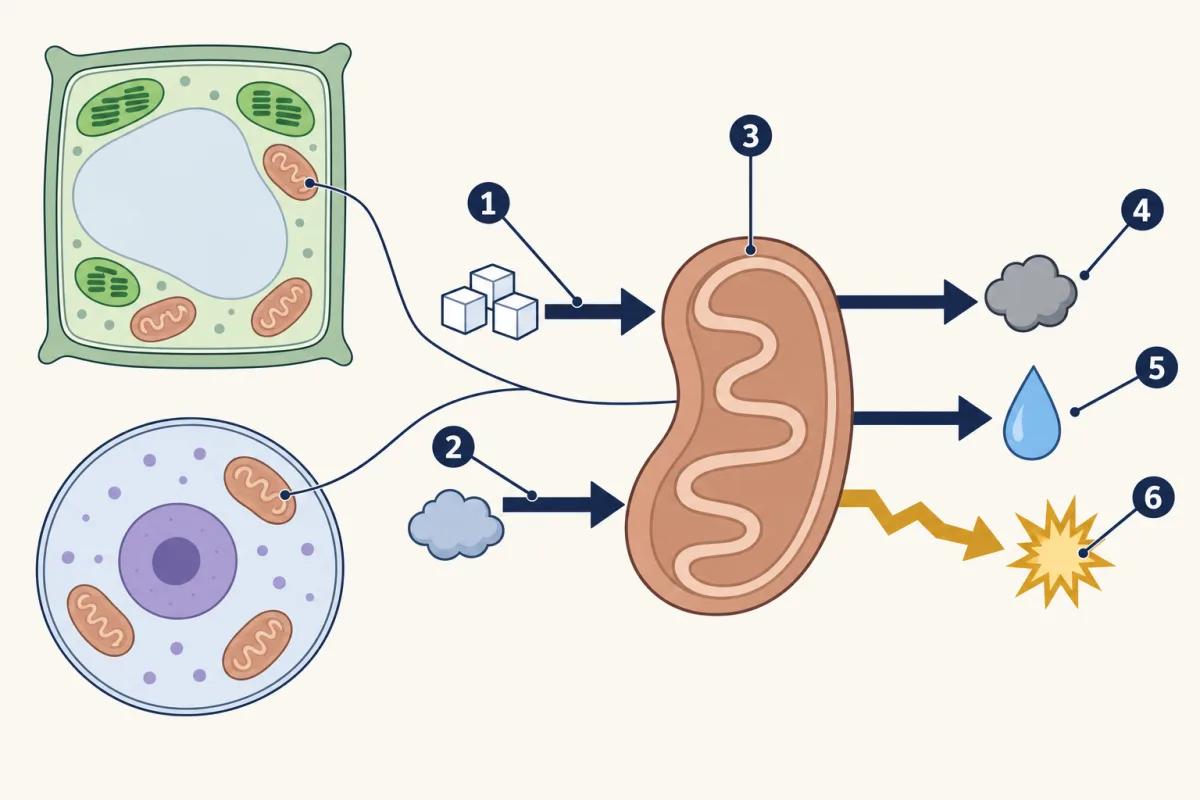
- sugar (glucose)
- oxygen
- mitochondrion
- carbon dioxide
- water
- energy
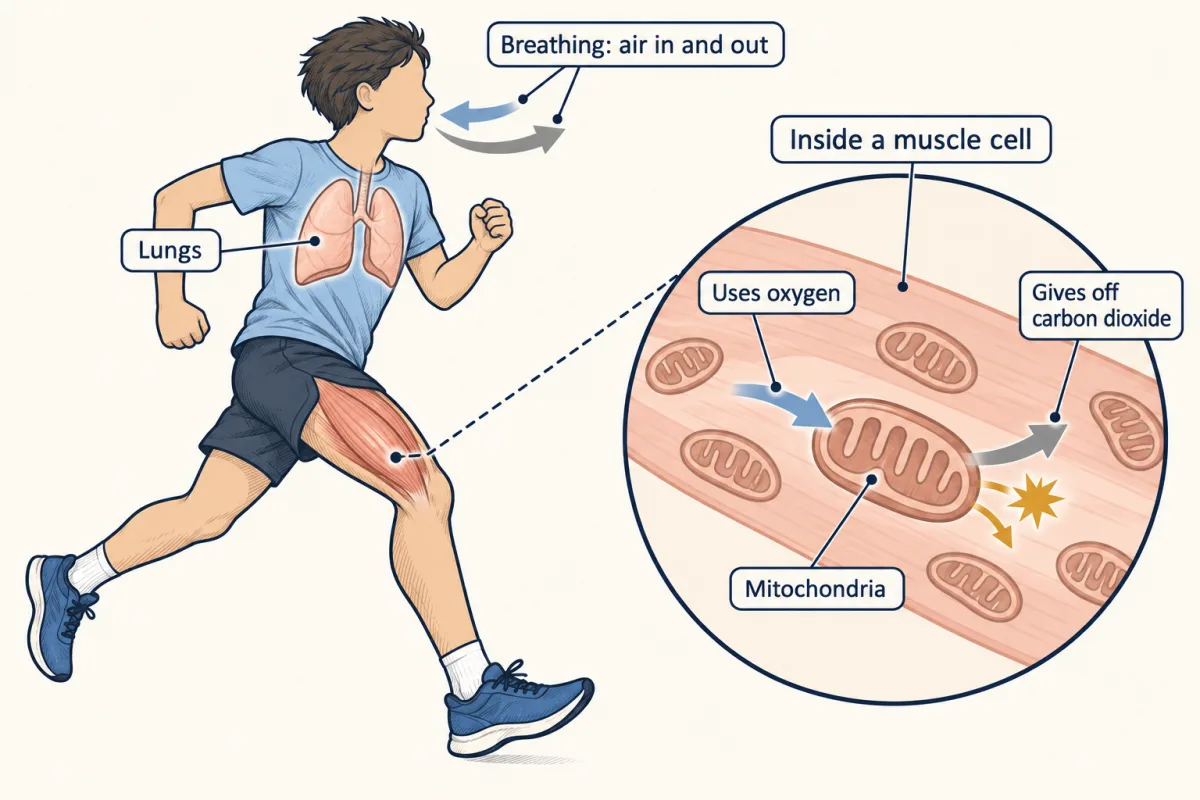
Breathing moves air in and out of your lungs. Cellular respiration happens inside your cells, where the oxygen is used and carbon dioxide is given off. AI-generated illustration -
Follow the released energy
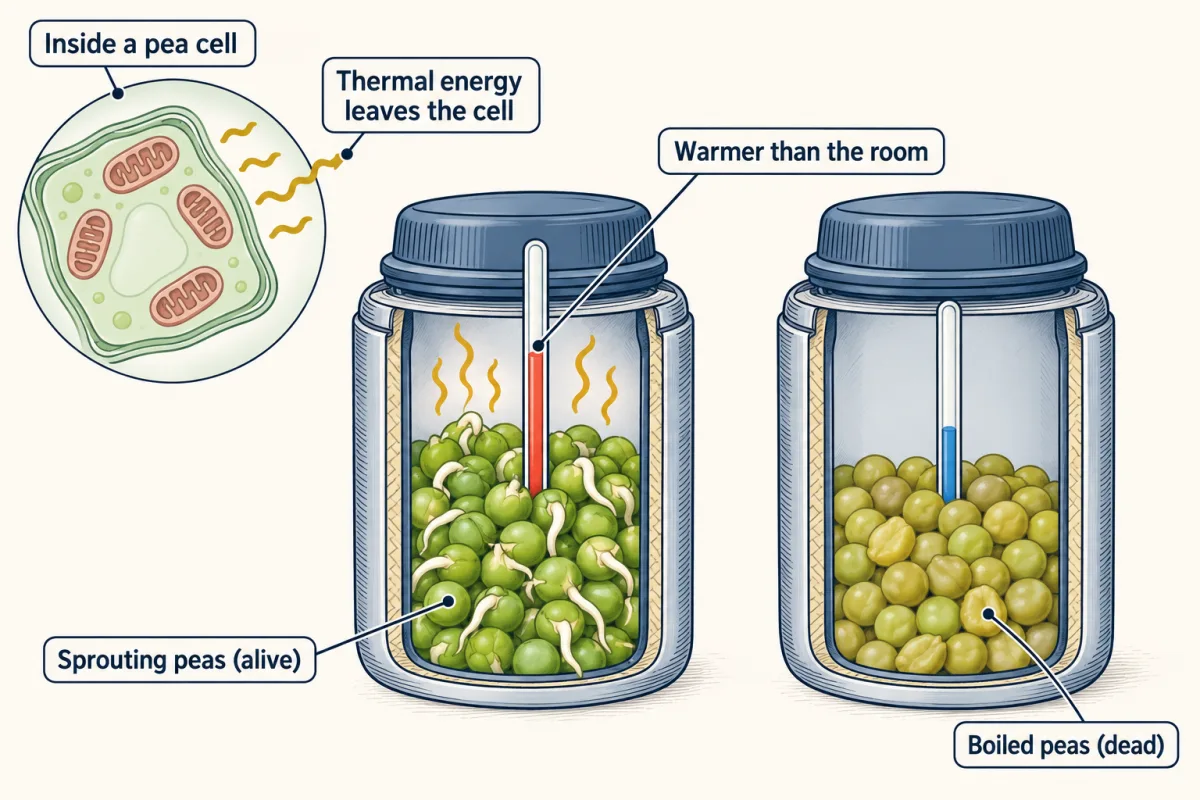
Living pea cells release thermal energy during respiration, so sprouting peas can warm a thermos while boiled peas stay near room temperature. AI-generated illustration -
Read the evidence the second film did not show
-
Evaluate: check your thinking
-
Going deeper
Where this lesson fits
Before thisReview first
- Inside a CellThis course · Lesson 2
You need to know what mitochondria are and what they do inside a cell before following energy through them.
- Photosynthesis Feeds the WorldThis course · Lesson 9
Plants make the glucose that respiration breaks down, so you need to know where that sugar comes from.
After thisStudy next
- Partners in EnergyThis course · Lesson 11
It uses respiration's glucose, oxygen and carbon dioxide together with photosynthesis to explain daily changes in creek oxygen.
Elsewhere on the siteFilms, simulations and method films in other courses
- Set Up: Rot DetectivesFilm · Biology Together
Decomposers in sealed jars show living things giving off carbon dioxide as they use food.
- Set Up: Wake Up a SeedFilm · Biology Together
A waking seed shows a dormant living thing starting to use its stored food.
Suggested by an AI model from the lessons themselves, then checked. How we use AI