Biology · Skim version
Matter Cycles
Read the full lesson → Skim the whole course →
The guiding idea
How can rain falling on a farm help build a crab in the Chesapeake Bay?
In ecosystems, atoms move between reservoirs, and processes connect their cycles.
From the film: One Crab, Three Connected Cycles
- In ecosystems, atoms move between reservoirs, and processes connect their cycles.
- Photosynthesis moves carbon into living things, while respiration and decomposition move much of it back.
- Moving water can carry nitrogen from land into rivers and the Bay.
- Microbial handoffs make nitrogen gas usable by plants and return it to the air.
From the film: When People Change the Flow
- When more matter enters a reservoir than leaves it, the amount rises.
- Burning fossil fuels moves long-stored carbon into today's air.
- Runoff can carry added nitrogen from fields toward the Chesapeake Bay.
- Measurements and models reveal different parts of changed cycles.
-
Explore: follow one atom
-
Explain: carbon moves, and it sets the temperature
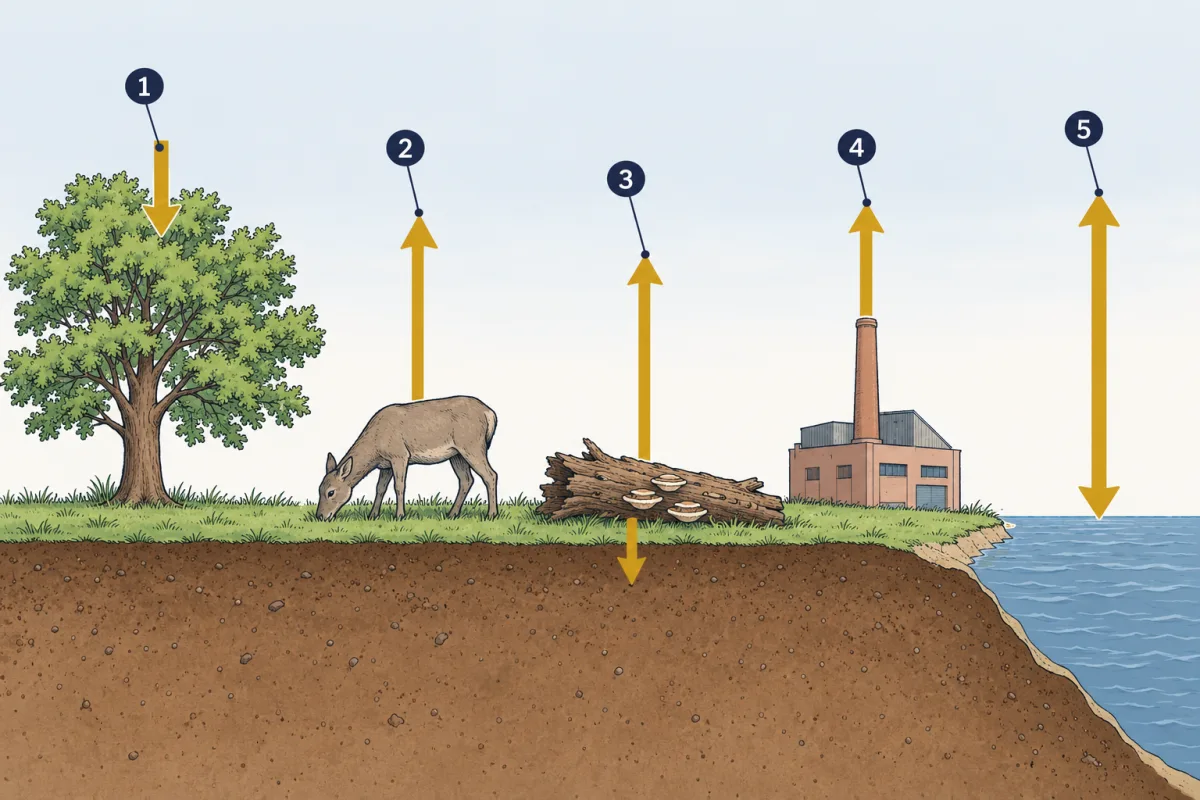
- photosynthesis
- respiration
- decomposition
- combustion
- ocean absorption
-
Explain: water carries everything else
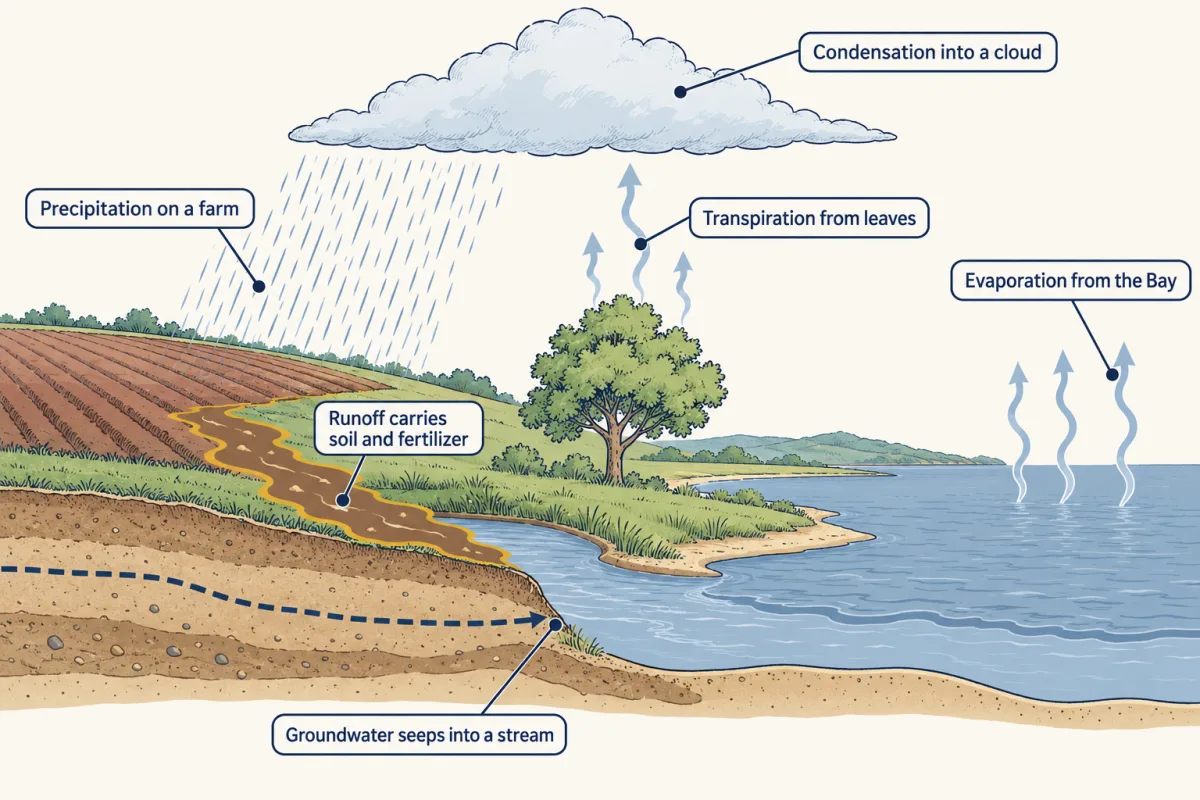
The water cycle carries things: rain on a field can wash soil and fertilizer into a river that flows to the Bay. AI-generated illustration -
Explain: nitrogen needs microbial handoffs
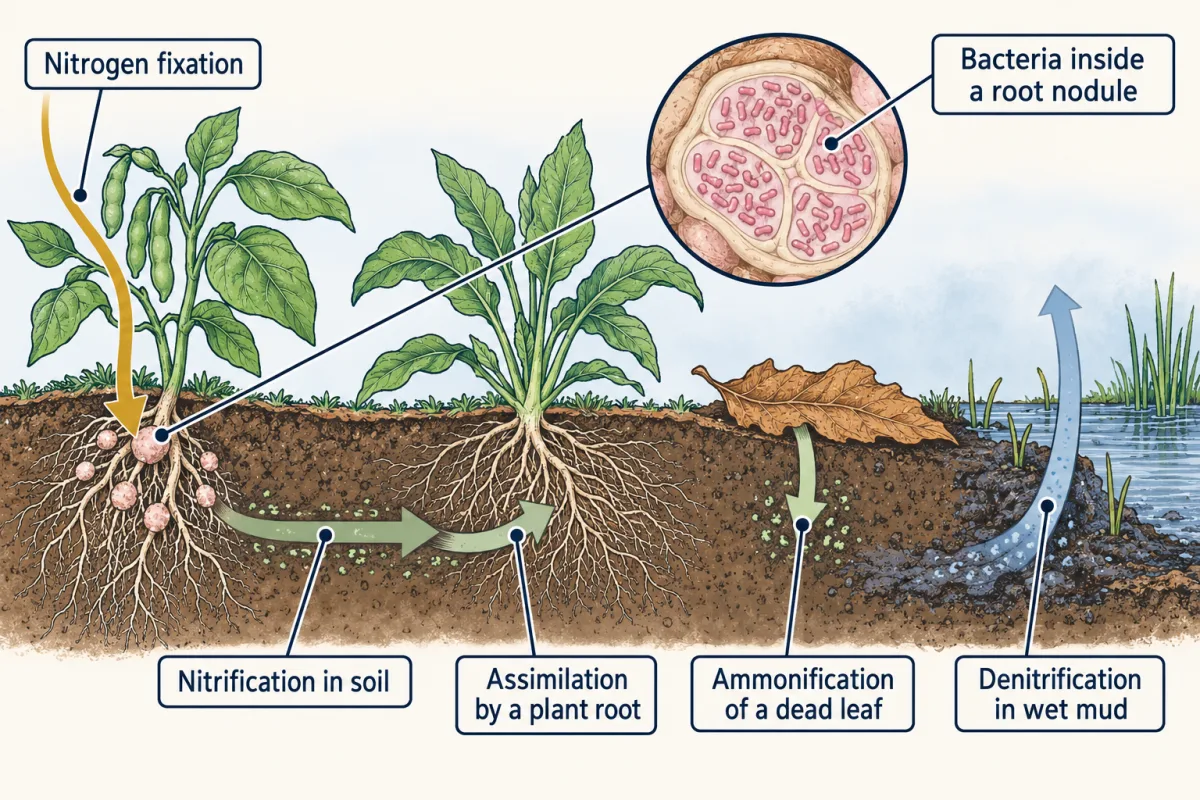
The nitrogen cycle in one field: microbes in root nodules, soil and wet mud do the steps that plants cannot. AI-generated illustration -
Elaborate: what the records show
-
Evaluate: check your thinking
-
Going deeper: routes and rates
Where this lesson fits
Before thisReview first
- Capturing SunlightThis course · Lesson 4
You need to know how plants turn carbon dioxide and water into sugar to follow how carbon enters living things.
- Respiration and ATPThis course · Lesson 5
You need cellular respiration from there to see how cells return carbon dioxide to the air.
After thisStudy next
- The Chesapeake Under PressureThis course · Lesson 33
It uses nitrogen runoff and its handoffs to explain how field fertilizer leaves the Bay short of oxygen.
- Succession in VirginiaThis course · Lesson 32
Soil nutrients and decomposition cycles shape how a field recovers, which builds on how matter moves here.
Suggested by an AI model from the lessons themselves, then checked. How we use AI