Life Science · Skim version
Living Together: Symbiosis
Read the full lesson → Skim the whole course →
The guiding idea
How can one gray-green lichen patch on a tree show two different kinds of symbiosis?
Sort symbiosis by what each partner gains or loses.
From the film: One Patch, Two Relationships
- Sort symbiosis by what each partner gains or loses.
- In mutualism all partners benefit.
- In commensalism one partner benefits and the other seems unaffected.
- In parasitism one partner benefits and the other is harmed; a parasite usually feeds for days or longer without killing its host.
From the film: Does the Fungus Help?
- Sort symbiosis by what each partner gains or loses.
- Compare plants with and without the fungus under the same conditions.
- Dry mass gives evidence about plant growth, not every possible effect.
- Plants with the fungus had more mean shoot mass at every water level, but the smallest gap could be due to chance.
- A result supports a claim only within the conditions tested.
-
Explore: test pairs of species
-
What the names mean
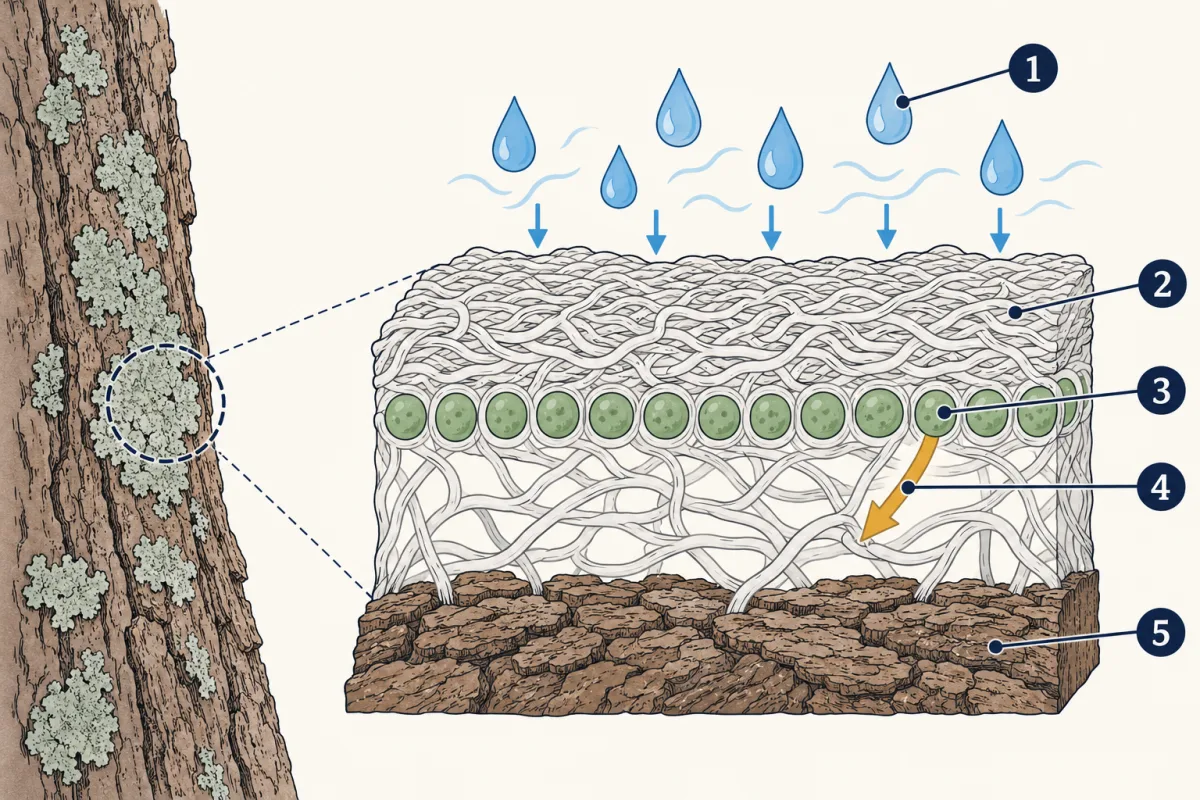
- rain and water from the air
- fungus threads
- green alga cells
- sugar
- tree bark
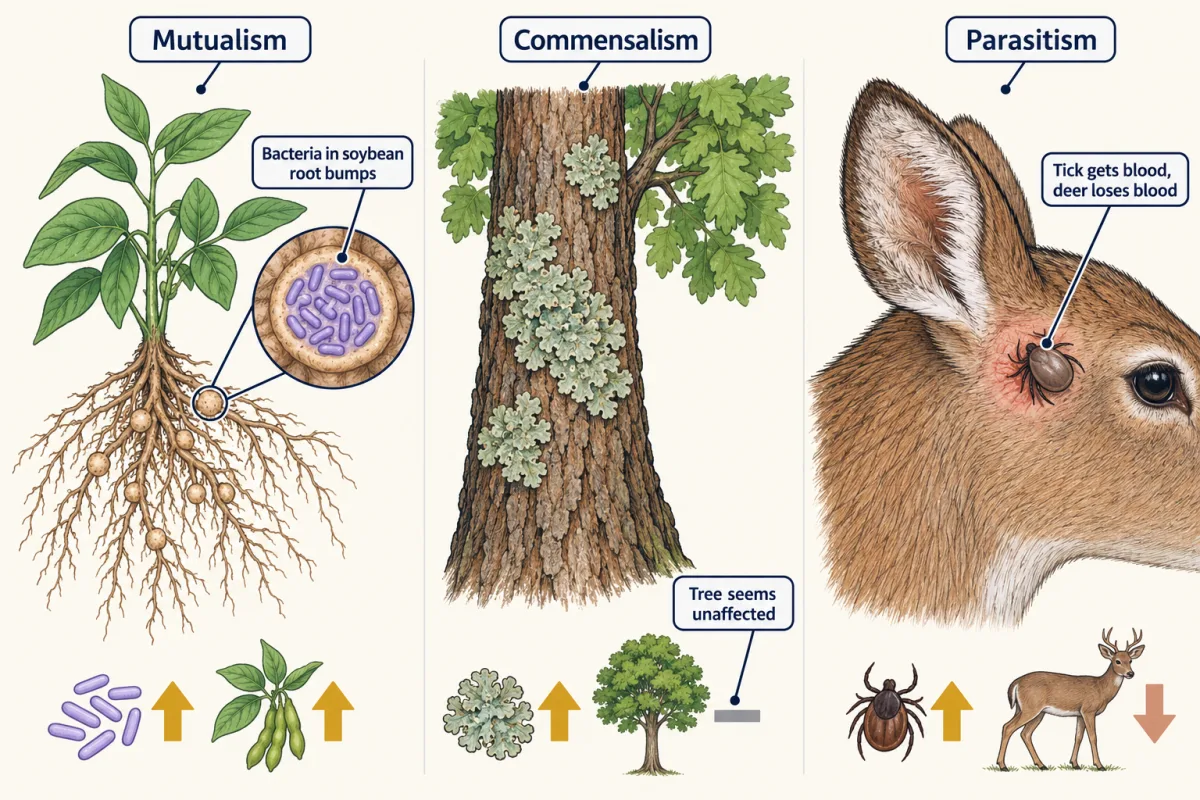
Mutualism helps both partners, commensalism helps one without affecting the other, and parasitism helps one while harming the other. AI-generated illustration -
Why partnerships last
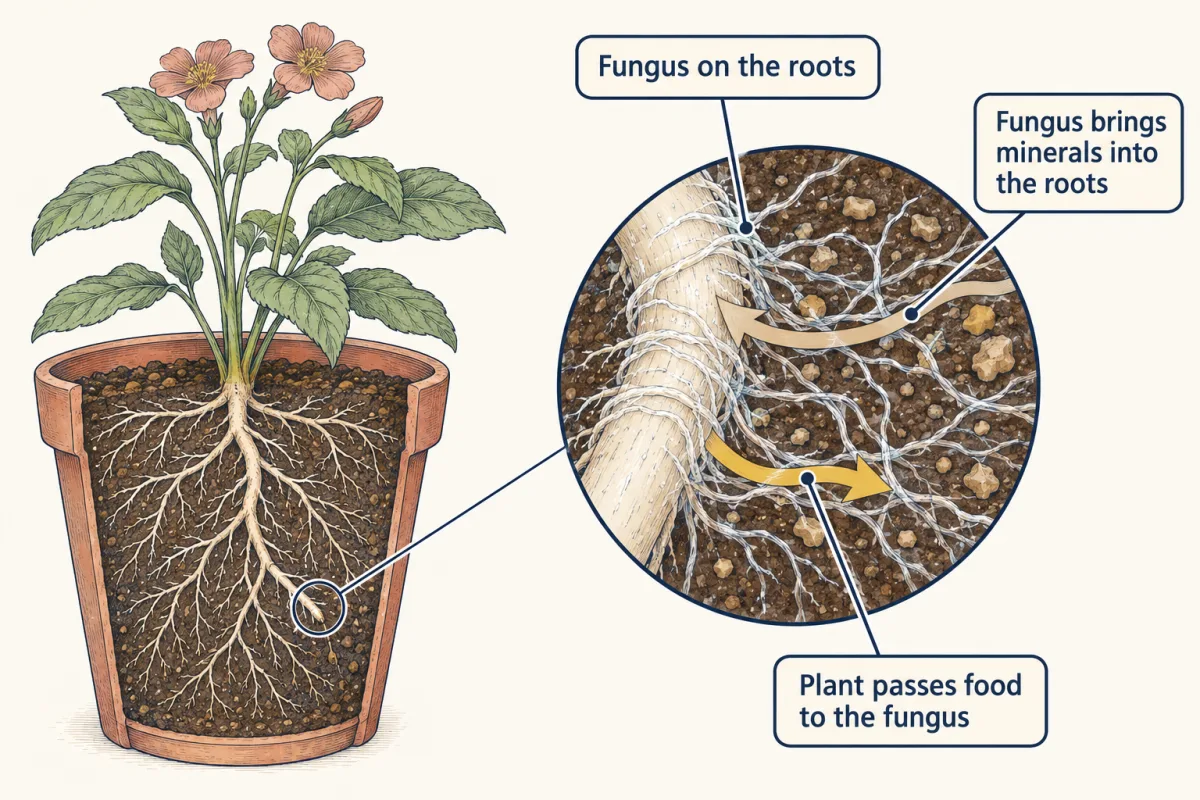
A root fungus can bring minerals to a plant while receiving plant-made food. AI-generated illustration -
Evidence: does a root fungus help a plant grow?
-
Going deeper: when the simple model needs refining
-
Check your thinking
Where this lesson fits
Before thisReview first
- Producers, Consumers and DecomposersThis course · Lesson 13
You need to know how living things get food to see what each partner gains in a partnership.
- Predators and PreyThis course · Lesson 16
The lesson sets a parasite beside a predator, so you need to know how a predator differs by killing prey.
After thisStudy next
- Habitat and NicheThis course · Lesson 19
It builds on how species share a place, using what each species gains from living near others.
Elsewhere on the siteFilms, simulations and method films in other courses
- Switch off a microbe groupSimulation · Biology
Switching a microbe group off shows what the plant loses when its bacterial partner is gone.
Suggested by an AI model from the lessons themselves, then checked. How we use AI