Biology · Skim version
Evidence for Evolution
Read the full lesson → Skim the whole course →
The guiding idea
If whales live their whole lives in water, why do some fossil whales have legs, and why do living whales still carry small hip bones?
Independent evidence that agrees strengthens an explanation of common descent.
From the film: How Rocks Put Fossils in Order
- In an undisturbed stack, lower rock layers formed before higher layers.
- Radioactive dating can add ages in years to a relative rock order.
- Dated volcanic layers above and below a fossil bracket its age but do not give it exactly.
- The fossil record has gaps because most living things never fossilize.
- Independent evidence that agrees strengthens an explanation of common descent.
From the film: Four Tests of Whale Ancestry
- Shared DNA insertions group whales with hippos among the even-toed hoofed mammals.
- Living structures and embryos can preserve evidence of shared ancestry.
- Vestigial does not mean useless: a reduced inherited structure can keep a job.
- Living relatives share ancestors; one did not become the other.
- Independent evidence that agrees strengthens an explanation of common descent.
-
Explore: stack rock layers and count DNA differences
-
Use rock order, then test its limits
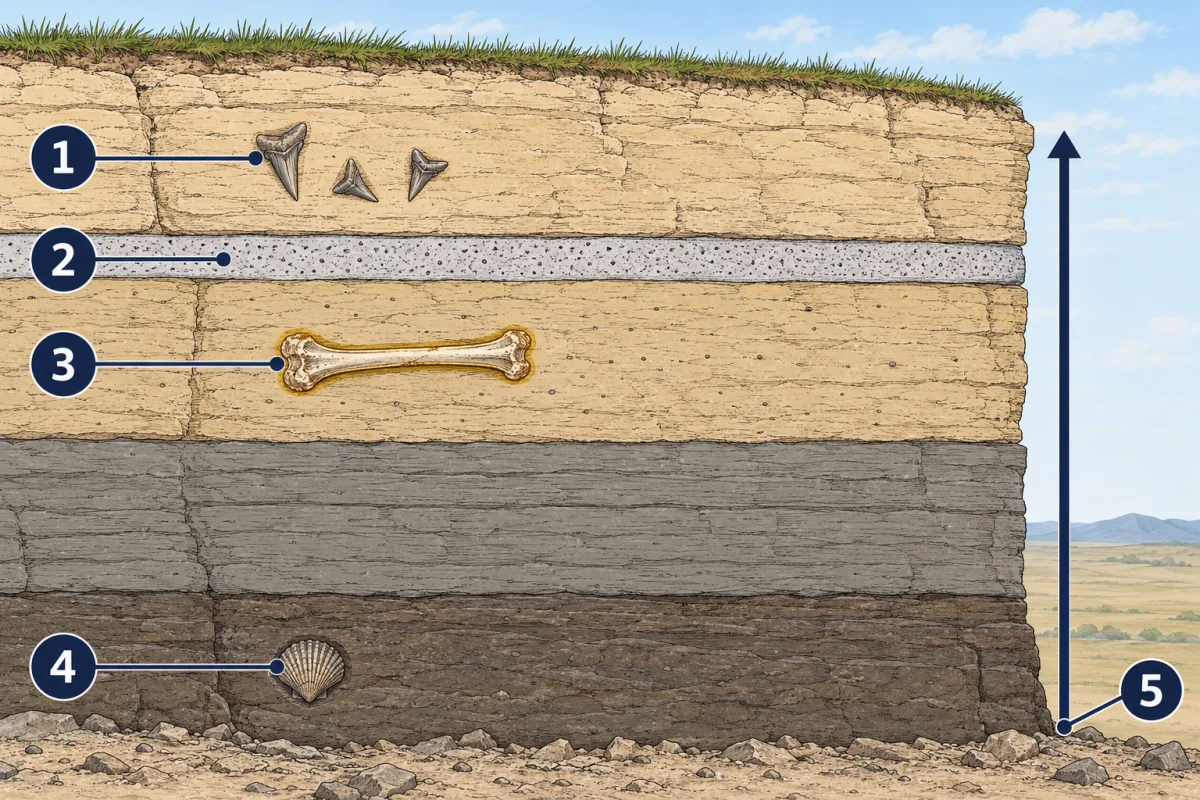
- top layer with shark teeth
- volcanic ash layer
- fossil whale bone
- oldest bottom layer
- older to younger
-
What a DNA percentage does—and does not—measure
-
What the other evidence can and cannot show
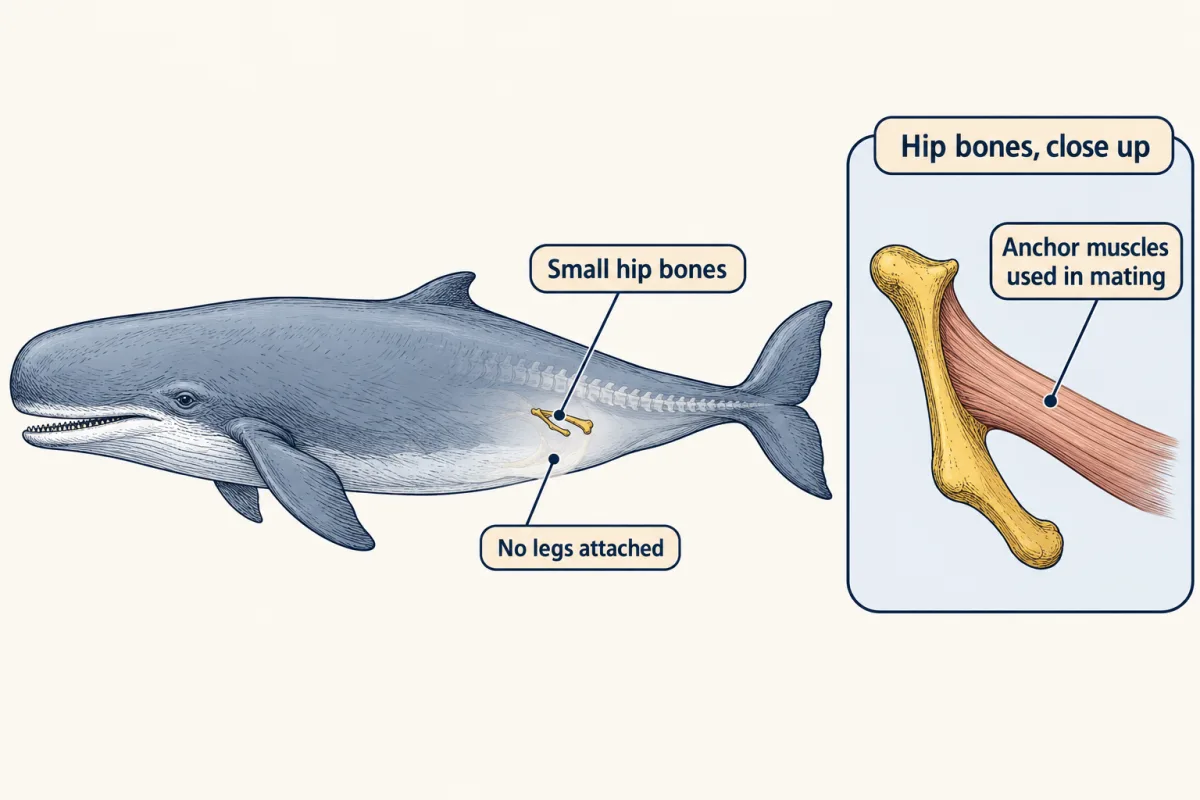
A vestigial structure: living whales carry small hip bones that hold up no legs, yet in males they still anchor muscles used in mating. AI-generated illustration 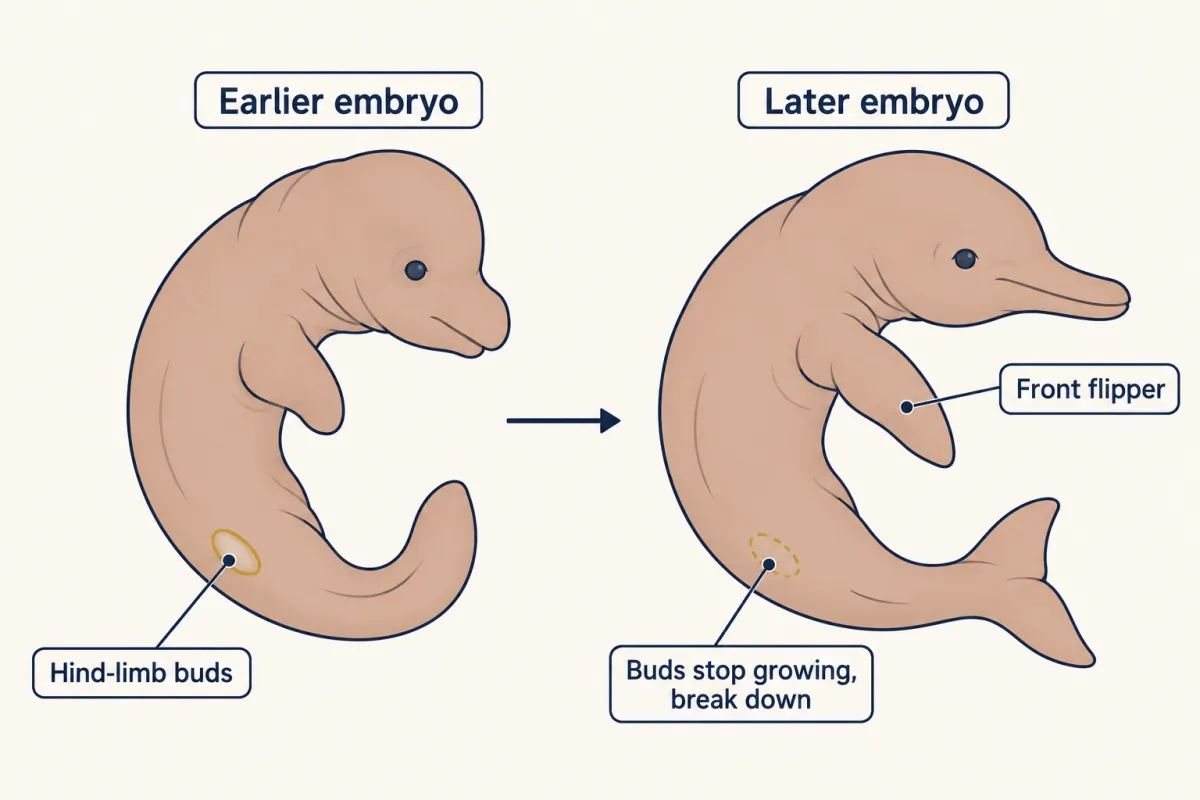
Spotted dolphin embryos start hind-limb buds, then the buds stop growing and break down. The embryo is not replaying its ancestors; it starts a limb and then stops. AI-generated illustration -
Elaborate: read DNA comparisons and fossil ages
-
Evaluate: check your thinking
-
Going deeper
Where this lesson fits
Before thisReview first
- DNA: Structure and CopyingThis course · Lesson 16
You need to know DNA is a sequence of bases that gets copied, to follow why DNA differences build up.
- Meiosis and VariationThis course · Lesson 19
You need to know where inherited variation comes from before reading DNA differences as a record of descent.
After thisStudy next
- Natural Selection and New SpeciesThis course · Lesson 28
It uses the shared-ancestry history from this lesson to explain how change happens and how new species split off.
- Variation and SurvivalThis course · Lesson 27
It explains the process that produced the changes in the lineages the fossils and DNA record.
Elsewhere on the siteFilms, simulations and method films in other courses
- Radiometric datingMethod film
The lesson's ages in years for fossil layers come from radioactive decay of parent atoms into daughters.
- Molecular clock datingMethod film
Counting DNA differences between species can be turned into dates for when lineages split.
Suggested by an AI model from the lessons themselves, then checked. How we use AI