Biology · Skim version
The Chesapeake Under Pressure
Read the full lesson → Skim the whole course →
The guiding idea
How can fertilizer spread on a field far upstream leave crabs and fish short of oxygen at the bottom of the Chesapeake Bay?
Extra nutrients feed algae; bacteria use oxygen while poor mixing limits replacement; effective fixes cut nutrients first, rebuild habitat, and track recovery over time.
From the film: Where the Bay's Oxygen Goes
- Extra nutrients feed algae; bacteria use oxygen while poor mixing limits replacement.
- Runoff can carry nitrogen and phosphorus from a watershed into the Bay.
- Bacteria use dissolved oxygen while decomposing dead algae.
- Summer layering slows the replacement of oxygen in deep water.
From the film: Design a Fix That Can Be Tested
- Effective fixes cut nutrients first, rebuild habitat, and track recovery over time.
- Criteria say what a plan must achieve; constraints limit the plan.
- Buffers, cover crops and wastewater upgrades can reduce nutrient inputs.
- Oyster reefs rebuild habitat but do not replace cutting nutrients.
-
From a watershed to bottom water
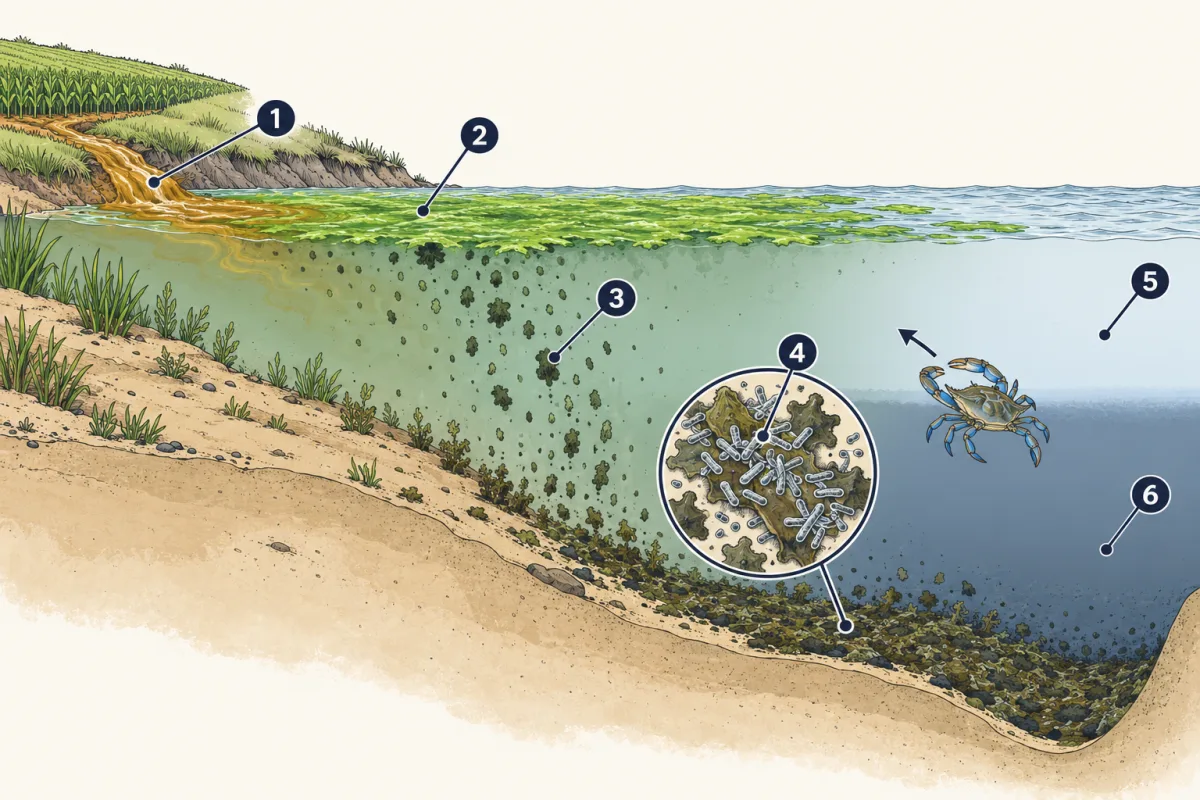
- runoff
- algal bloom
- dead algae
- bacteria
- fresh river water
- hypoxia
-
People and nature both change ecosystems
-
Fixing a watershed by design
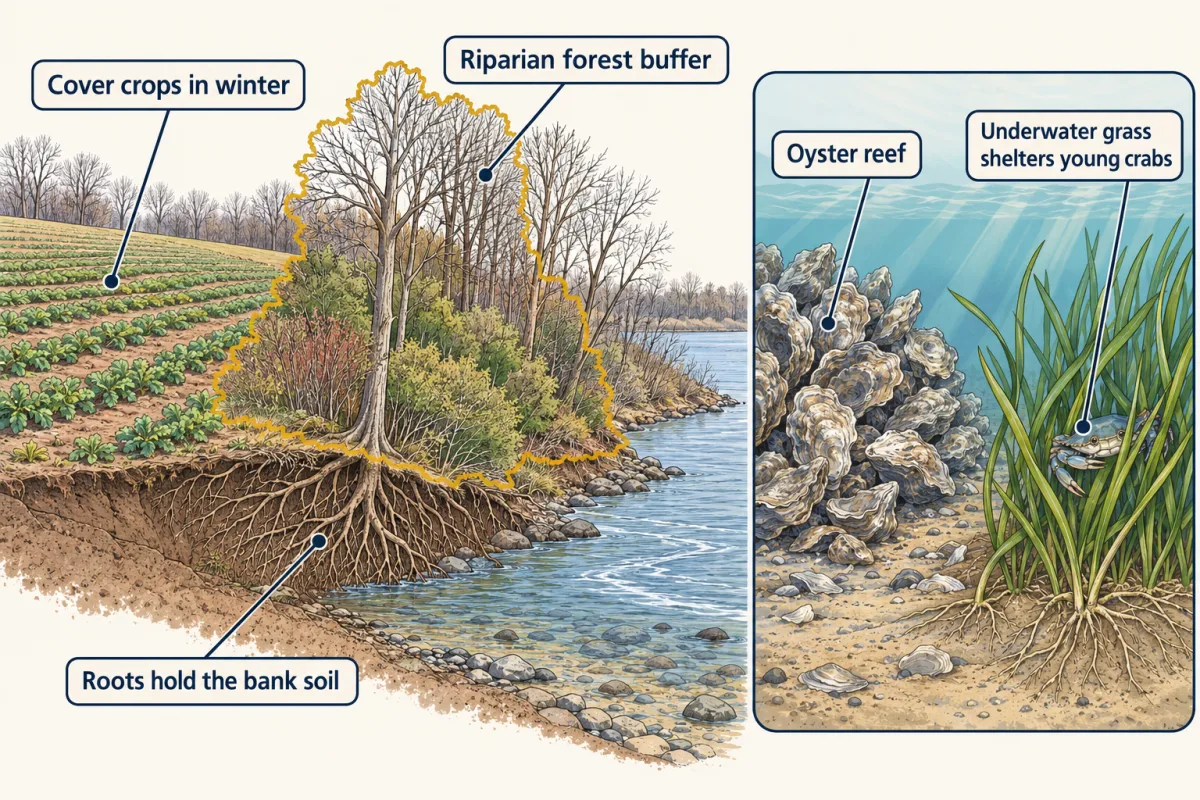
Cover crops and a forest buffer hold soil and nutrients on land, while oyster reefs and underwater grass add habitat; reefs do not replace cutting nutrients. AI-generated illustration -
Read the Bay’s evidence
-
Going deeper
-
Check your thinking
Where this lesson fits
Before thisReview first
- Matter CyclesThis course · Lesson 31
You need how nitrogen and other matter move from land to water to follow nutrients into the Bay.
- Respiration and ATPThis course · Lesson 5
Bacteria use oxygen to break down dead algae, which is the respiration idea behind low-oxygen water.
- Populations and Carrying CapacityThis course · Lesson 29
The Bay's blue crab numbers and limits help you see how conditions cap how much life a place supports.
Elsewhere on the siteFilms, simulations and method films in other courses
- Extra Nutrients, Less Deep OxygenFilm · Life Science
It shows the same chain of extra nutrients, algae bloom and low deep-water oxygen.
- Ecosystem mass and energy budgetsMethod film
This lesson's watershed model tracks nitrogen inputs and outputs, which is how ecosystem budgets work.
Suggested by an AI model from the lessons themselves, then checked. How we use AI