Biology · Skim version
Beyond Dominant and Recessive
Read the full lesson → Skim the whole course →
The guiding idea
Why does a red snapdragon crossed with a white one give pink flowers, while a red Shorthorn bred with a white one gives a calf with red and white hairs side by side?
Alleles remain separate, and each genetic tool reveals a different scale.
From the film: One Cross, Three Patterns
- Alleles remain separate; the pattern sets only how each pair shows.
- In incomplete dominance the heterozygote shows an in-between phenotype, as in pink snapdragons.
- In codominance the heterozygote shows the effects of both alleles, as in roan Shorthorn cattle.
- When every genotype has its own phenotype, the genotype and phenotype ratios match.
- The ABO gene has three common alleles, and each person carries two.
From the film: From Families to Chromosomes
- Each genetic tool reveals a different scale: cross, family or whole chromosome.
- A pedigree tests inheritance models against people across generations.
- Pedigree clues are not proof, especially in a small family.
- A karyotype shows whole chromosomes and large changes, not single alleles.
-
Explore: switch one cross between three patterns
-
Explain: when neither allele hides the other
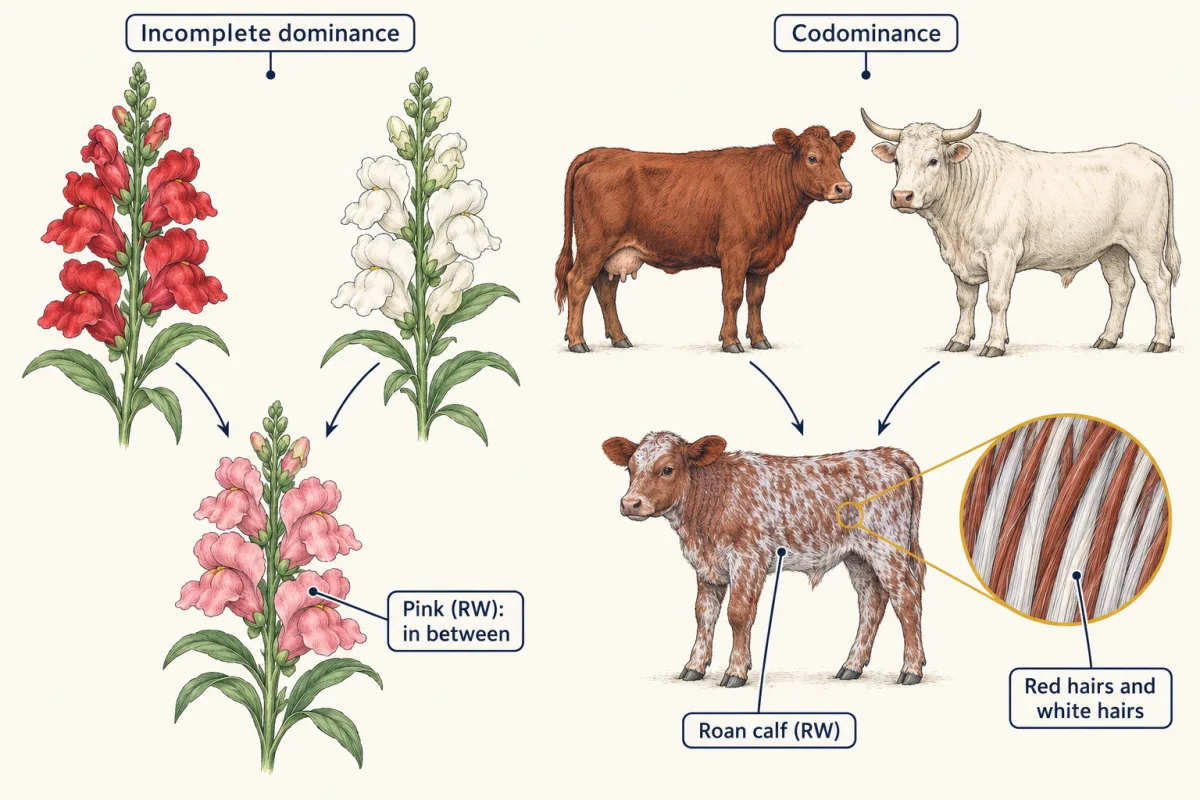
Two heterozygotes: the pink snapdragon is in between its parents, while the roan calf shows both, hair by hair. In both, the alleles stay separate. AI-generated illustration 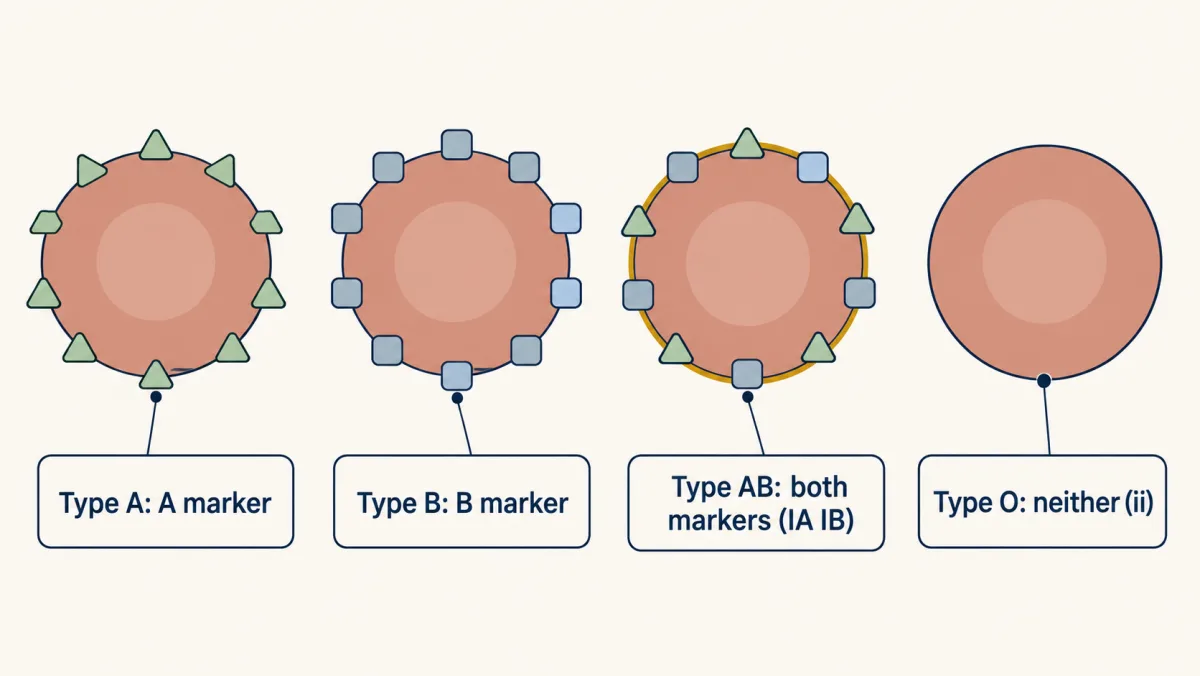
ABO blood types as markers on red blood cells: type AB carries both, because the IA and IB alleles are codominant. AI-generated illustration -
Explain: reading a family pedigree
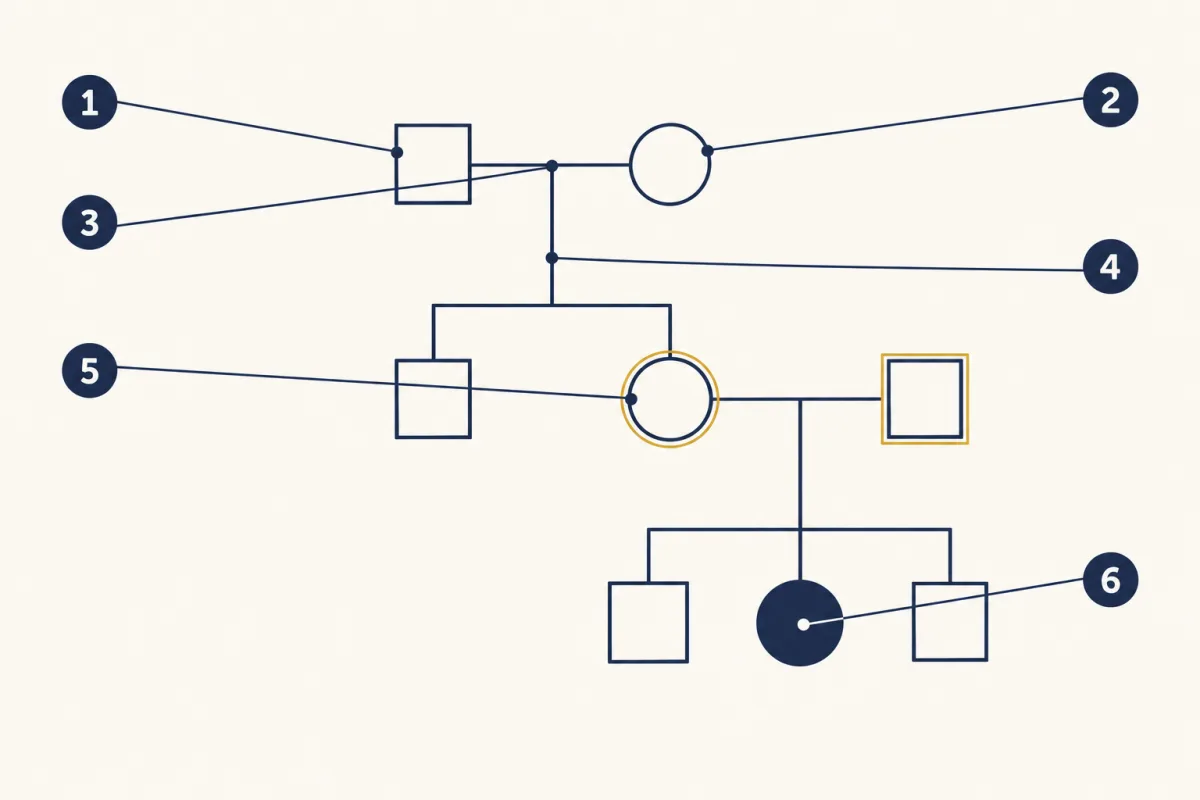
- square
- circle
- horizontal line
- vertical line
- carrier
- shaded symbol
-
Explain: a karyotype counts whole chromosomes
-
Elaborate: model predictions and real blood-type counts
-
Evaluate: check your thinking
Where this lesson fits
Before thisReview first
- Mendel and Punnett SquaresThis course · Lesson 20
You need its Punnett squares and the ideas of dominant and recessive alleles to see how these crosses differ.
- Meiosis and VariationThis course · Lesson 19
Each parent passes on one allele of each pair through sex cells, which is why alleles stay separate here.
After thisStudy next
- Engineering GenesThis course · Lesson 22
It moves one chosen gene into another organism, using the idea that genes are the same units in every cell.
Elsewhere on the siteFilms, simulations and method films in other courses
- Pedigree analysisMethod film
This method film shows how to read carrier risk and inheritance from family trees, as the lesson's pedigree section does.
Suggested by an AI model from the lessons themselves, then checked. How we use AI