How Much a Drug Changes a Step
Read the transcript of “How Much a Drug Changes a Step”
Film transcript: How Much a Drug Changes a Step
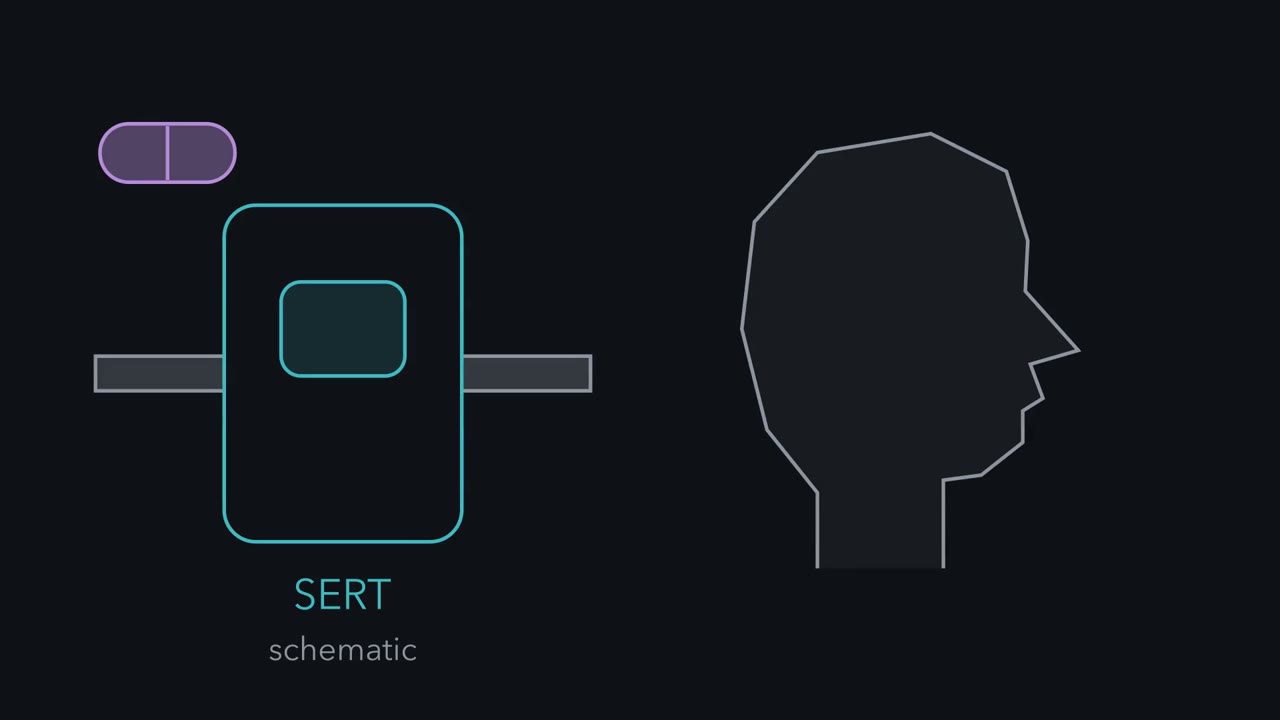
A drug that fills nine in ten of its targets looks nearly done. Is it? Take paroxetine. It blocks the transporter that clears serotonin. Picture the transporters as a field of dots. As the drug's concentration rises, the dots fill. Half fill at a very low concentration. That concentration is the dissociation constant, KD. Nine in ten takes nine times that concentration. Ninety-nine in a hundred takes eleven times the 90% % concentration. The curve flattens at the top, so the last few sites cost far more drug. Do those last few sites matter? Build a simple model to find out. Suppose the transporter is the only way out, and is far from busy. Block half, and serotonin lingers twice as long.
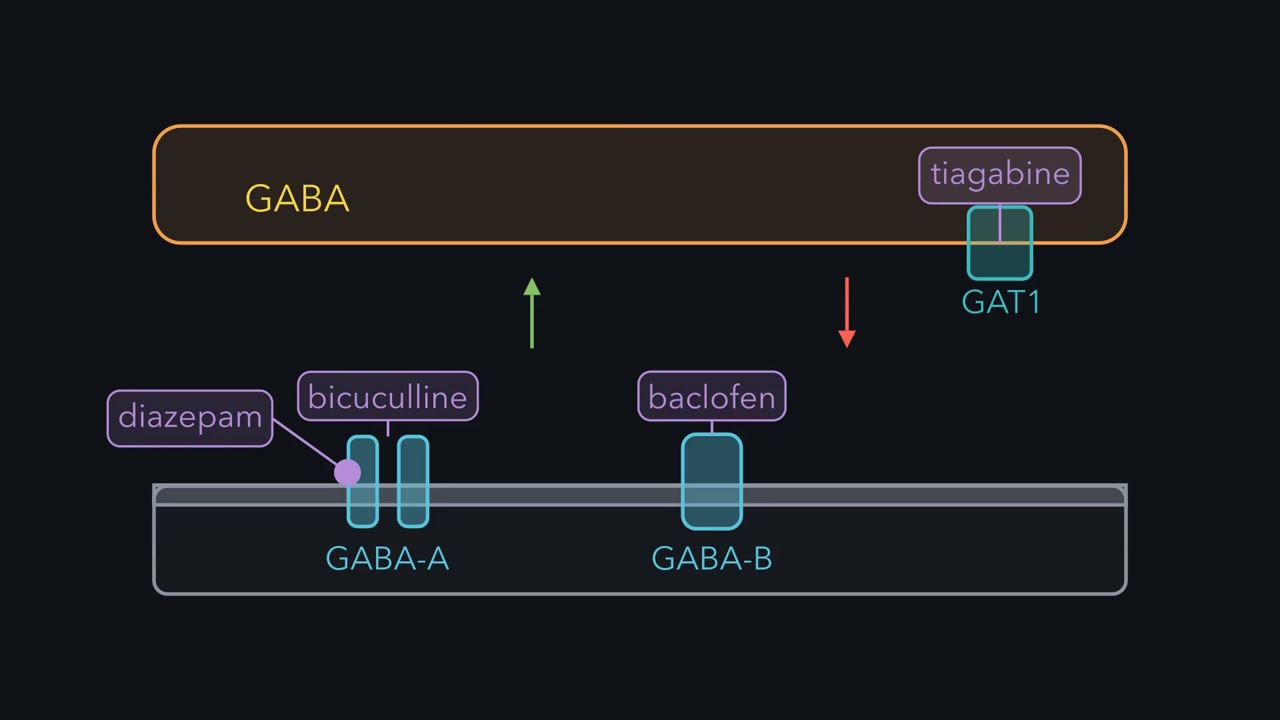
Block nine in ten, and it lingers ten times as long. Block ninety-nine in a hundred, and it lingers about a hundred times as long. That stretch is the factor 1 + L/K. L is the free drug concentration. K is the drug's half-fill concentration. Real tissue has other routes out. They make all three numbers smaller, and limit the stretch most when the block is nearly complete. The same factor appears at a receptor. Picture GABA's dose-response curve. A competitive antagonist slides the curve right. You need more GABA, by that same factor, but you still reach the top. Diazepam, a modulator at a separate site, slides the curve to the left instead. Keep adding bicuculline.
Then, separately, keep adding diazepam. What happens to each curve? The antagonist keeps pushing the curve right, for as long as you add more. The modulator stops. Once its own sites are full, it can do no more. That is its ceiling. One warning. This rule is for blockers that compete, not for agonists. An agonist is different. With spare receptors, filling a tenth of them can give about half the full effect. The takeaway: if the transporter is the only way out, the last few percent blocked stretch the signal most.
Four drugs that act on GABA push inhibition in opposite directions. What decides which way a drug pushes?
Continue in the lesson: Transmitter Systems and Drugs →
2:35 · Free, with captions and a transcript. The lesson has the full text, the questions and the sources.
More films from this lesson
How this film was made. Narration: an AI narrator voice (Kokoro, af_heart) reading narration written from this lesson's text. Animation: AI-generated in code (Manim) by Claude, a schematic with no drawn molecular structures. Captions come from the narration script. See something wrong? Report it.