What Let the Eagles Return?
Read the transcript of “What Let the Eagles Return?”
Film transcript: What Let the Eagles Return?
Why did Virginia's nesting eagle map change so dramatically? One survey map begins with only a few gold nest markers. A later, larger search is crowded with them. The searches were not identical, so the picture needs a careful explanation. The difference asks what changed. Start with the pressure on reproduction.
DDT was a pesticide used to kill pests. It breaks down into DDE. That related chemical can make bird eggshells thin. Thin shells often broke while the parents sat on them. Other eggs failed to hatch. Fewer chicks joined the next generation. DDT was not the only problem. People destroyed nesting habitat, and some shot eagles illegally. The causes differed, but they pushed the same population downward. Fewer young survived, and fewer safe places remained for nesting pairs. Several pressures could act together. Now remove the pesticide pressure and protect nesting forest. What should happen next? Will occupied nests jump immediately, or rise over many breeding seasons?
Hold your answer while the shoreline stays in view. Picture the time needed. The count should not jump at once. The United States banned most uses of DDT. Laws protected eagles and their nests. People also protected nesting places. Together, those actions reduced known harms instead of creating adult eagles instantly. Protection changed the conditions for survival. Recovery still takes time. A pair may raise young, but young eagles need several years before breeding. Some eagles also die or meet new dangers. The pathway is possible, yet each loop from nest to new pair takes time. That delay shapes the curve. Here is the rule. Remove the harm, protect what remains, and help ecosystems recover over time. In this case, pesticide pressure was reduced and nesting places had protection. The population could grow through many rounds of reproduction.
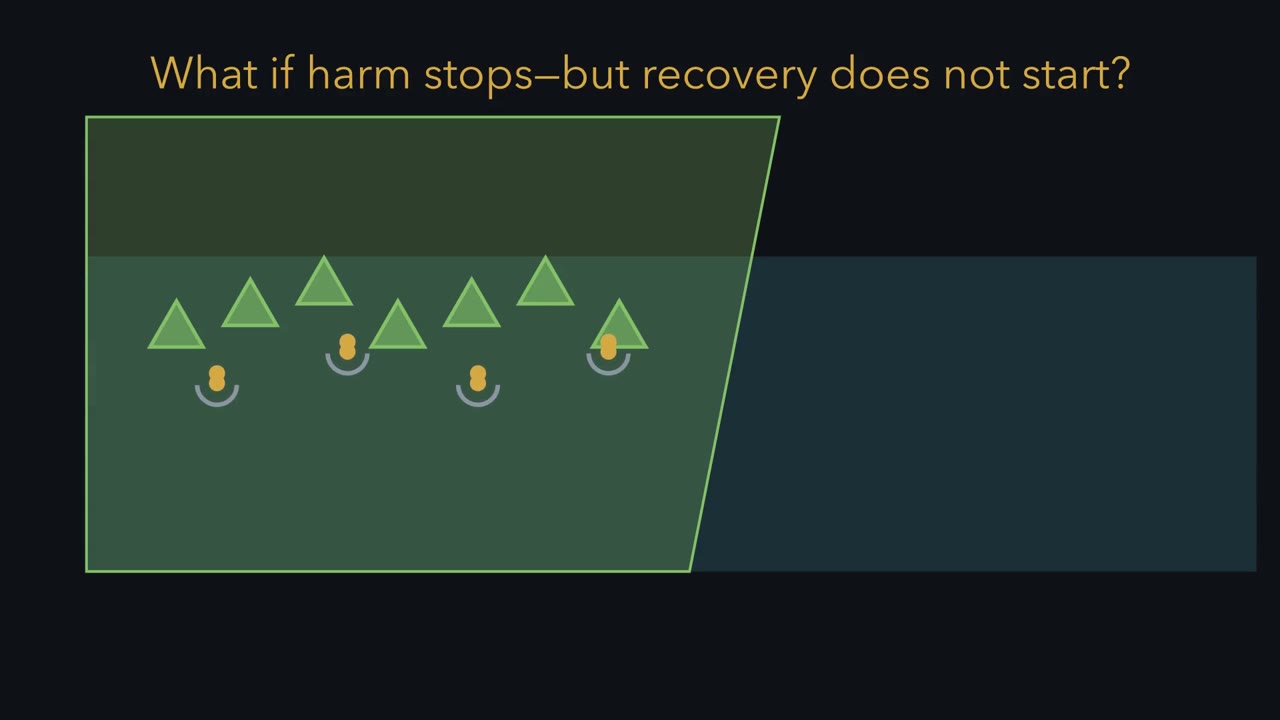
Recovery depended on reproduction across many seasons. The survey counts rose over decades, with a small dip along the way. That pattern fits recovery, but it does not prove one action caused every added pair. Search coverage, weather, habitat, and several protections all matter when scientists interpret counts. A count is evidence, not a complete cause map. The eagle story shows a population responding after pressures eased. An entire habitat can face another barrier. Even when conditions improve, the organisms needed to restart it may be missing. That is where restoration enters the story. The next film follows it.
How did Virginia go from 33 pairs of nesting bald eagles in 1977 to more than 1,000 in 2016?
Continue in the lesson: Helping Ecosystems Recover →
3:30 · Free, with captions and a transcript. The lesson has the full text, the questions and the sources.
More films from this lesson
How this film was made. Narration: written from this lesson's text and read by an AI narrator voice (Kokoro, af_heart). Animation: AI-generated in code (Manim) by Claude, a schematic with no drawn molecular structures. Captions come from the narration script. See something wrong? Report it.