Why Do Sprouting Peas Get Warm?
Read the transcript of “Why Do Sprouting Peas Get Warm?”
Film transcript: Why Do Sprouting Peas Get Warm?
Why can sprouting peas warm a thermos, while boiled peas cannot? Peas have no muscles. Both thermoses begin near room temperature. Only one contains living cells. Watch the warmth rise as we follow stored food energy through one pea cell. Inside the sprouting pea, food molecules store energy. The fuel we will follow is glucose. Glucose is a sugar that stores energy in its molecules.
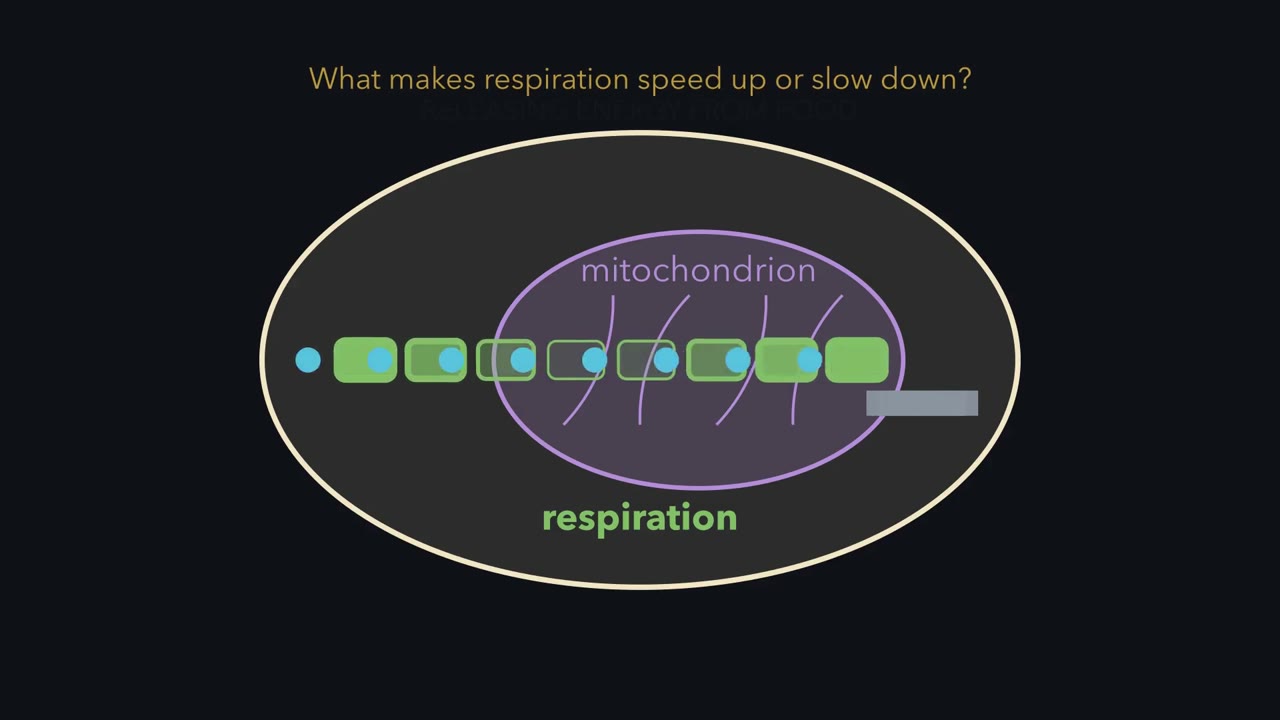
Plants make glucose by photosynthesis. Cells must release stored energy before using it. Cellular respiration releases that energy. Glucose and oxygen enter the pathway. Carbon dioxide and water leave, along with released energy. Oxygen is a gas cells use. Carbon dioxide is a gas they give off. Respiration happens in many small steps, not one burst. The first steps occur in the cytoplasm. Most of the work follows inside mitochondria. Plant and animal cells both have these small organelles. Fungus cells usually have them too. Do not confuse mitochondria with chloroplasts. Chloroplasts let a plant make glucose by photosynthesis. Mitochondria let plant and animal cells release stored food energy.
A plant cell can contain both kinds of organelle. The pathway has released stored energy. Where will that energy go now? Will it power cell work, leave as warmth, or do both? Make your prediction. It does both. One branch powers cell work, such as building new cell parts. Another becomes thermal energy, the motion of particles we feel as warmth. Some released energy always leaves along this thermal branch. The cell did not make new energy. It changed energy already stored in glucose. The thermos slows the orange thermal energy from escaping. As living pea cells keep respiring, their thermometer can rise. Breathing is different from cellular respiration.
Breathing moves air into and out of lungs. It brings oxygen in and carries carbon dioxide out. Respiration happens inside cells, including cells in organisms without lungs. Now compare the thermoses again. Sprouting peas contain living cells that keep releasing thermal energy. Boiling killed the cells in the control peas. After those peas cool, they do not respire, so their thermometer stays near the room. Respiration releases stored food energy for cell work and as thermal energy. That explains the warmth without inventing energy. Next, temperature, oxygen, and sugar will change its rate around the same pathway.
Why do sprouting peas in a thermos get warmer than the room?
Continue in the lesson: Releasing Energy from Food →
3:24 · Free, with captions and a transcript. The lesson has the full text, the questions and the sources.
More films from this lesson
How this film was made. Narration: written from this lesson's text and read by an AI narrator voice (Kokoro, af_heart). Animation: AI-generated in code (Manim) by Claude, a schematic with no drawn molecular structures. Captions come from the narration script. See something wrong? Report it.