When the Reading Changes
Read the transcript of “When the Reading Changes”
Film transcript: When the Reading Changes
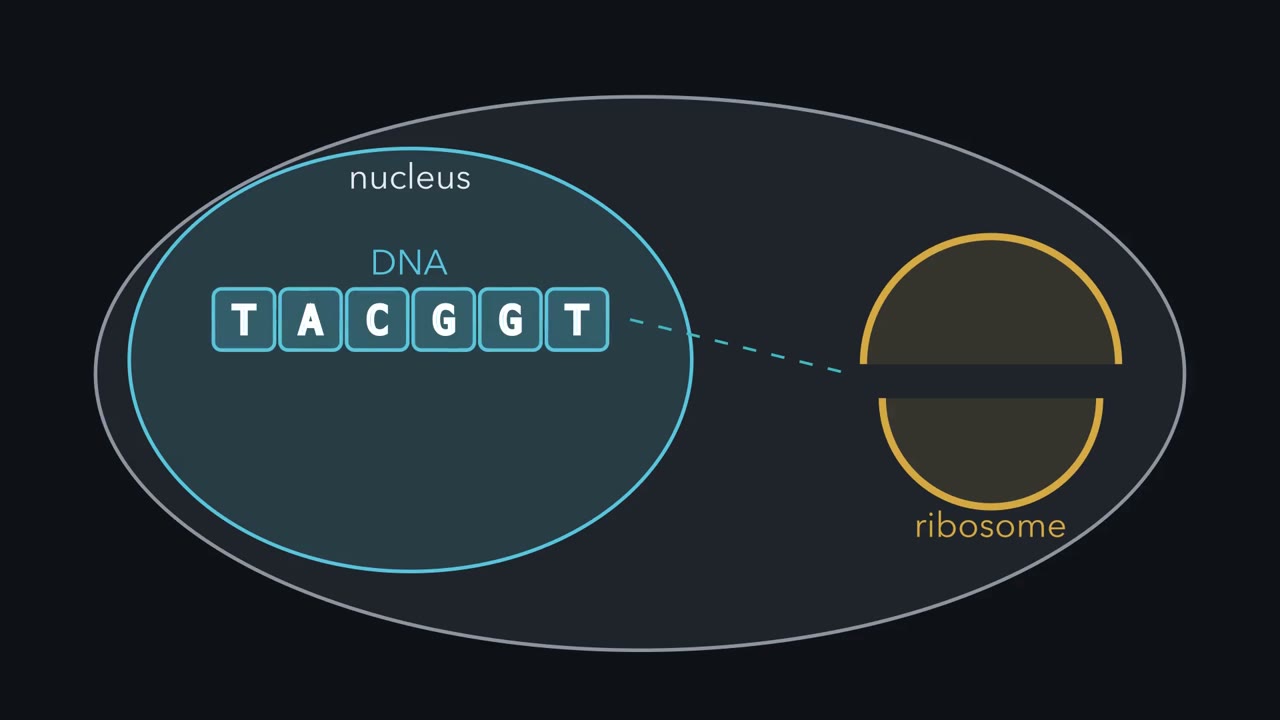
The first film followed blue DNA into green messenger RNA and a red amino acid chain. If a DNA letter changes, how much of that chain changes? Keep watching the same blocks and reading window. A mutation is a change in DNA base order. A substitution swaps a base. Because several codons can mean the same amino acid, a swap can leave the chain unchanged. Another swap can change an amino acid or create an early stop. An insertion adds bases, and a deletion removes them. The ribosome does not see spaces between codons. It starts at its reading point and groups the message from there. Adding or removing one base inside the coding part shifts that grouping.
This is called a frameshift. Predict what happens when the waiting block enters near the start. Will only its codon change, or will later codons change too? Follow the dividers, not the colours. The inserted block shifts every divider after it. The gold ribosome now reads new codons from that point. Many later amino acids can change, and an early stop may appear. Removing a base can shift the frame in the same way. Now compare a quieter substitution.
Messenger codon GAG means glutamic acid. Change its last letter, making GAA, and it still means glutamic acid. The DNA changed, but this amino acid chain did not. This outcome is called a silent mutation. Now follow the sickle substitution.
The usual coding DNA reads GAG. The sickle allele reads GTG. Messenger RNA therefore reads GUG instead of GAG. The ribosome places valine instead of glutamic acid. That changed spot can alter hemoglobin's behaviour. When oxygen is low, sickle hemoglobin can join into stiff rods. The rods can bend a soft red blood cell. A letter change has reached a whole cell. A changed letter does not guarantee a changed trait. Some substitutions keep the same amino acid. Protein effects also depend on which copies a person has and the environment. Here is the reading rule to keep. In coding DNA, swaps change one codon; frameshifts change later codons.
How can changing one letter out of hundreds in a gene make red blood cells bend into stiff sickle shapes?
Continue in the lesson: From DNA to Protein →
3:00 · Free, with captions and a transcript. The lesson has the full text, the questions and the sources.
More films from this lesson
How this film was made. Narration: an AI narrator voice (Kokoro, af_heart) reading narration written from this lesson's text. Animation: AI-generated in code (Manim) by Claude, a schematic with no drawn molecular structures. Captions come from the narration script. See something wrong? Report it.