Weighing the Drain
Read the transcript of “Weighing the Drain”
Film transcript: Weighing the Drain
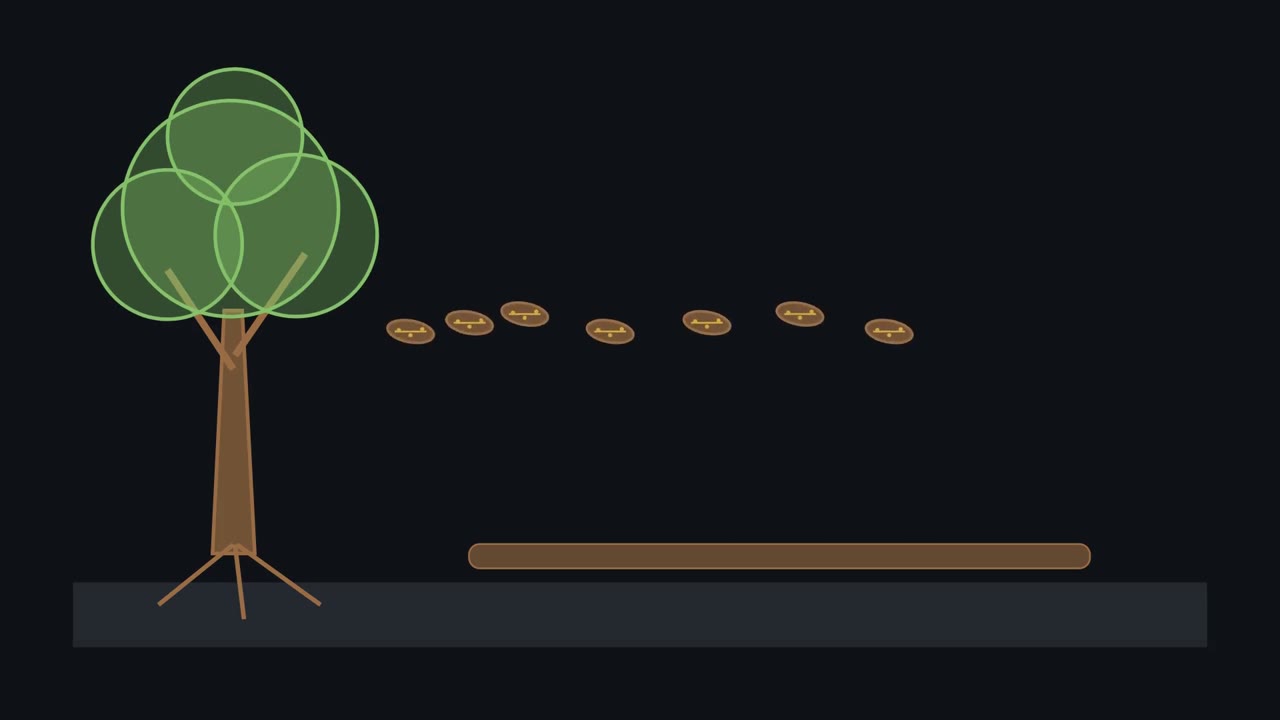
The first film showed decomposers draining the leaf pile. But how fast does a real forest's drain run? How could you measure matter you cannot see leaving? Researchers in West Virginia found a way. In October 2011, they worked in the Weimer Run watershed, near the town of Davis. They sealed dried yellow birch leaves in mesh bags, and weighed the leaves first. Then they set the bags on the forest floor, at three heights above the stream. Five times over two years, they brought some bags back. Different bags came back each time. They dried the leaves and weighed them again. Why dry the leaves before weighing?
Wet leaves are heavier. Drying them means that water in the leaves does not change the result. Let's follow the higher site. The graph shows the percent of the starting mass left. Every bag started at 100 percent. Each later dot is an average of 8 or 9 bags. After one month, about 72 percent was left. That first drop was fast. Part of it was probably rain washing sugars and other substances out of the fresh leaves. This is called leaching. It does not need decomposers. Now jump to 12 months. About 60 percent of the mass was left. So about 40 percent was gone in one year. At 24 months, a little under half was left. The bags were still losing mass, but more slowly than in the first year.
One more thing. The mesh kept earthworms and millipedes out. On an open forest floor, would leaves break down faster or slower than in the bags? Probably faster. Worms and millipedes tear dead leaves into smaller bits. Smaller bits give fungi and bacteria more surface to work on. So the bags probably show the drain running slower than it really does. In these bags, about 40 percent drained away in a year, and about half in two. Suppose a model drain took 40 percent of the whole pile every year. The pile would level off near 2.5 autumns' worth. But these bags lost mass more slowly in year two. So two years cannot tell us how big a real pile gets.
Some early loss was probably leaching, and decomposers did some too. Weighing measures all the loss together. It cannot split decomposers from leaching or bits lost through the mesh. And it shows one kind of leaf in bags, not a whole forest floor. Weighing leaf bags measures how fast leaves lose mass.
Leaves fall in the forest every autumn, so why don’t the old ones just keep piling up?
Continue in the lesson: Producers, Consumers and Decomposers →
3:13 · Free, with captions and a transcript. The lesson has the full text, the questions and the sources.
More films from this lesson
How this film was made. Narration: an AI narrator voice (Kokoro, af_heart) reading narration written from this lesson's text. Animation: AI-generated in code (Manim) by Claude, a schematic with no drawn molecular structures. Captions come from the narration script. See something wrong? Report it.