What the Island's Counts Show
Read the transcript of “What the Island's Counts Show”
Film transcript: What the Island's Counts Show
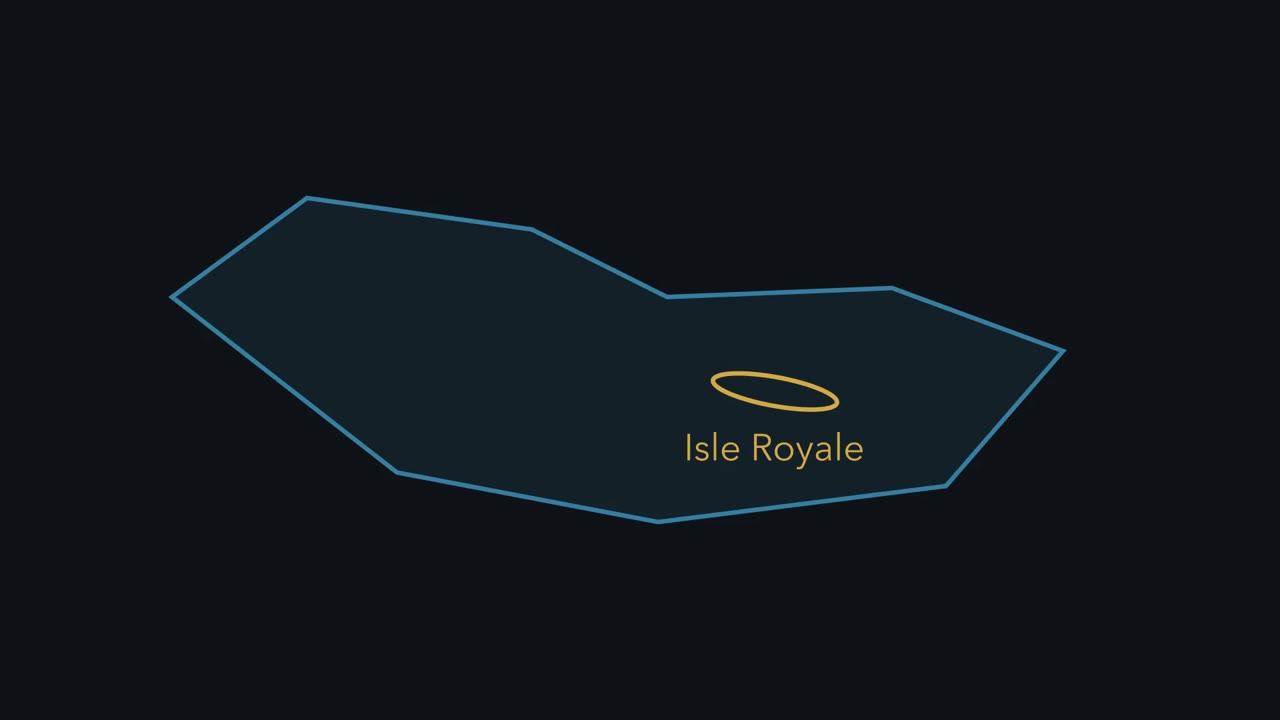
Does the real island follow the rule? The first film used a model island, where wolves usually ran short of food before the moose ran out. Now we check the real counts. Isle Royale is an island in Lake Superior, where wolves hunt moose.
Scientists survey both animals in most winters. Wolves are counted from the air, so the wolf count is close to every wolf. Moose are too many to count one by one. Scientists count them on small squares of land and use those counts to estimate the whole island. So moose numbers are estimates. Here are the counts from many winters. The brown line is the moose. The grey line is the wolves. Some winters have no count. Look at nineteen ninety-five.
The moose line is near its highest point. There are only sixteen wolves. The counter is high, so the wolves had plenty of moose to hunt. Two winters later, the moose had dropped to about five hundred. The wolves had risen to twenty-four. The counter fell, and the wolves now had few moose to hunt. The counts alone do not say why the moose fell. Weather and food can matter too. What we can follow is the counter. So here is a question for you. Only about twenty-one moose for each wolf. What happens to the twenty-four wolves by the next winter? Pause and predict.
By the next winter, there were only fourteen wolves. Hundreds of moose were still alive. That fits the rule from the first film. But be careful. One run of counts can fit the rule. It cannot prove the cause by itself. Now jump to twenty sixteen.
Scientists counted only two wolves on the whole island. They estimated one thousand three hundred moose. The counter shoots way up. With so much food, you might expect more wolves. That did not happen. The last wolves were close relatives. Mating between close relatives is called inbreeding. The wolves carried harmful inherited traits, which added to their health problems. So a shortage of moose was not what held these wolves back. Then people stepped in. In twenty eighteen and twenty nineteen, the Park Service brought nineteen new wolves to the island. So food matters. Few moose for each wolf can mean fewer wolves. But weather, ticks, disease, inbreeding and people moving wolves also change the counts. Food is one limit on wolves, not the only one.
On an island where wolves hunt moose, why haven't the wolves eaten every last moose?
Continue in the lesson: Predators and Prey →
3:12 · Free, with captions and a transcript. The lesson has the full text, the questions and the sources.
More films from this lesson
How this film was made. Narration: an AI narrator voice (Kokoro, af_heart) reading narration written from this lesson's text. Animation: AI-generated in code (Manim) by Claude, a schematic with no drawn molecular structures. Captions come from the narration script. See something wrong? Report it.