Where Does a Plant Add New Body?
Read the transcript of “Where Does a Plant Add New Body?”
Film transcript: Where Does a Plant Add New Body?
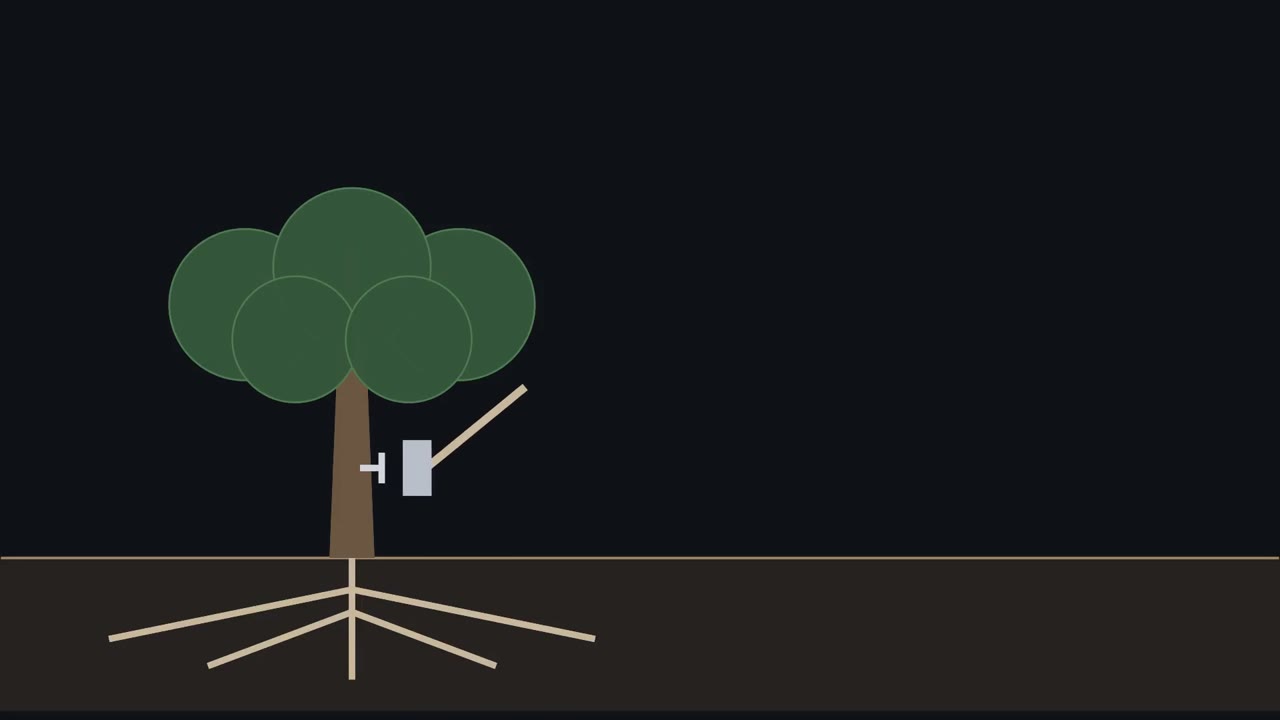
Where on a 300-year-old oak were this spring's new leaves made? The tree is ancient, but this spring's leaves are only months old. The answer is meristems. A meristem is a group of cells that keeps dividing. No adult mammal grows a new limb, but many plants keep their meristems for years. So they keep adding new organs. Apical meristems sit at the tips of growing roots and shoots. Growth from them is called primary growth. It is mainly growth in length. Zoom in on a root tip. A root cap shields the front as it pushes through soil. Just behind the cap, small cells divide. This is the zone of division. A little further back, division tapers off.
Cells lengthen many times over as water fills their vacuoles, the big water sacs inside them. This is the zone of elongation. Further back still, cells stop lengthening. They take on their final types, and root hairs grow out from the surface. This is the zone of maturation. Now follow one lengthwise row of cells, a cell file. New cells leave the meristem at a steady rhythm. Each one stretches, then stops.
Meanwhile the tip keeps moving forward through the soil. Paint ink marks at even spacing along a growing root tip. A day later, which gaps between the marks have widened? Mostly the gaps in the zone of elongation, where cells stretch. In the mature region, where cells have stopped lengthening, the marks stay put. So how fast does the root grow? Count the new cells each file makes per hour. Multiply by the final length each cell reaches. That product is the growth rate. It holds at steady state, when the zones keep their size and every file behaves alike. Now block stretching but leave division alone.
Cells keep coming, yet the tip barely creeps forward. Most of a root's new length comes from stretching, not from dividing. A shoot tip grows the same way, though it has no cap. At each node it adds one or more leaves, with a bud in the angle of each leaf. So a plant's new cells come from its meristems. For a root at steady state, growth equals new cells per file per hour, times their final length.
A 300-year-old oak grows new leaves each spring and usually a new ring of wood each year, yet no adult mammal grows a new limb. How does the oak keep building?
Continue in the lesson: Plant Body and Growth →
2:55 · Free, with captions and a transcript. The lesson has the full text, the questions and the sources.
More films from this lesson
How this film was made. Narration: written from this lesson's text and read by an AI narrator voice (Kokoro, af_heart). Animation: AI-generated in code (Manim) by Claude, a schematic with no drawn molecular structures. Captions come from the narration script. See something wrong? Report it.