When Ecosystems Change Course
Read the transcript of “When Ecosystems Change Course”
Film transcript: When Ecosystems Change Course
The first film followed one change through the Bay. Why do some ecosystems recover while others stay changed? Follow what happens to habitat and living things. The answer is not simply that every change causes permanent damage.
A climate change is a lasting shift in a place's usual temperature, rain, or weather. It builds over many years. Habitat can move or shrink as conditions shift. Some species may follow suitable conditions, while others may lose space. A catastrophic disturbance arrives suddenly and harms many living things at once. Hurricanes tear branches. Floods spread water and mud.
Forest fires burn plants. The event is brief compared with a climate trend, but effects can last. Either kind of change can alter habitat. Biodiversity means the variety of living things in an area. Some populations fall, while others may find new space. So one event can affect different groups in different directions. Picture a young pine forest growing after a severe fire. The first fire removed older trees, but young trees started returning. What may happen if it burns again before the young trees make many seeds?
Fewer young trees may grow after the second fire, because few seeds were ready. In Yellowstone, researchers found far fewer young trees after a quick second fire. They counted only the first year, so the long-term result is not known. Change one ecosystem part, and effects can spread through the system. The path depends on connections, timing, and the conditions already there. A change can weaken, strengthen, or stop before reaching every part. Recovery depends on how severe a change is, how long it lasts, and the conditions already there. Timing matters too. Cooler water and winds can remix the Bay in fall. Repeated damage can slow return. The supply of seeds can shape what happens next.
Recovery does not always mean an exact return. A changed ecosystem can still work, but in a different way. Different groups can also respond differently. Return can be fast, slow, partial, or hard to see at first. People cause many ecosystem changes, and people can also help recovery. A good plan traces connections, measures results, and changes course when evidence disagrees. Actions on land can change water downstream, so helpful actions can spread too. When an ecosystem changes, ask where the change began, which connections carried it, and what might help recovery. Those questions turn a disaster story into a testable model. Look for measurements that could support the model or show its limits.
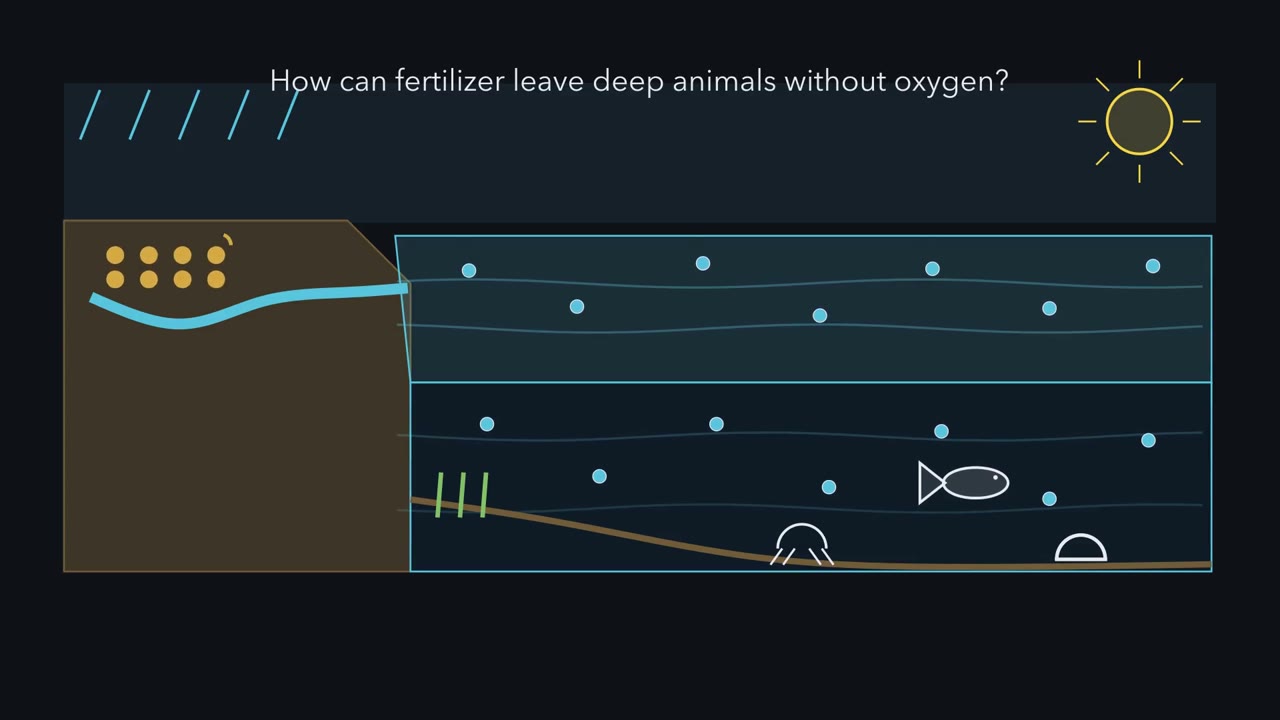
How can fertilizer that helps crops grow leave fish and crabs without enough oxygen in the deep water of the Chesapeake Bay?
Continue in the lesson: Big Changes: Dead Zones, Storms and Climate →
3:30 · Free, with captions and a transcript. The lesson has the full text, the questions and the sources.
More films from this lesson
How this film was made. Narration: an AI narrator voice (Kokoro, af_heart) reading narration written from this lesson's text. Animation: AI-generated in code (Manim) by Claude, a schematic with no drawn molecular structures. Captions come from the narration script. See something wrong? Report it.