A Photo That Tells Time
Read the transcript of “A Photo That Tells Time”
Film transcript: A Photo That Tells Time
Can a still photo tell you how long something takes? A photo freezes one moment, and nothing in it moves. So where would the time be hiding? The first film followed one model cell through the cycle, step by step, in order. A stained root tip cannot show you that. It gives you only a snapshot. Picture a huge school with no shared bell. Each student keeps a different timetable.
Snap a photo at a random moment. Most students are in class. Only a few are in the hallway. Why? Class lasts much longer than the walk between classes. So at any random moment, a student is more likely to be in class. Try it yourself. Stage A lasts twice as long as Stage B. In a random snapshot, which stage will you see more of?
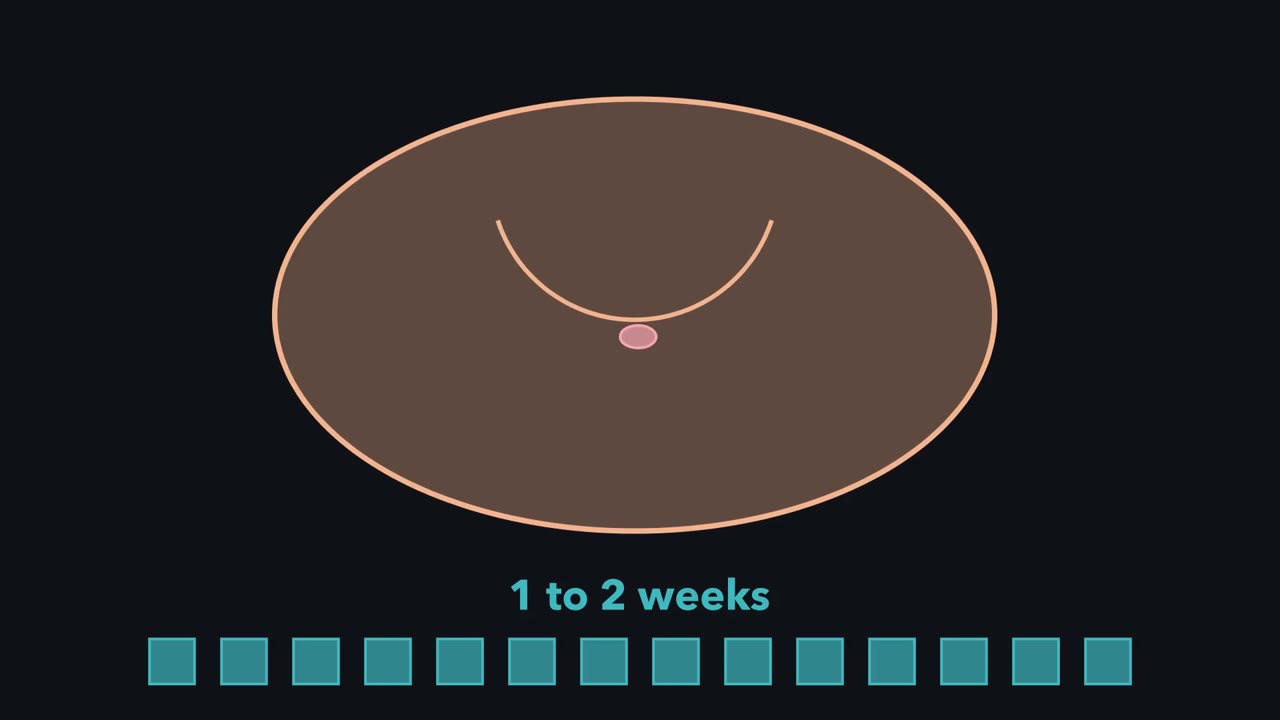
Stage A. You should see about twice as many things in Stage A. A stage that lasts longer tends to hold more of them in a snapshot. Now swap the students for cells. Set an onion on a glass of water, and roots grow down. Near each root tip, cells divide often. A thin root tip is dyed, or stained, so the chromosomes show up. Under a microscope, each cell is caught at one moment of its own cycle. Each cell is sorted into a stage by what its chromosomes look like. Thick, coiled chromosomes, not yet in a row, mean prophase. A row across the middle means metaphase. Let's work one stage together, using real counts. In one set of 36 photographed onion cells, 10 were in prophase, the coiled stage.
Turn that count into a share of all the cells. Follow the steps on the screen. Prophase holds about 28 percent of the cells. The activity says to assume one cycle takes 24 hours. Take each stage's share of the cells as its share of the time. Then prophase lasts about 7 hours. Treat this as a rough guide. There are only 36 photos, and nobody says how they were picked. And the 24 hours is assumed, not measured. Still, it works best with many fairly picked cells, dividing out of step in a steadily growing root. Then a longer stage tends to hold more cells in a snapshot. So a stage's share of the cells is only a rough guide to its time. That was one stage.
Four more are waiting, along with the biggest question in the lesson. Now count the rest yourself.
When you scrape your knee, where does the new skin come from?
Continue in the lesson: How Cells Divide →
3:09 · Free, with captions and a transcript. The lesson has the full text, the questions and the sources.
More films from this lesson
How this film was made. Narration: an AI narrator voice (Kokoro, af_heart) reading narration written from this lesson's text. Animation: AI-generated in code (Manim) by Claude, a schematic with no drawn molecular structures. Captions come from the narration script. See something wrong? Report it.