One Cross, Three Patterns
Read the transcript of “One Cross, Three Patterns”
Film transcript: One Cross, Three Patterns
How can the same offspring genotypes make groups that look different? Watch pink snapdragons send their allele copies into an empty grid. The copies will stay fixed while the phenotype rule changes around them. The screen will track inherited copies separately from the visible traits they help produce.
An allele is a version of a gene. Each parent can pass its R allele or its W allele. The grid tracks every pairing. It does not decide what each pairing looks like. Keeping those jobs separate is the key to reading the result. Before the tiles land, predict the combinations.
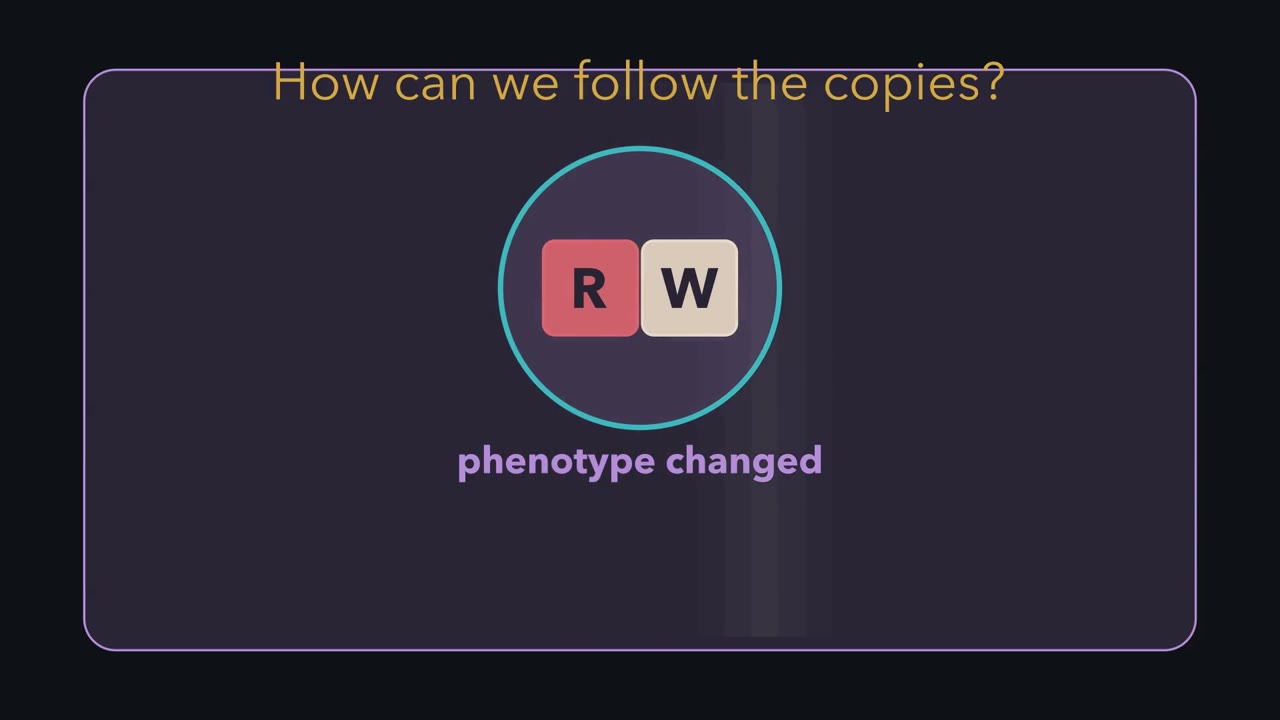
Which pairing repeats, and which pairings appear at the corners? Hold your answer while the tiles keep moving. Look for repeated paths rather than guessing from the parents' pink color. The tiles land as RR, RW, RW, and WW. The mixed pairing appears twice. This genotype pattern comes from allele separation, so changing the phenotype rule cannot change the grid. The parents' pink phenotype never fused their R and W allele copies. Now place an incomplete-dominance lens over the grid. RR becomes red, WW becomes white, and RW becomes pink. Every genotype has its own phenotype here, so the phenotype pattern matches the genotype pattern. The color looks blended, but the inherited copies remain distinct inside each plant.
Codominance needs a different gene, so switch to Shorthorn cattle. The same three pairings give red, roan and white coats. A roan RW calf grows red hairs and white hairs side by side. The mixed genotype shows both effects instead of an in-between color. The allele pairings still do not move. Alleles remain separate, and each genetic tool reveals a different scale. The grid reveals allele combinations. A phenotype key reveals how each combination appears. Confusing those views makes pink look like permanent blending. The tool must match the question you are asking. The same separation helps with blood type. A population has three common ABO alleles, but each person carries a pair.
Type AB red blood cells display both A and B markers, a codominant phenotype. Type O cells display neither marker, while type A or B displays its matching marker. So do not ask which allele won. Ask which alleles were inherited, then ask what that pair does to phenotype. The first answer comes from the cross. The second comes from the inheritance pattern. That order keeps inheritance separate from the way a trait is displayed.
Why does a red snapdragon crossed with a white one give pink flowers, while a red Shorthorn bred with a white one gives a calf with red and white hairs side by side?
Continue in the lesson: Beyond Dominant and Recessive →
3:21 · Free, with captions and a transcript. The lesson has the full text, the questions and the sources.
More films from this lesson
How this film was made. Narration: written from this lesson's text and read by an AI narrator voice (Kokoro, af_heart). Animation: AI-generated in code (Manim) by Claude, a schematic with no drawn molecular structures. Captions come from the narration script. See something wrong? Report it.