Biology Together · Skim version
Wake Up a Seed
Read the full lesson → Skim the whole course →
The guiding idea
Is a dry bean alive, or is it just a little stone? Two bags and a damp paper towel let a child find out.
You and your child put dry beans from the kitchen into two clear bags, one with a damp paper towel and one dry.
-
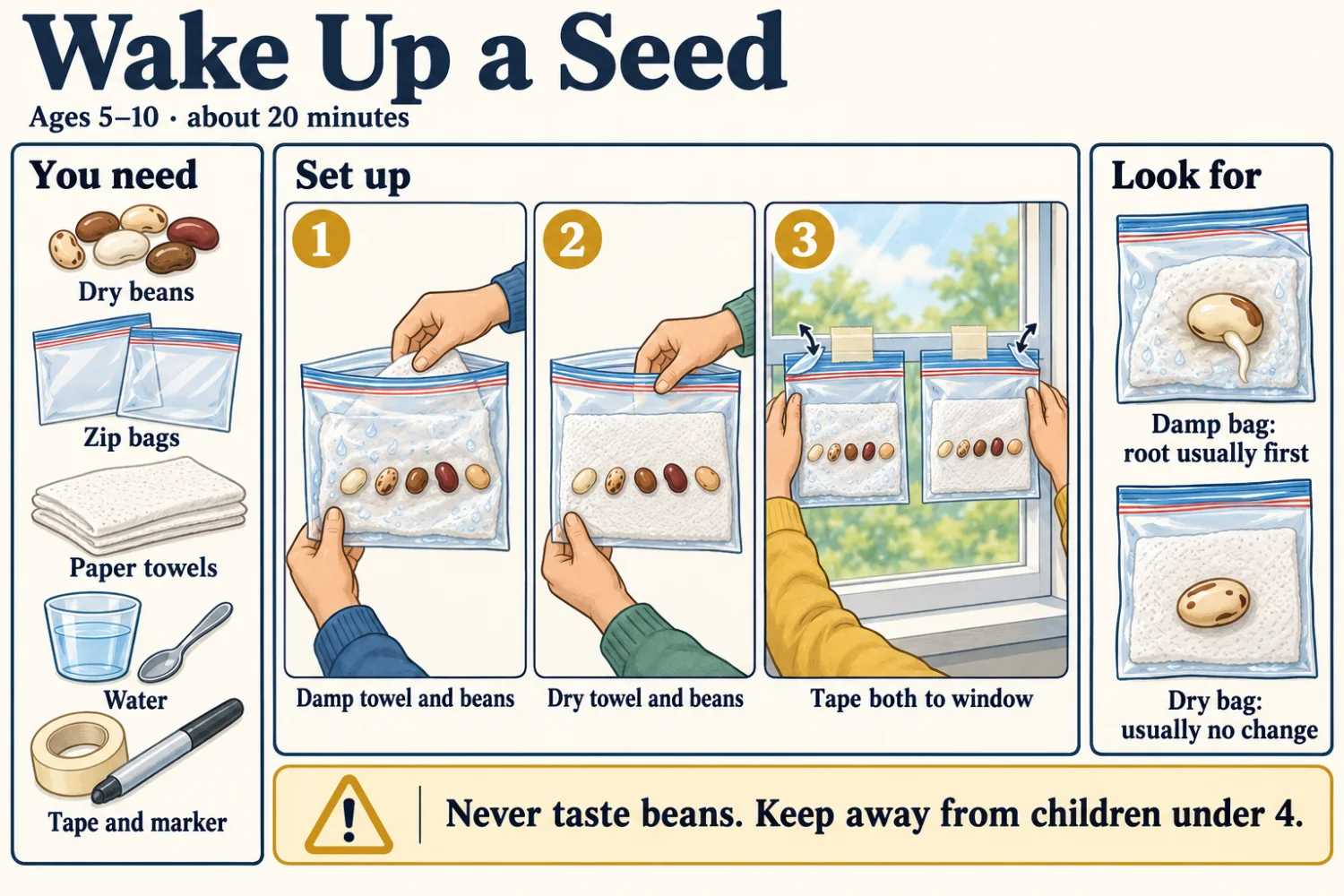
At a glance: print this card or keep it open while you work. The full steps and safety notes are below. AI-generated illustration -
The big idea
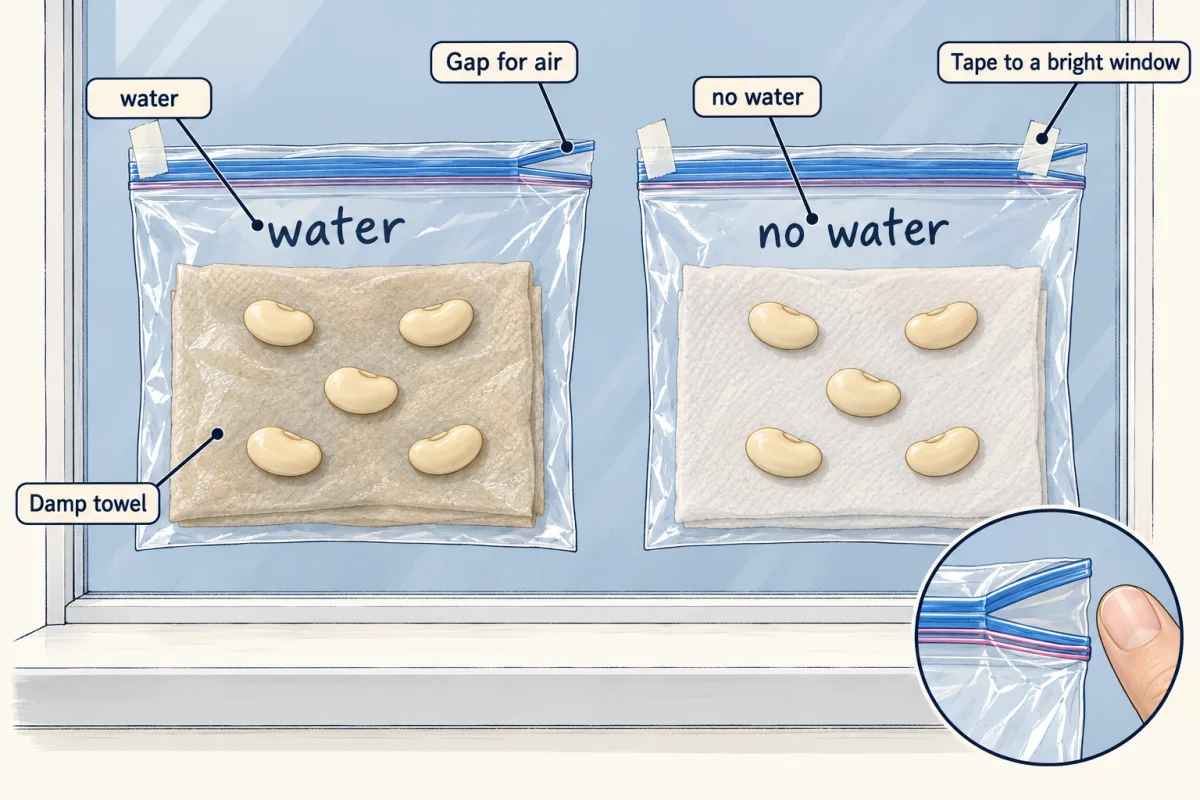
Two bags, one difference. Put 4 to 6 beans on a damp towel in one bag and on a dry towel in the other, leave a finger-wide gap for air, and tape both to a bright window. AI-generated illustration -
What to do
-
Questions to ask while you do it
-
What children often think
-
Why it works
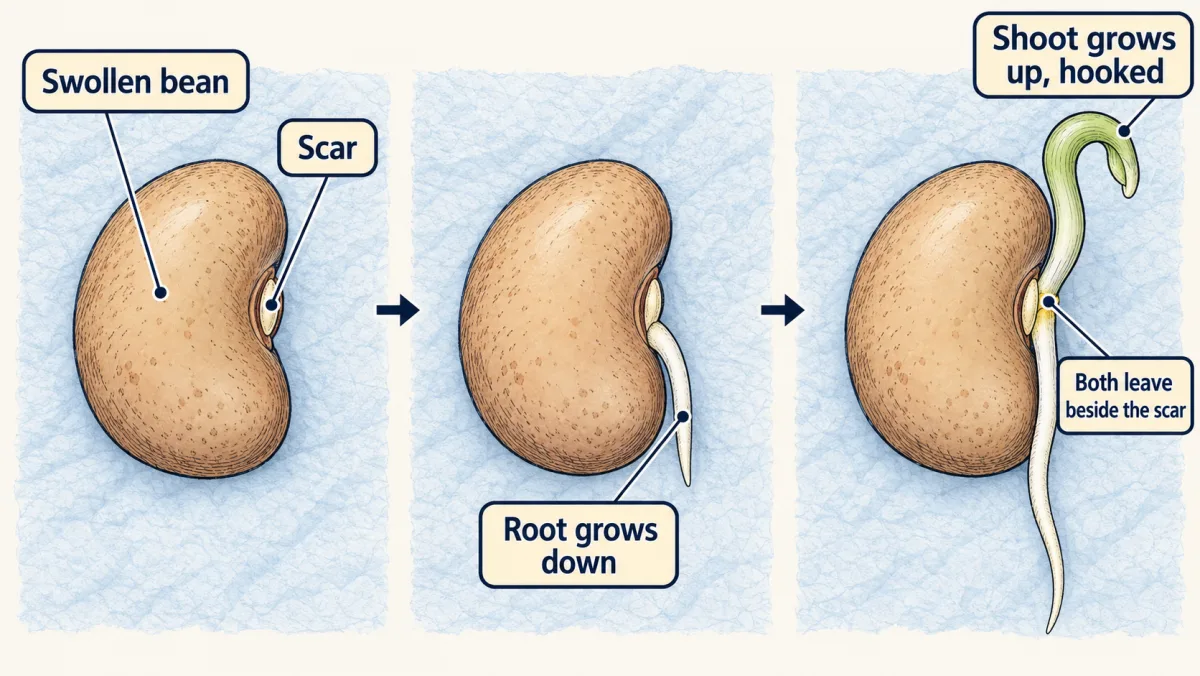
What to look for in the damp bag. The bean swells, a white root usually comes out first and grows down, and the curved shoot follows a few days later. Timing varies with the room's warmth. AI-generated illustration -
Easier and harder
-
If it doesn’t go as planned
-
Observation sheet
Where this lesson fits
Before thisReview first
- Alive or Not?This course · Lesson 1
The sorting game there shows what living things do, which tells why a resting seed still counts as alive.
After thisStudy next
- What Do Plants Need?This course · Lesson 7
Your child tests which things a plant needs, building on seeing that water wakes a seed.
- From Bean to BeanThis course · Lesson 12
Your child grows a bean plant through its whole life, starting from the sprouting seed seen here.
- Plant Parts We EatThis course · Lesson 8
The root coming out first here helps your child name the root as a plant part.
Elsewhere on the siteFilms, simulations and method films in other courses
- A plant in a growth chamberSimulation · Life Science
A seed becoming a tree shows where a plant's growing body comes from, extending the sprouting idea.
Suggested by an AI model from the lessons themselves, then checked. How we use AI