Biology Together · Skim version
Roots Hold the Soil
Read the full lesson → Skim the whole course →
The guiding idea
Why does a muddy stream run brown after a storm? Two trays of soil and a watering can show where the mud comes from.
You set up two sloped trays of soil, one bare and one covered in grass, and pour the same "rain" on both.
-
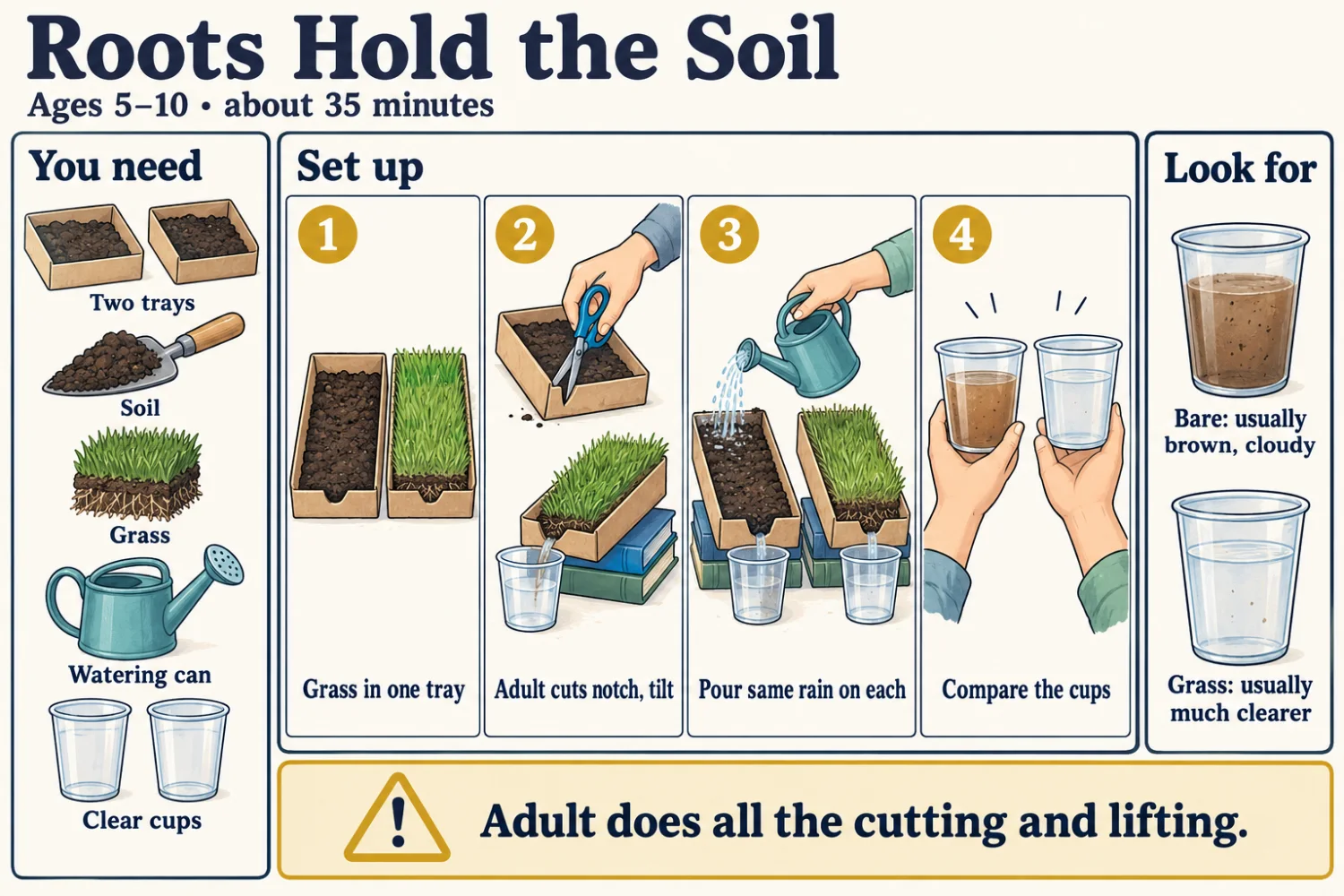
At a glance: print this card or keep it open while you work. The full steps and safety notes are below. AI-generated illustration -
The big idea
-
What to do
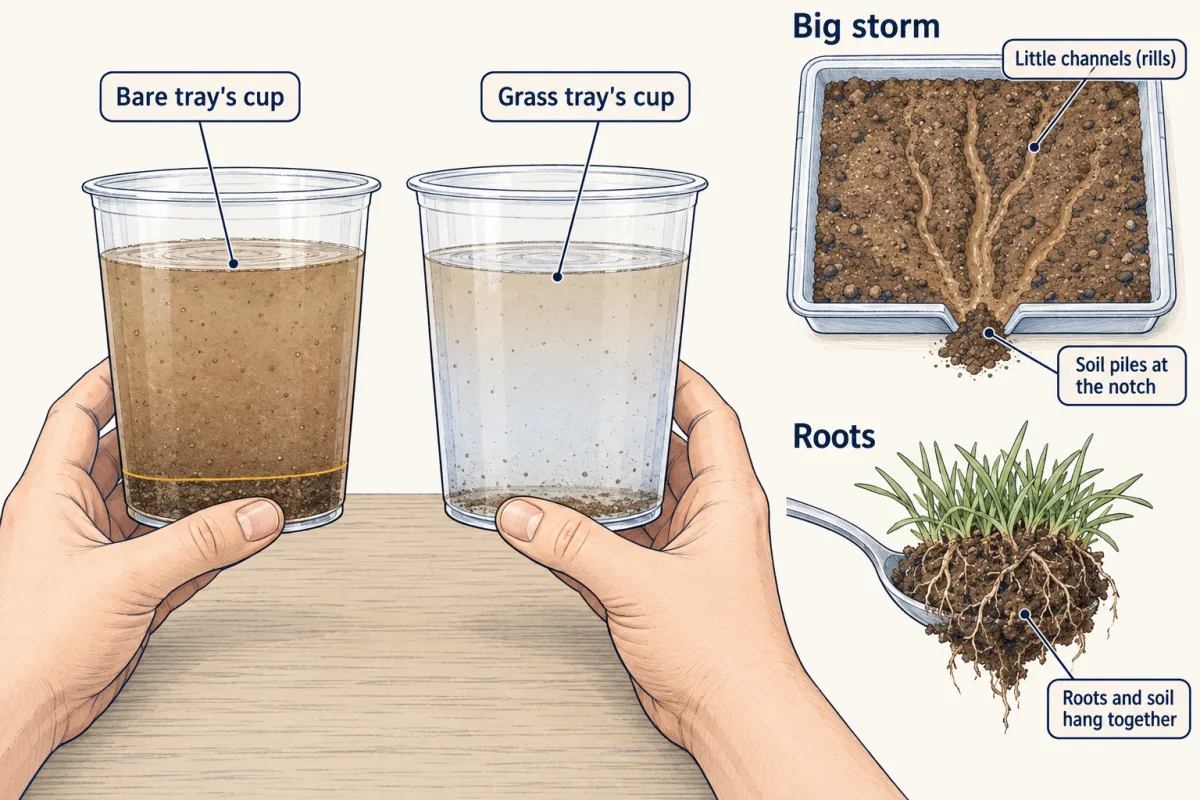
The bare tray's cup is usually brown and cloudy, and the grass tray's cup is usually much clearer. The bare soil gets little channels called rills, and roots hold soil together in one clump. AI-generated illustration 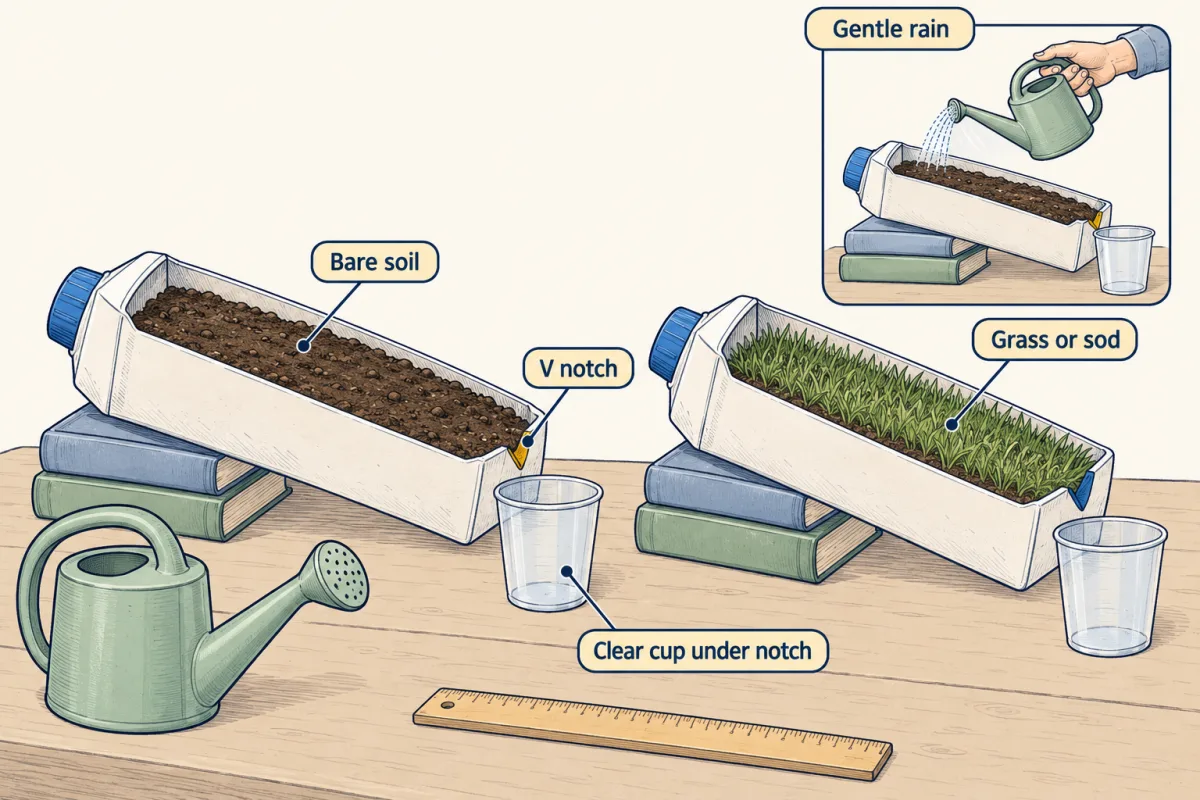
One tray of bare soil and one of grass, tilted the same amount, with a cup under each notch. Pour the same amount of water the same way on each. AI-generated illustration -
Questions to ask while you do it
-
What children often think
-
Why it works
-
Easier and harder
-
If it doesn’t go as planned
-
Observation sheet
Where this lesson fits
Before thisReview first
- Soil ShakeThis course · Lesson 23
You see what soil is made of there, so you know what is washing away here.
- A Watershed in a PanThis course · Lesson 28
You watch rain run downhill there, and this lesson shows what that water carries along.
After thisStudy next
- Creek CrittersThis course · Lesson 30
Muddy runoff ends up in creeks, so you can see what lives in the water it reaches.
Elsewhere on the siteFilms, simulations and method films in other courses
- Two Sides of Every EcosystemFilm · Life Science
Nonliving conditions such as muddy water help decide which living things can survive in a stream.
Suggested by an AI model from the lessons themselves, then checked. How we use AI