Developmental Neuroscience · Skim version
The Neurotrophic Hypothesis Tested
Read the full lesson → Skim the whole course →
The guiding idea
Neutralize one protein in a newborn mouse and its sympathetic ganglia waste away. Neurons compete for a limiting amount of target-derived factor, and the amount limits how many live. Does NGF decide how many neurons there are?
Developing neurons are made in excess and compete for a limiting amount of survival factor from their targets, so the targets' supply limits how many live.
From the film: Too Small, or Lost?
- Many neurons are made and then lost, so a small ganglion is a question about history: count across time before you decide.
- Whether neurons are kept depends on the target, which must supply something they need.
- Make too many, then let the target keep what it can feed; as a survival factor, NGF cannot raise survivors above the number made.
From the film: A Limiting Supply
- Neurons compete for a limiting amount of neurotrophic factor from their targets, and neurons that get too little die by apoptosis.
- The hypothesis predicts reduced death, not extra birth, so when counts change the tests must ask which happened.
- An extra-leg graft in chick embryos supports a limiting target resource, but motor neurons do not depend on NGF, so it does not say which molecule.
From the film: Add It, Take It Away
- Adding NGF is enough to enlarge ganglia, but a larger ganglion does not say whether neurons were saved or born.
- An antiserum against NGF destroyed sympathetic ganglia in newborn mice, which shows necessity only if the antibody hit nothing else.
- Dependence on NGF is tied to a developmental window, and the window differs between populations.
From the film: Made, Then Lost
- Mice lacking NGF or TrkA lose sympathetic neurons and many sensory neurons, which settles the antibody doubt.
- In TrkA-null mice the counts matched early and the deficit appeared later, so the neurons were produced and then lost.
- NGF works by holding back a Bax-dependent death program.
From the film: The Ceiling, and the Sharing Puzzle
- Extra NGF given during the death period saves neurons that would have died, but never more than were made.
- In the ideal model, survivors are at most the smaller of the neurons made and the number the supply can support.
- How many survive when supply is short depends on how the factor is shared, and in mouse sympathetic neurons evidence supports active competition.
- The ceiling holds only for the population measured, and limb motor neurons do not depend on NGF.
From the film: Permissive or Instructive
- For survival, NGF is permissive: it keeps alive neurons that were already specified as sympathetic or sensory.
- To tell permissive from instructive, keep the signal present but change where or when it is delivered, and ask whether the pattern follows.
- In the targets examined, NGF also instructs how densely and where axons branch within a target.
-
Too small, or lost?
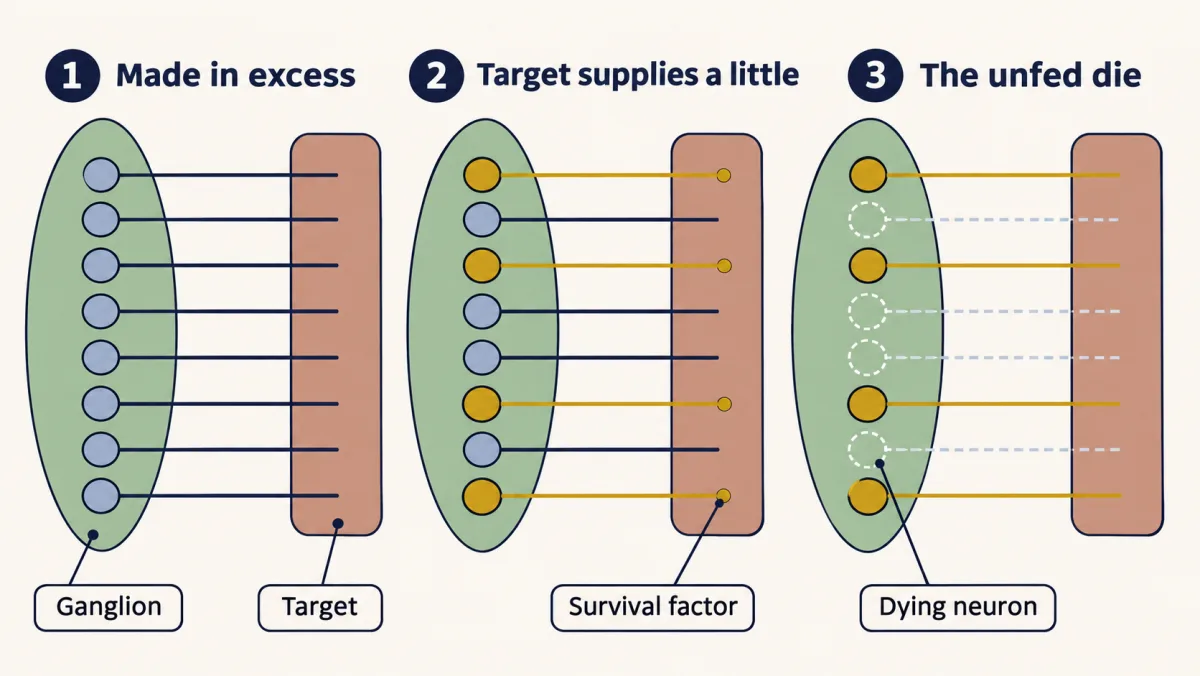
The neurotrophic hypothesis in three steps: neurons are made in excess, the target supplies a limited amount of a survival factor, and the neurons that get too little die. The middle step was at first an inference that later experiments had to earn. AI-generated illustration -
The hypothesis and what it predicts
-
Add it, take it away
-
Delete it, and watch the time course
-
What extra NGF can do
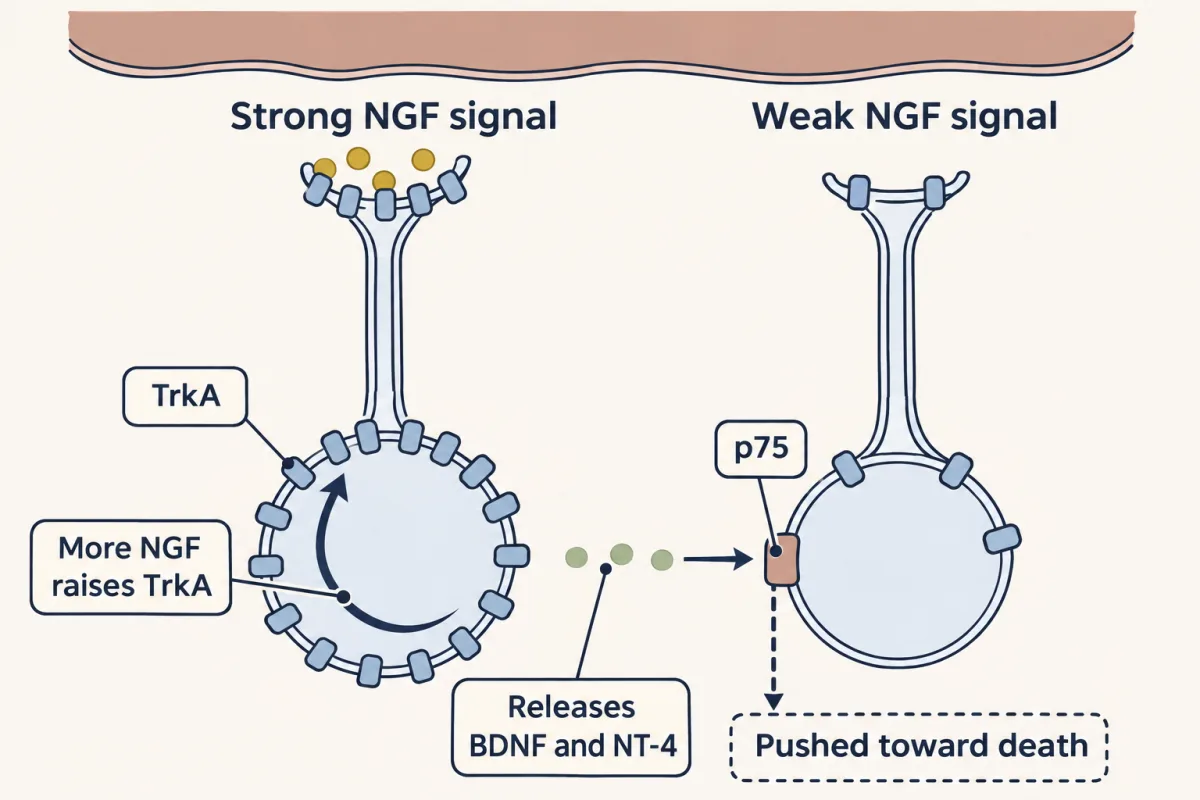
In the model the evidence supports for mouse sympathetic neurons, a neuron that gets more NGF makes more TrkA and takes up still more, and it releases BDNF and NT-4 that act through p75 on neighbours with weak NGF signalling, pushing them toward death. AI-generated illustration -
Permissive for survival, instructive for wiring
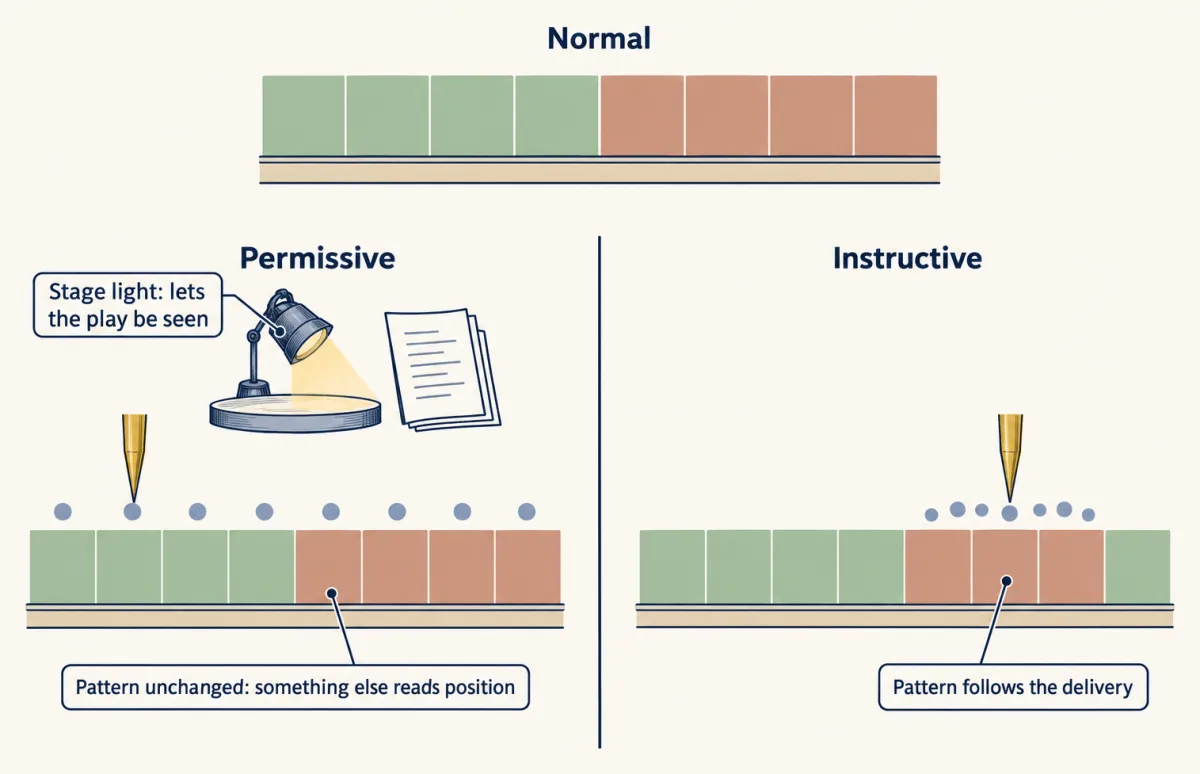
To tell the two apart, keep the signal present but change where it is delivered. If the pattern is unchanged, something else is reading position and the signal was permissive; if the pattern follows the delivery, the signal is instructive. AI-generated illustration 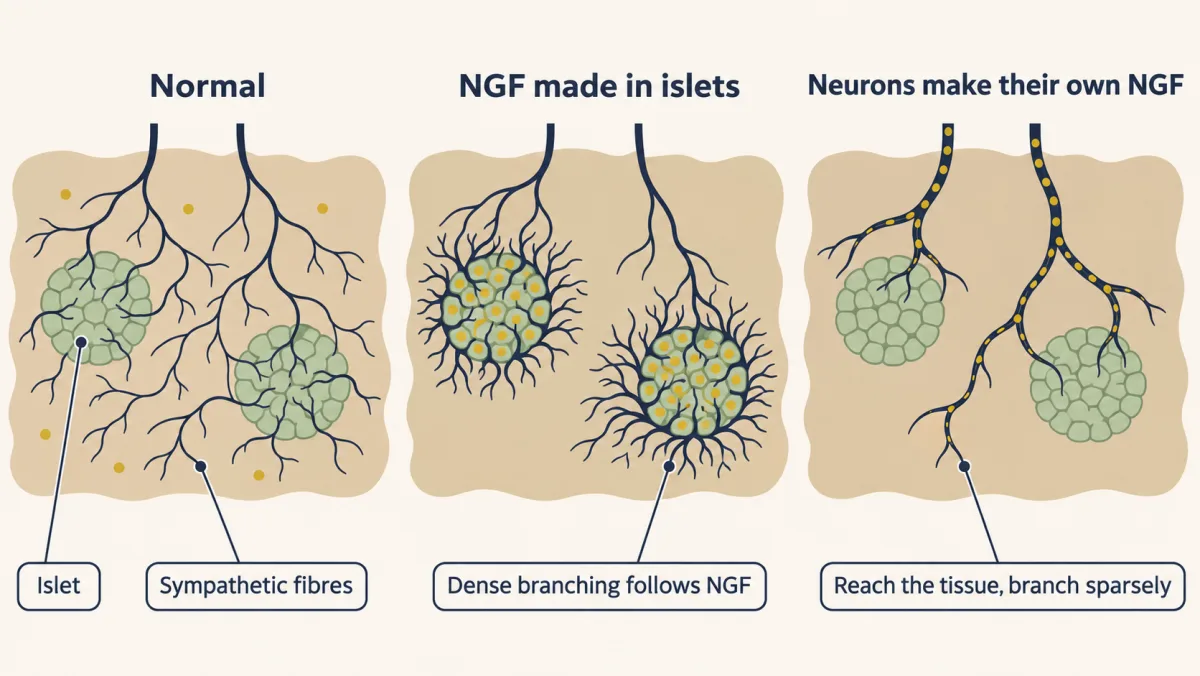
Where NGF is made changes where sympathetic axons branch: NGF made in the islets drew dense innervation there, and when the neurons made NGF themselves, axons still reached their tissues but branched sparsely inside them. In the targets examined, NGF looks permissive for reaching a target and instructive for branching within it. AI-generated illustration -
Putting it together
-
Going deeper