Biology Together · Skim version
Like Their Parents, Not the Same
Read the full lesson → Skim the whole course →
The guiding idea
Are all the peas in a pod the same? A ruler and a few vegetables help a child find out how offspring compare.
You and your child open pea pods, cut an apple and a pepper, and collect leaves from one plant.
-
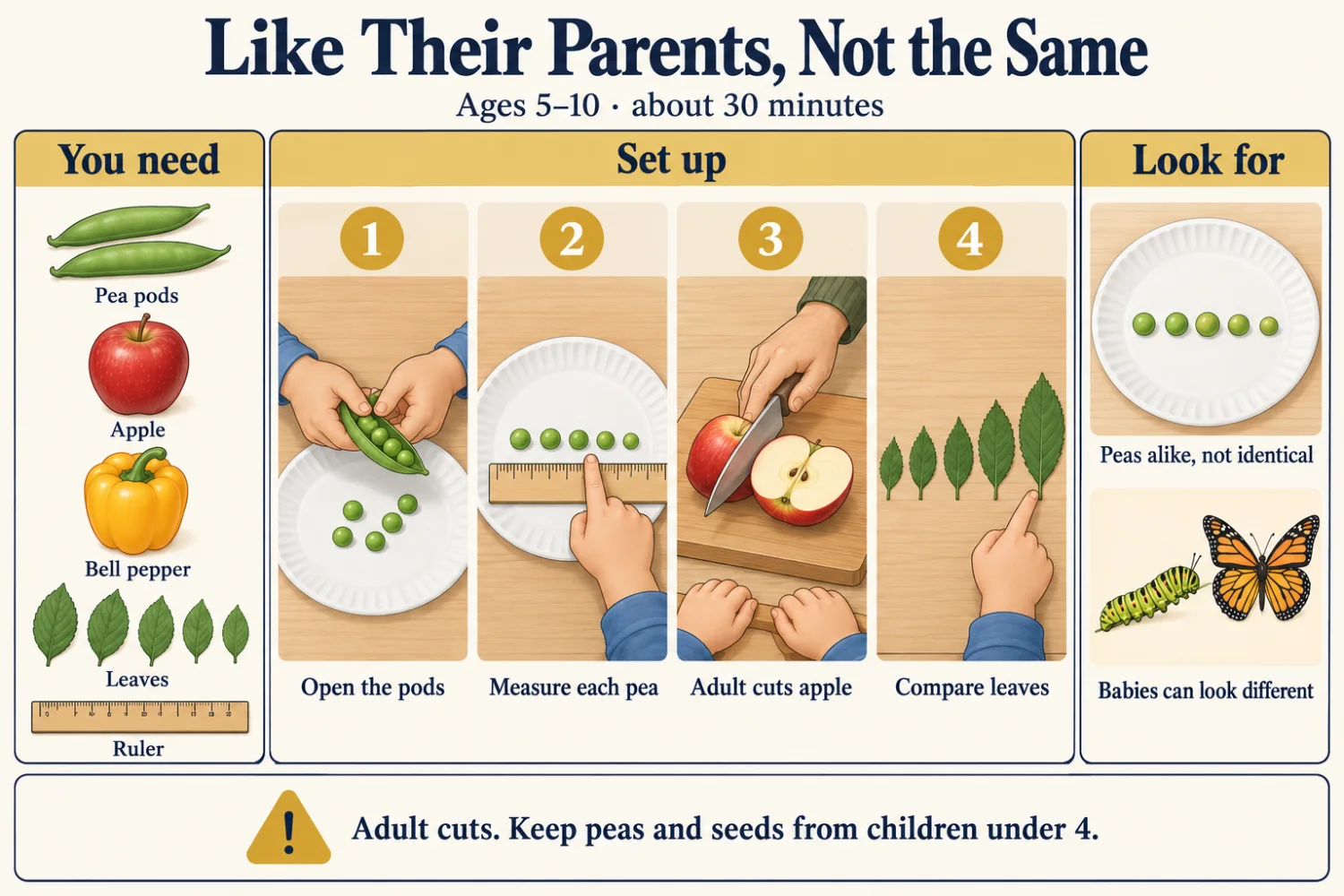
At a glance: print this card or keep it open while you work. The full steps and safety notes are below. AI-generated illustration -
The big idea
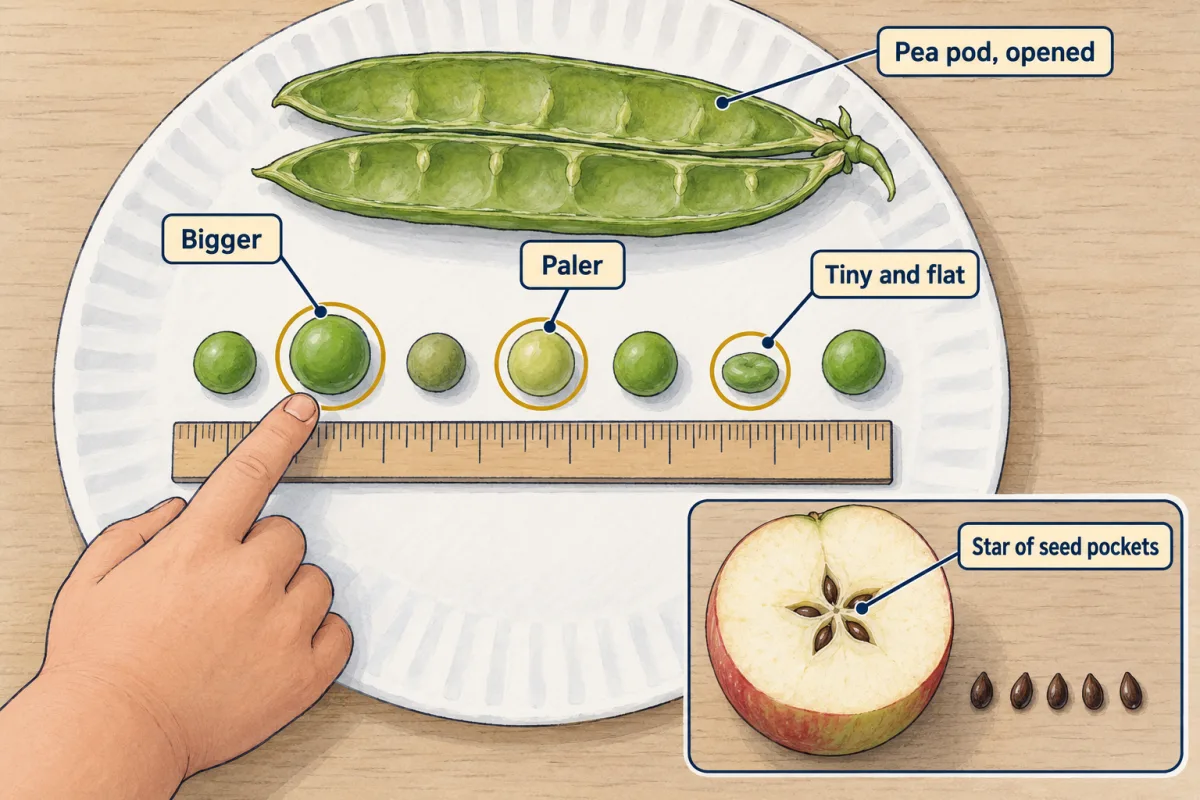
Peas from one pod, lined up in the order they sat. They look like twins until you set them next to a ruler. An apple cut across its middle shows a star of seed pockets. AI-generated illustration 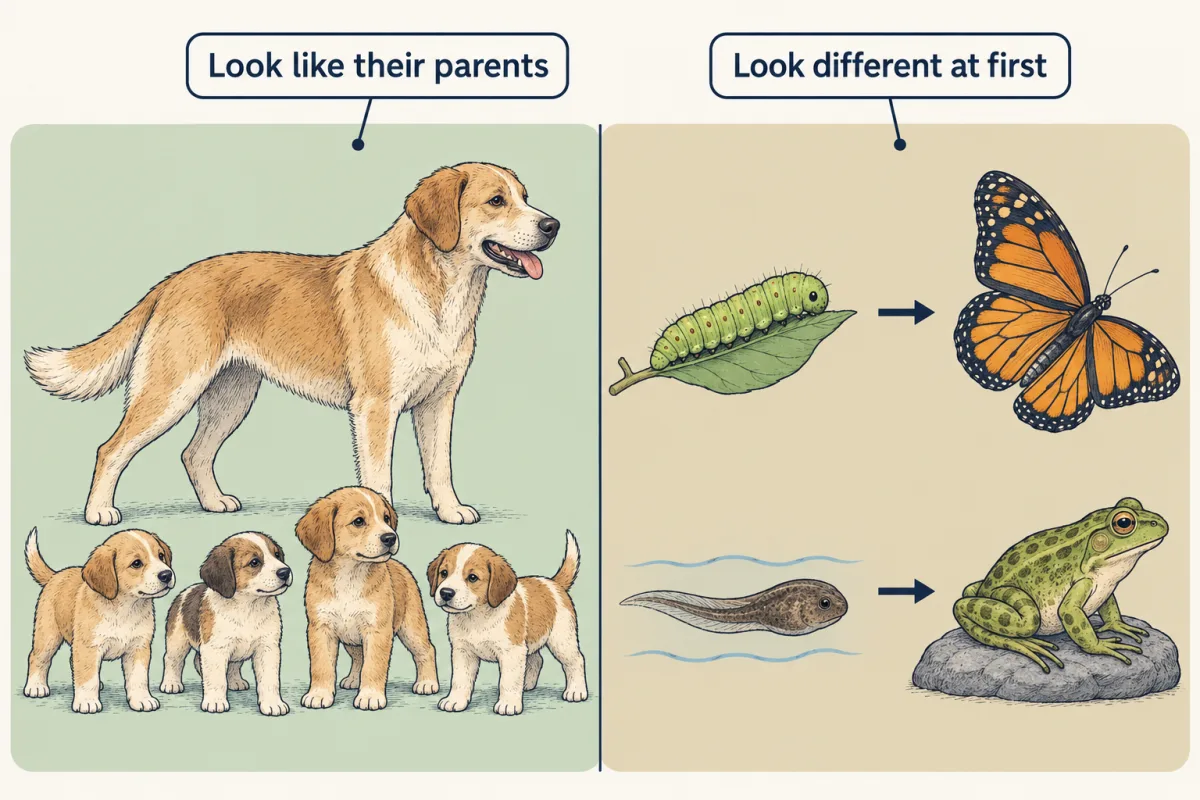
Two groups for the picture sort. Some babies look like small versions of their parents from the start. Others, like caterpillars and tadpoles, look very different at first. AI-generated illustration -
What to do
-
Questions to ask while you do it
-
What children often think
-
Why it works
-
Easier and harder
-
If it doesn’t go as planned
-
Observation sheet
Where this lesson fits
After thisStudy next
- Mealworms to BeetlesThis course · Lesson 14
Raising mealworms lets your child watch a baby that looks nothing like its adult, which this activity only showed in pictures.
- The Camouflage HuntThis course · Lesson 18
The small differences between offspring now matter: some colours stay hidden from a hungry bird and some do not.
Elsewhere on the siteFilms, simulations and method films in other courses
- What Can Cross a Generation?Film · Life Science
It shows which traits pass from parent to young and which do not, taking the idea of like parents further.
- Beetles and new coloursSimulation · Life Science
It lets students see why offspring of one parent plant still differ in size and shape.
Suggested by an AI model from the lessons themselves, then checked. How we use AI