Biology Together · Skim version
Make a Fossil Print
Read the full lesson → Skim the whole course →
The guiding idea
How do we know what lived here before people? Making fossil prints shows how a shell or a footprint can be saved in rock.
Your child presses shells, leaves and toy animal feet into modelling clay to make prints, and an adult can fill them with plaster to make copies.
-
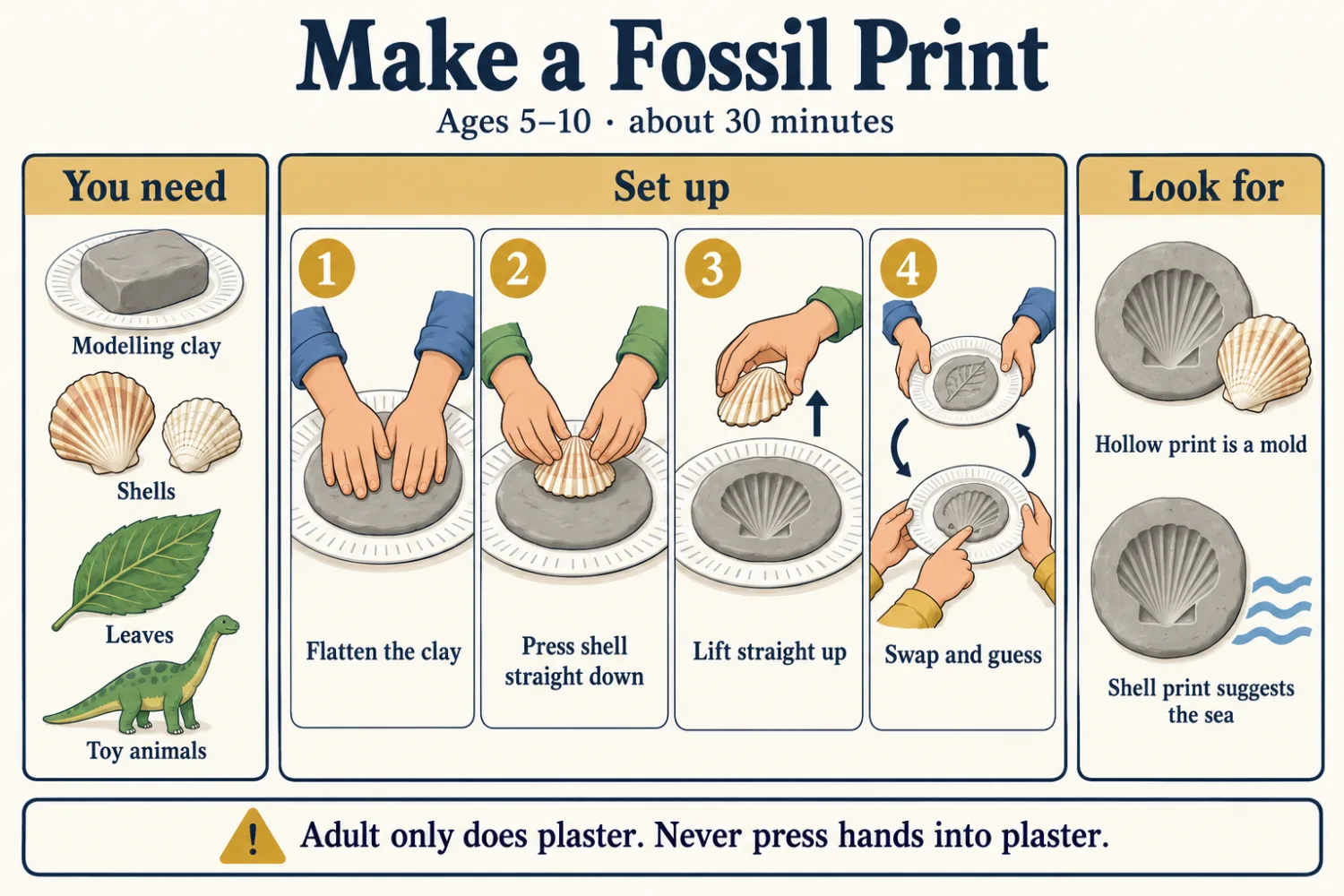
At a glance: print this card or keep it open while you work. The full steps and safety notes are below. AI-generated illustration -
The big idea
-
What to do
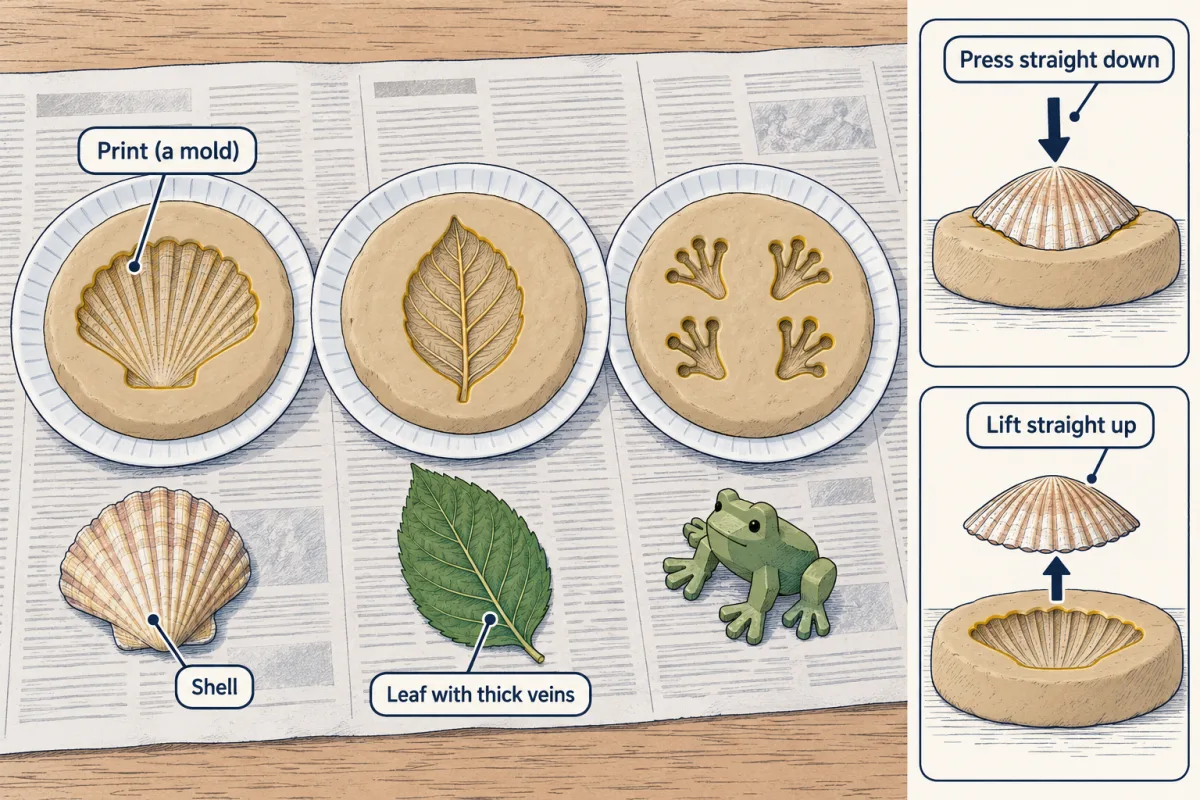
Press each object straight down into flat modelling clay, then lift it straight up. The hollow shape it leaves is a mold. Shells with ridges, leaves with thick veins and toy feet with clear toes make the sharpest prints. AI-generated illustration -
Questions to ask while you do it
-
What children often think
-
Why it works
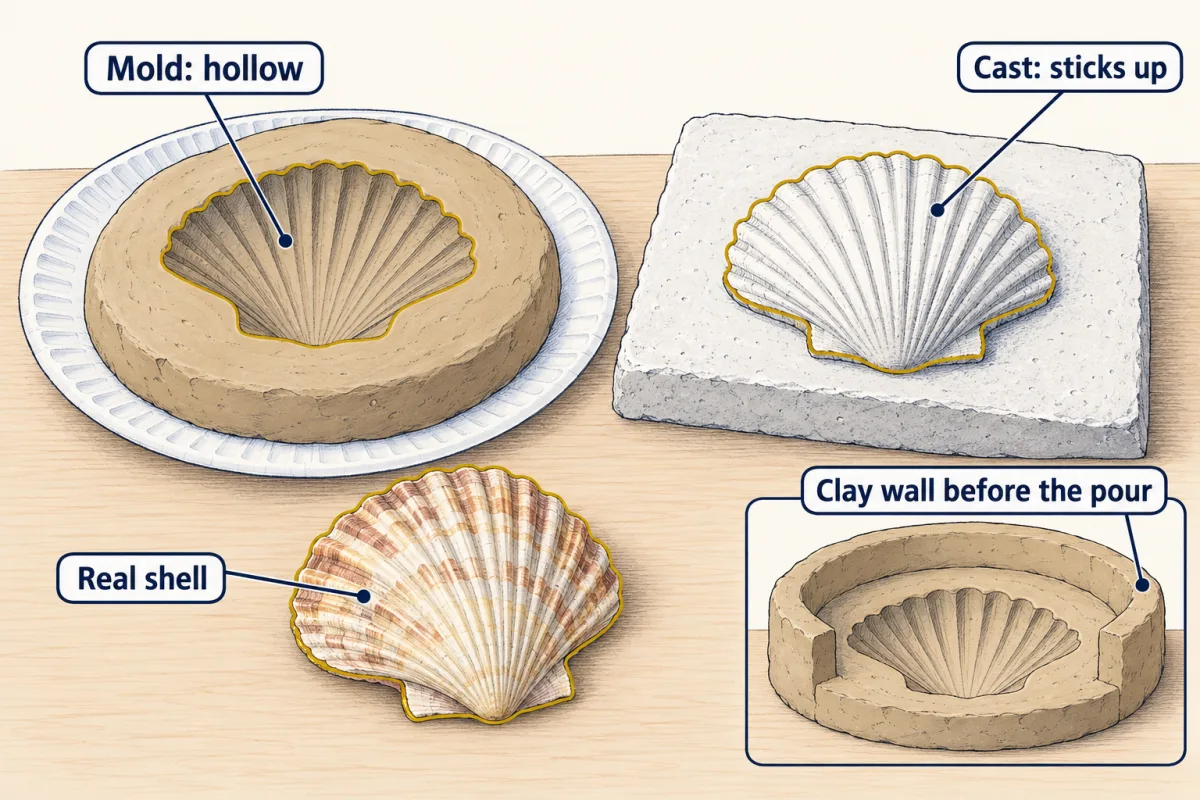
A mold is the hollow shape a shell leaves in clay, and a cast is a copy that fills the mold, so it sticks up like the real shell. Plaster casts are optional and an adult job. AI-generated illustration -
Easier and harder
-
If it doesn’t go as planned
-
Observation sheet
Where this lesson fits
After thisStudy next
- Rot DetectivesThis course · Lesson 22
It shows how dead things rot away, which is why most living things never become fossils.
Elsewhere on the siteFilms, simulations and method films in other courses
- What the Rocks Still ShowFilm · Life Science
It shows how real fossils are preserved remains or traces and what they tell about life long ago.
Suggested by an AI model from the lessons themselves, then checked. How we use AI