Biology Together · Skim version
Backyard Habitat Hunt
Read the full lesson → Skim the whole course →
The guiding idea
Is anything living in a patch of plain grass? A string square and ten minutes of close looking answer that.
You and your child mark a one-metre square of yard or park with string and look closely at everything in it, or gently roll a log and put it back.
-
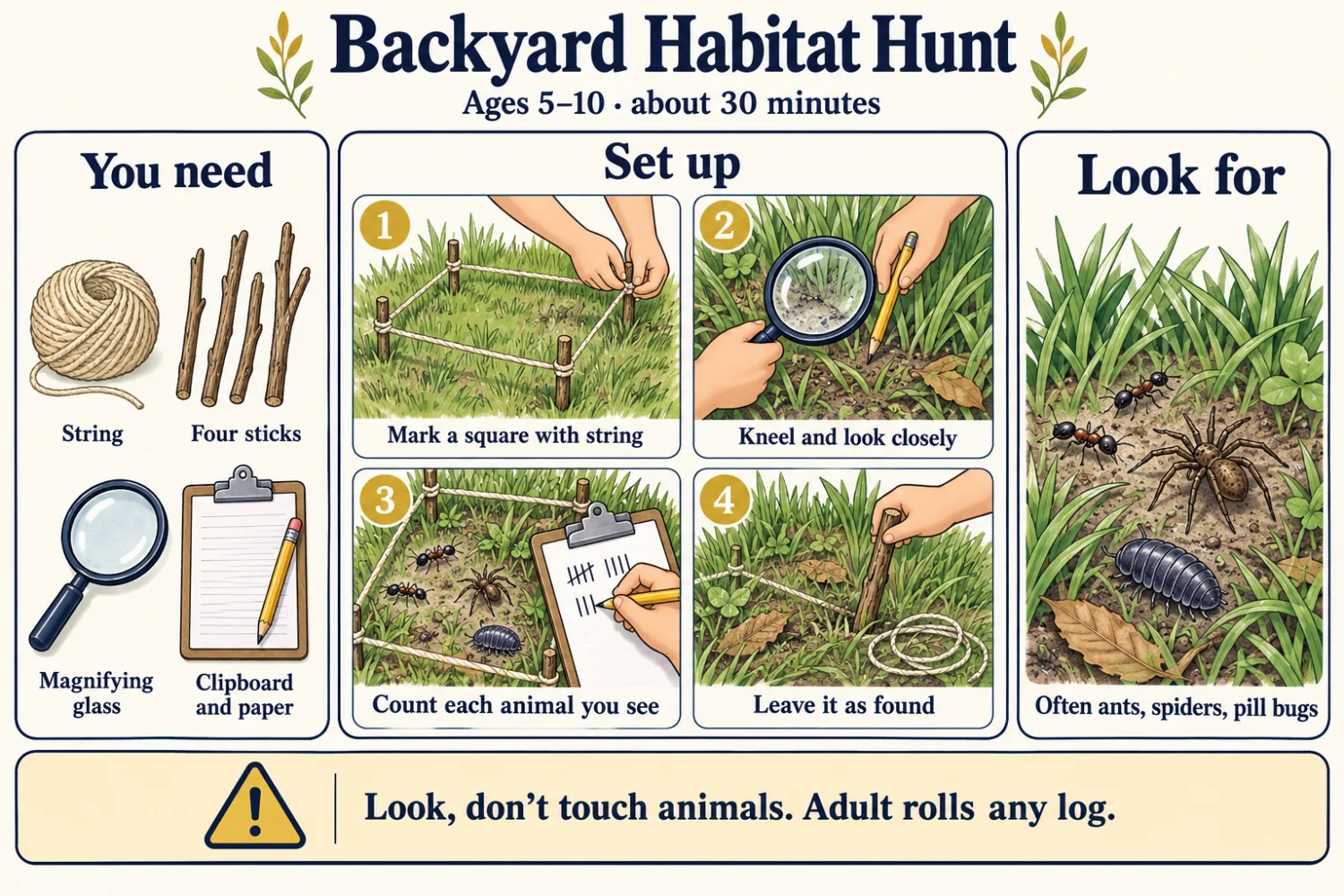
At a glance: print this card or keep it open while you work. The full steps and safety notes are below. AI-generated illustration -
The big idea
-
What to do
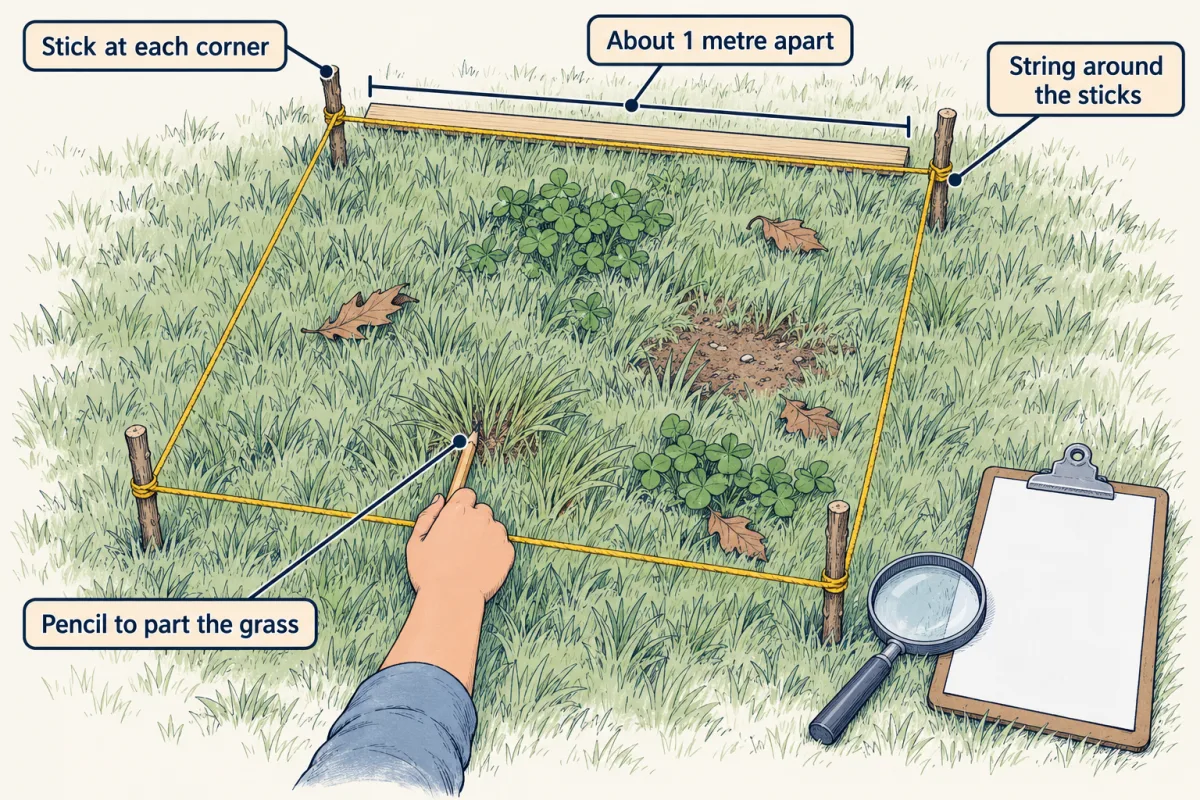
A habitat square: a stick at each corner, about 1 metre apart, with string wrapped around them. Kneel down and part the grass with a pencil to look closely. AI-generated illustration -
Questions to ask while you do it
-
What children often think
-
Why it works
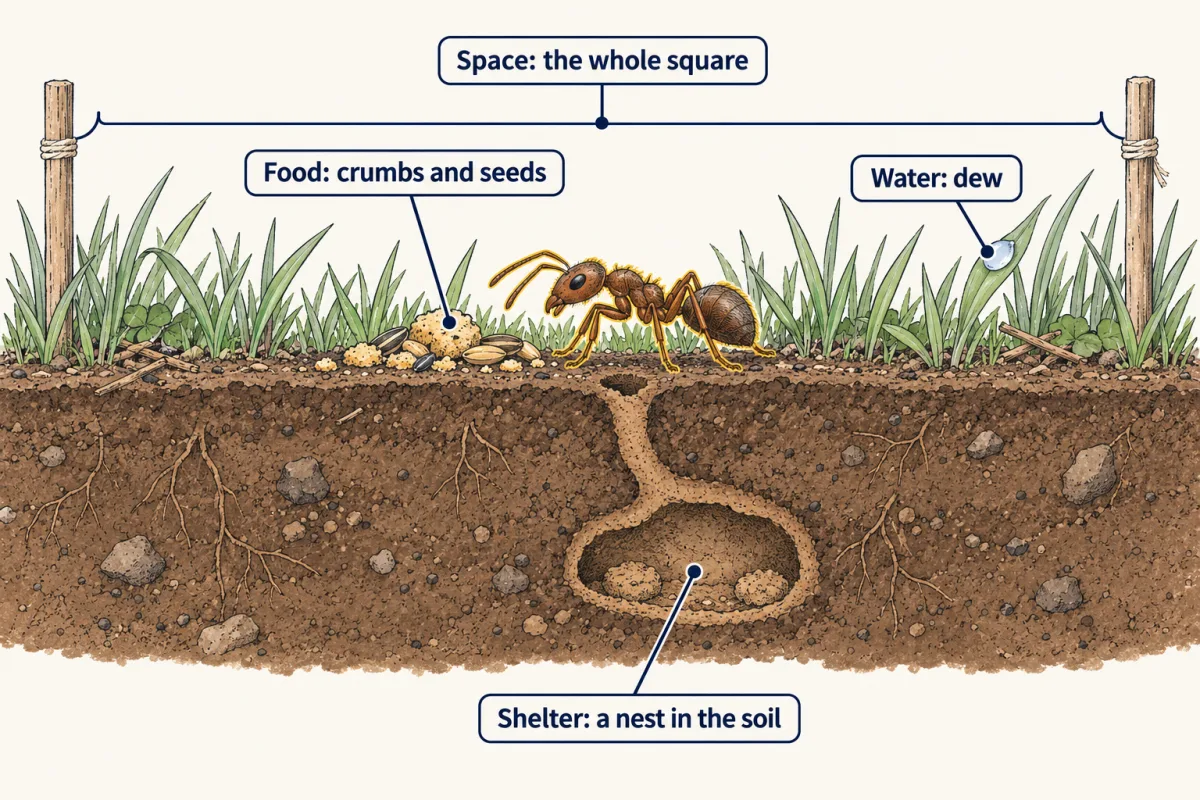
One ant and what it needs in the square. It might eat crumbs and seeds, drink dew, shelter in a nest in the soil, and use the square and the ground around it as space. AI-generated illustration -
Easier and harder
-
If it doesn’t go as planned
-
Observation sheet
Where this lesson fits
Before thisReview first
- Alive or Not?This course · Lesson 1
Your child needs to sort living from nonliving things there to make the two lists here.
After thisStudy next
- Who Eats Whom?This course · Lesson 21
It takes the food that animals find in their habitat and shows who eats whom.
- Creek CrittersThis course · Lesson 30
It repeats this close looking and counting in a creek habitat, with different animals living there.
- Soil ShakeThis course · Lesson 23
It looks closely at the soil that many square-metre animals use for shelter.
Elsewhere on the siteFilms, simulations and method films in other courses
- Two Sides of Every EcosystemFilm · Life Science
It shows how living and nonliving parts of a place decide which animals can live there.
Suggested by an AI model from the lessons themselves, then checked. How we use AI