A Tree Made of Air
Read the transcript of “A Tree Made of Air”
Film transcript: A Tree Made of Air
Where does a tree's mass come from? A willow in a pot, weighed long ago, turns that into a puzzle. Here is what the man who weighed it reported. In the sixteen hundreds, a man planted a five-pound willow stem in two hundred pounds of dried soil. Five years later, he reported a tree of about one hundred sixty-nine pounds. The soil was only about two ounces lighter. So soil loss could not account for the tree's gain. He weighed it alive, so part of its gain was water. But dry the tree, and plenty of solid matter is left. Make a guess before we zoom in. If you dried this tree, how much of what is left came from the soil? Most of it, about half, or almost none?
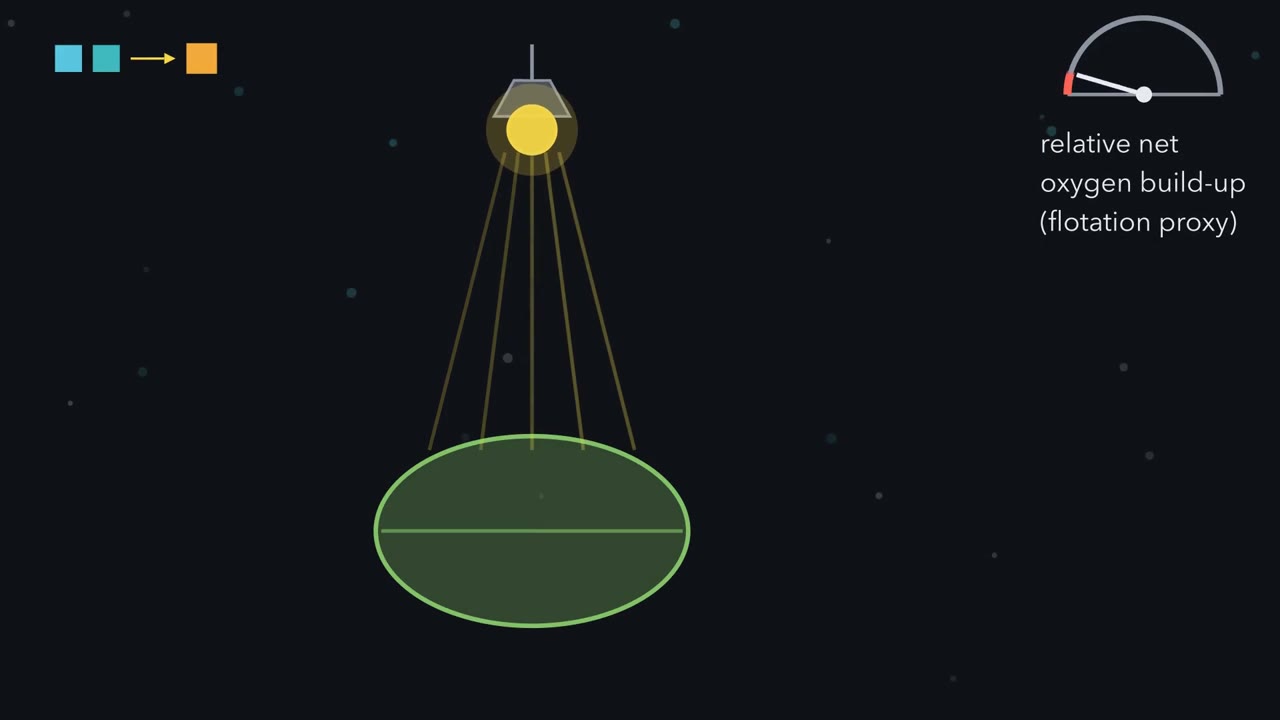
Almost none. Soil gives a plant water and a small share of minerals, such as nitrogen. Most of a plant's dry mass comes from something you cannot see. It comes from the air. Zoom into a leaf. Carbon dioxide from the air drifts in through tiny pores called stomata. Water climbs up from the roots. Inside a leaf cell, a green chloroplast catches light. Its green pigment, chlorophyll, absorbs mostly red and blue light. That captured light powers photosynthesis. Water is split, and carbon from carbon dioxide is built into sugar. The atoms are rearranged into one glucose, a sugar with six carbon atoms. Six molecules of oxygen gas are released through the stomata.
Now count. Going in, there are six carbon, twelve hydrogen and eighteen oxygen atoms. Coming out, there are exactly the same. No atom is made, and none is destroyed. This is conservation of matter. So what did the light add? Not a single atom. Light adds energy. Part of that energy is stored as chemical energy in the new arrangement of atoms. Glucose and oxygen together hold more chemical energy than the carbon dioxide and water they came from. Think of a stretched spring, held ready to let go. Back to the willow. The plant links glucose into long chains of cellulose, the tough fiber of cell walls. Wood is mostly cell walls. So most of the trunk's dry mass was built from carbon dioxide and water.
Look at the dried tree again. Most of its dry mass came from carbon dioxide in the air. Water supplied the hydrogen. Only a small, essential share came from the soil.
How can a willow gain more than 160 pounds in five years while the soil in its pot loses only about 2 ounces, and how does sunlight end up stored in the sugar that built it?
Continue in the lesson: Capturing Sunlight →
3:13 · Free, with captions and a transcript. The lesson has the full text, the questions and the sources.
More films from this lesson
How this film was made. Narration: written from this lesson's text and read by an AI narrator voice (Kokoro, af_heart). Animation: AI-generated in code (Manim) by Claude, a schematic with no drawn molecular structures. Captions come from the narration script. See something wrong? Report it.