Cutting the Bridge
Read the transcript of “Cutting the Bridge”
Film transcript: Cutting the Bridge
A key flashes on a screen. The man says he saw nothing. Yet his left hand picks out the key. How? Cutting the forebrain commissures was used to treat epilepsy that drugs could not control. The corpus callosum is the largest commissure. In 1962, Gazzaniga, Bogen and Sperry reported one such patient, W.J. Blindfolded, he could use familiar objects with his left hand. But he could not name them. First, the crossings. At the optic chiasm, only the fibres from the nasal half of each retina cross. So everything left of the point he stares at reaches the right hemisphere, from both eyes. The hemifield matters, not the eye. A brief flash reduces the chance that he looks toward it.
We still monitor his gaze and discard trials with an eye movement, which could expose the picture to the other hemisphere. Touch from the left hand reaches the right hemisphere. And each hand is controlled mainly by the opposite hemisphere. Now apply the rule. You can say only what reaches the speaking hemisphere. In most people, that is the left. The key in the left field reaches only the right hemisphere. With the bridge cut, it has no route to speech. So he cannot name it, and says he saw nothing. But his right hemisphere feels with and controls the left hand, which finds the key. Now his eyes are closed, and a spoon is placed in his right hand.
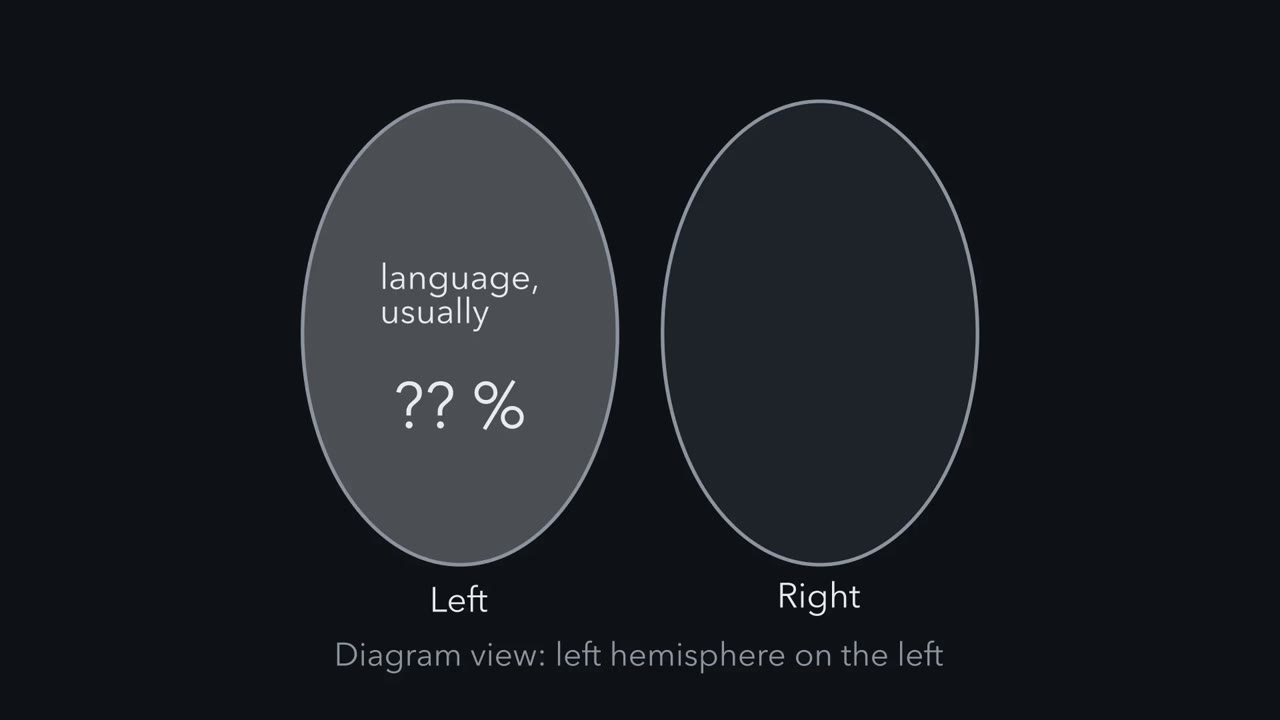
Can he name it? Yes. Touch from the right hand crosses in the medulla to the left hemisphere, which usually speaks. speech were on the right, the naming answers would flip. The hands would still follow the same crossings. Still, the disconnected right hemisphere understands some spoken words. It is mute more often than it is deaf. That fits the route. Understanding words gets help from both sides, but the road to speech usually runs on the left. The tidy rule has exceptions in two later patients. That debate is in the lesson. His right hemisphere can still see, feel and understand some words. But he cannot say what never reaches the speaking hemisphere.
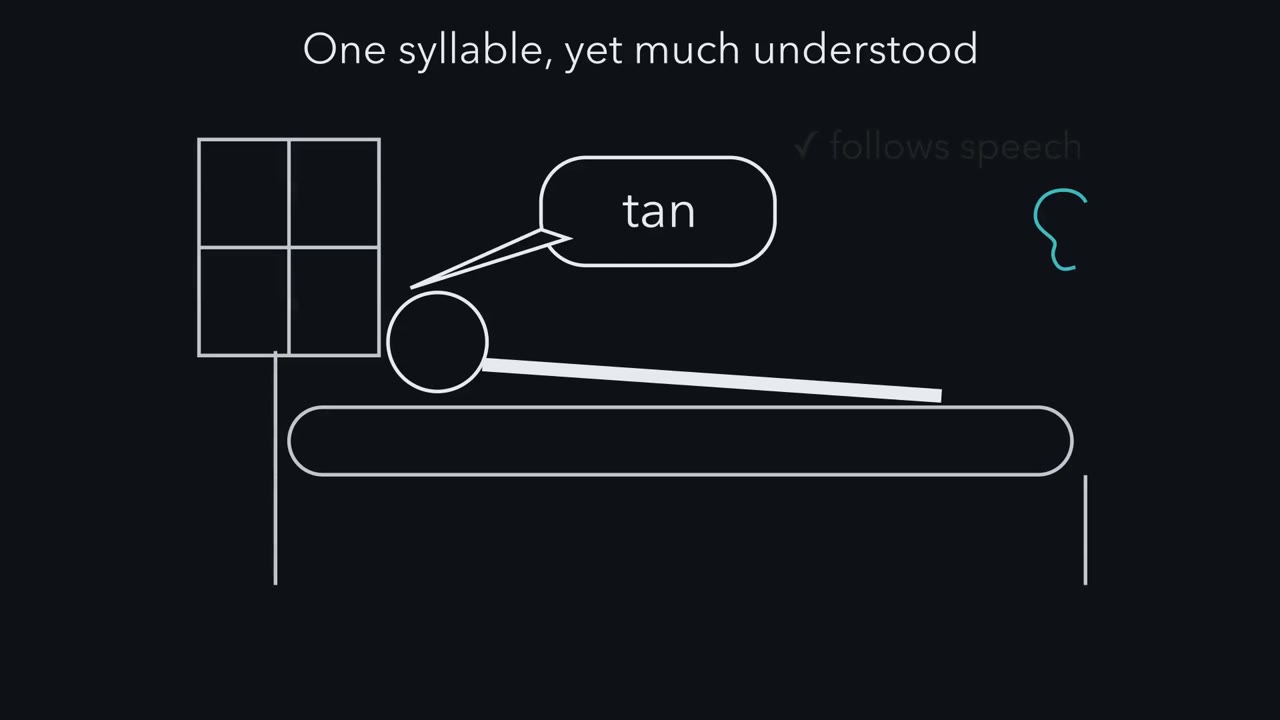
Leborgne could say almost nothing beyond one syllable, yet he appeared to follow much of what was said to him. What exactly had broken?
Continue in the lesson: Language and Lateralization →
2:35 · Free, with captions and a transcript. The lesson has the full text, the questions and the sources.
More films from this lesson
How this film was made. Narration: an AI narrator voice (Kokoro, af_heart) reading narration written from this lesson's text. Animation: AI-generated in code (Manim) by Claude, a schematic with no drawn molecular structures. Captions come from the narration script. See something wrong? Report it.