What the Hare Data Show
Read the transcript of “What the Hare Data Show”
Film transcript: What the Hare Data Show
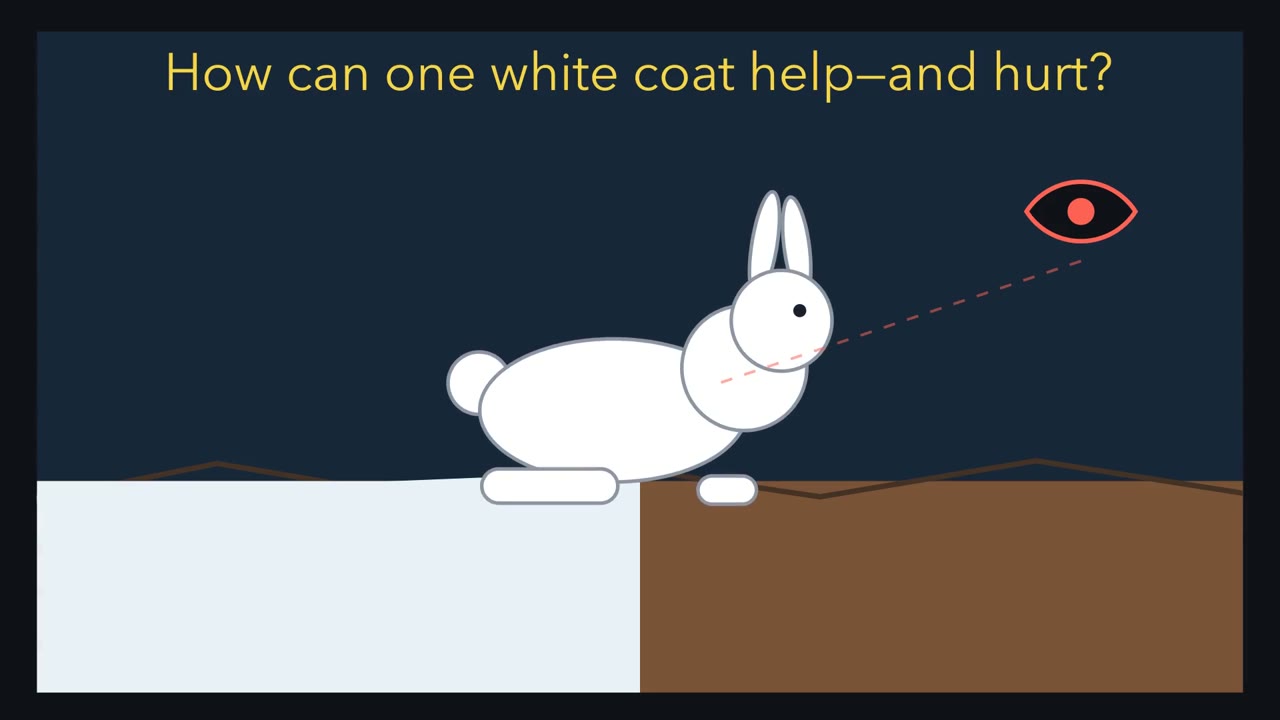
The first film showed one coat helping on snow and costing on bare ground. But does standing out actually change a hare's survival? Scientists in Montana fitted hares with small radio collars. Each week, they checked signals and tried to find each animal again. They estimated how white each coat was. They also scored nearby snow and averaged it into a weekly value for each site.
Contrast was the gap between a hare's coat whiteness and its site's weekly snow cover. A mathematical model then estimated weekly survival at different mismatch levels. These are estimates for groups, not guarantees for any single hare. When a hare was missed, the model estimated its coat color between observations. That step adds uncertainty, so the results remain rounded estimates. Before the estimates appear, predict the direction. As coat and ground differ more, should estimated survival rise, stay level, or fall?
The estimates fell as mismatch grew. The fully mismatched estimate was lower than the matched estimate, while partial mismatch sat between them. Camouflage is not a shield. A matched hare may die, and a mismatched hare may survive. The estimates change the chance; they do not decide any one hare's fate. A second team tested color more directly with clay mice. They placed light and dark models on light sand and dark soil. Bite, beak, and claw marks recorded attacks. On each ground, the model that mismatched received more attacks.
Color matching mattered in both places. Add the attack bars. Most marks landed on models that mismatched their ground. This held across both habitats. The pattern follows matching, not one color. The studies strengthen each other, but neither proves color caused every hare's death. Real predators also use movement, sound, smell, and cover. Now return to variation.
Hares in one population begin changing color at different times. Some timing may fit a changing snow season better. Snow can shift spring molt timing somewhat, but not enough to keep every hare matched. The hares also did not move to snowier resting spots. If a tendency to turn brown earlier is inherited, hares that have it may survive and leave more young. Across many generations, that tendency may become more common. Adaptations help in particular settings; populations change over generations, not individuals. One hare molts within life, but it does not choose inherited timing. The evidence links visible mismatch with lower estimated survival in Montana.
Variation gives selection something to act on, if timing is inherited. The field setting still matters.
What happens to a snowshoe hare that is still white when the snow melts early?
Continue in the lesson: Adaptations for Survival →
3:31 · Free, with captions and a transcript. The lesson has the full text, the questions and the sources.
More films from this lesson
How this film was made. Narration: an AI narrator voice (Kokoro, af_heart) reading narration written from this lesson's text. Animation: AI-generated in code (Manim) by Claude, a schematic with no drawn molecular structures. Captions come from the narration script. See something wrong? Report it.