Biology Together · Skim version
Thirsty Celery
Read the full lesson → Skim the whole course →
The guiding idea
How does water get from the bottom of a plant to the top? Coloured water and a celery stalk make the path visible.
You stand celery stalks in strongly coloured water and check them over a day.
-
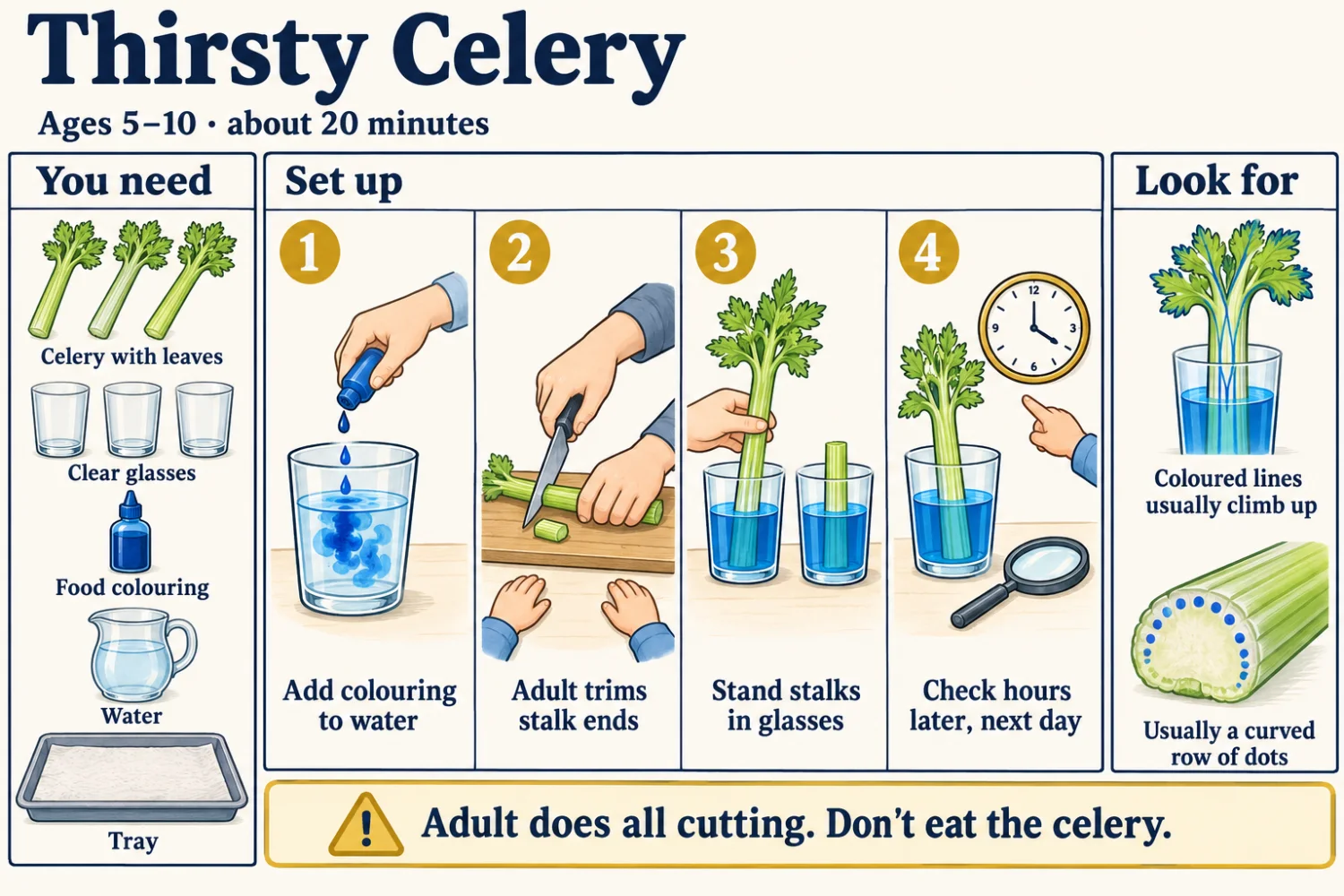
At a glance: print this card or keep it open while you work. The full steps and safety notes are below. AI-generated illustration -
The big idea
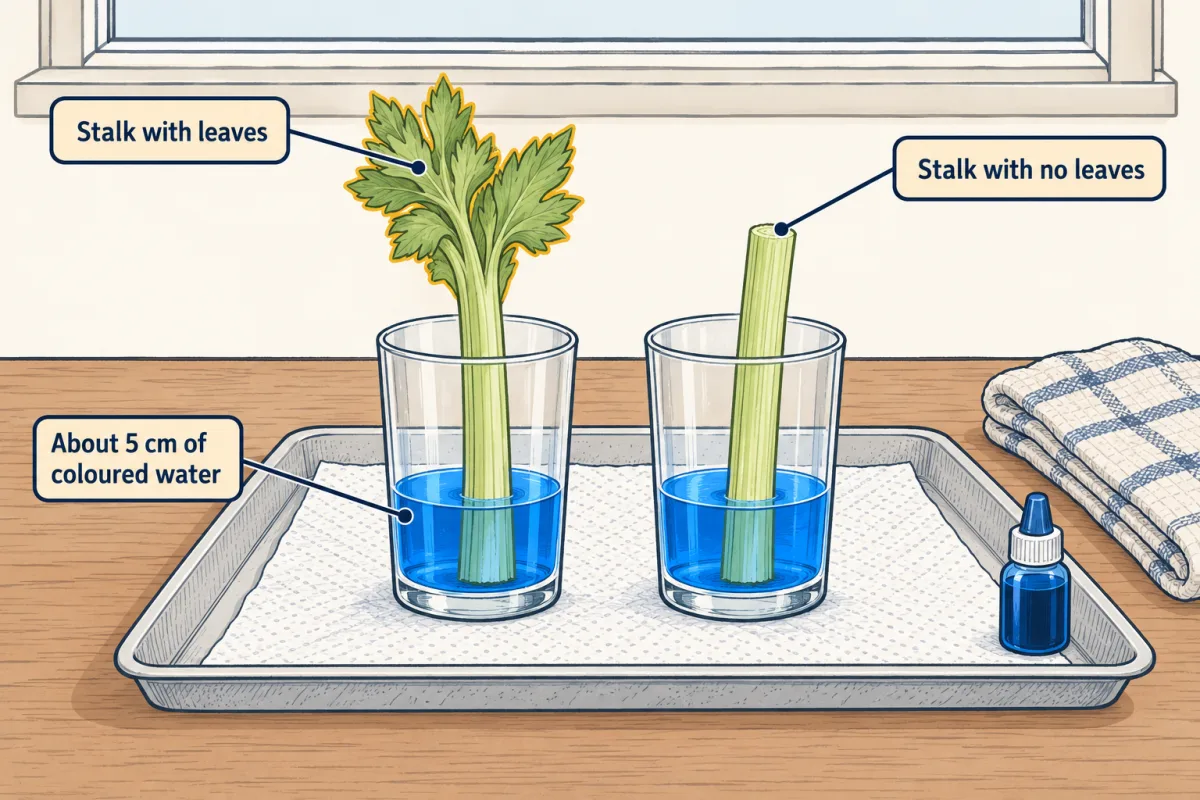
Two glasses with the same blue water. One celery stalk keeps its leaves and one has them cut off, so you can see whether leaves change how fast the colour climbs. AI-generated illustration -
What to do
-
Questions to ask while you do it
-
What children often think
-
Why it works
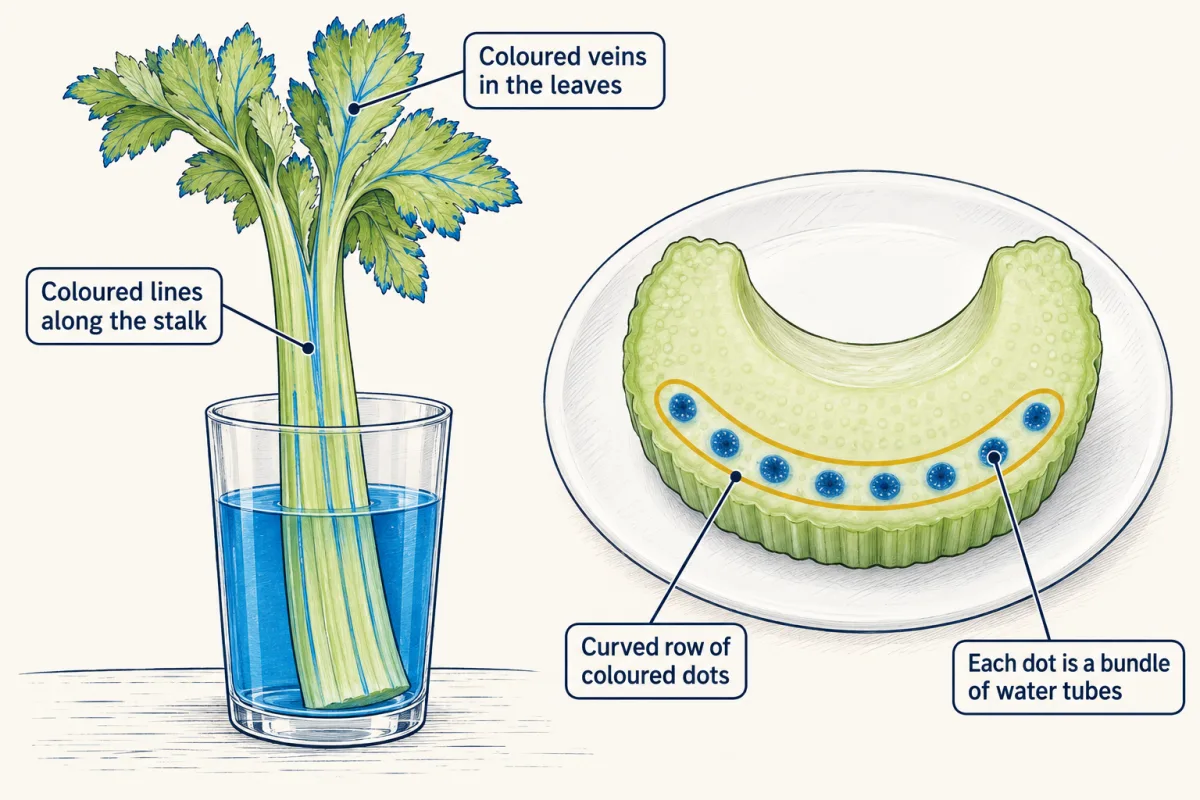
What you will usually see the next day. Blue lines show along the stalk and in the leaves. Cut across the stalk and the colour sits in a curved row of dots, each a bundle that holds water tubes. AI-generated illustration -
Easier and harder
-
If it doesn’t go as planned
-
Observation sheet
Where this lesson fits
Before thisReview first
- What Do Plants Need?This course · Lesson 7
Your child has already seen that plants need water, so here they can follow where that water travels.
- Plant Parts We EatThis course · Lesson 8
Knowing that celery is a stalk, and what stems and leaves do, helps your child read the coloured lines.
After thisStudy next
- Leaf DetectivesThis course · Lesson 10
Your child studies leaves more closely, the same part that pulls water up the stalk.
- Hidden Leaf ColorsThis course · Lesson 27
Another colour trick in leaves, using a coffee filter to show what is hidden inside them.
- Roots Hold the SoilThis course · Lesson 29
Your child looks at roots, where the water that climbs the stalk first comes in.
Suggested by an AI model from the lessons themselves, then checked. How we use AI