Biology Together · Skim version
Soil Shake
Read the full lesson → Skim the whole course →
The guiding idea
Is dirt just dirt? Shake some soil in a jar of water and watch it sort itself into layers.
You and your child shake garden soil in a jar of water, then watch it settle over a day.
-
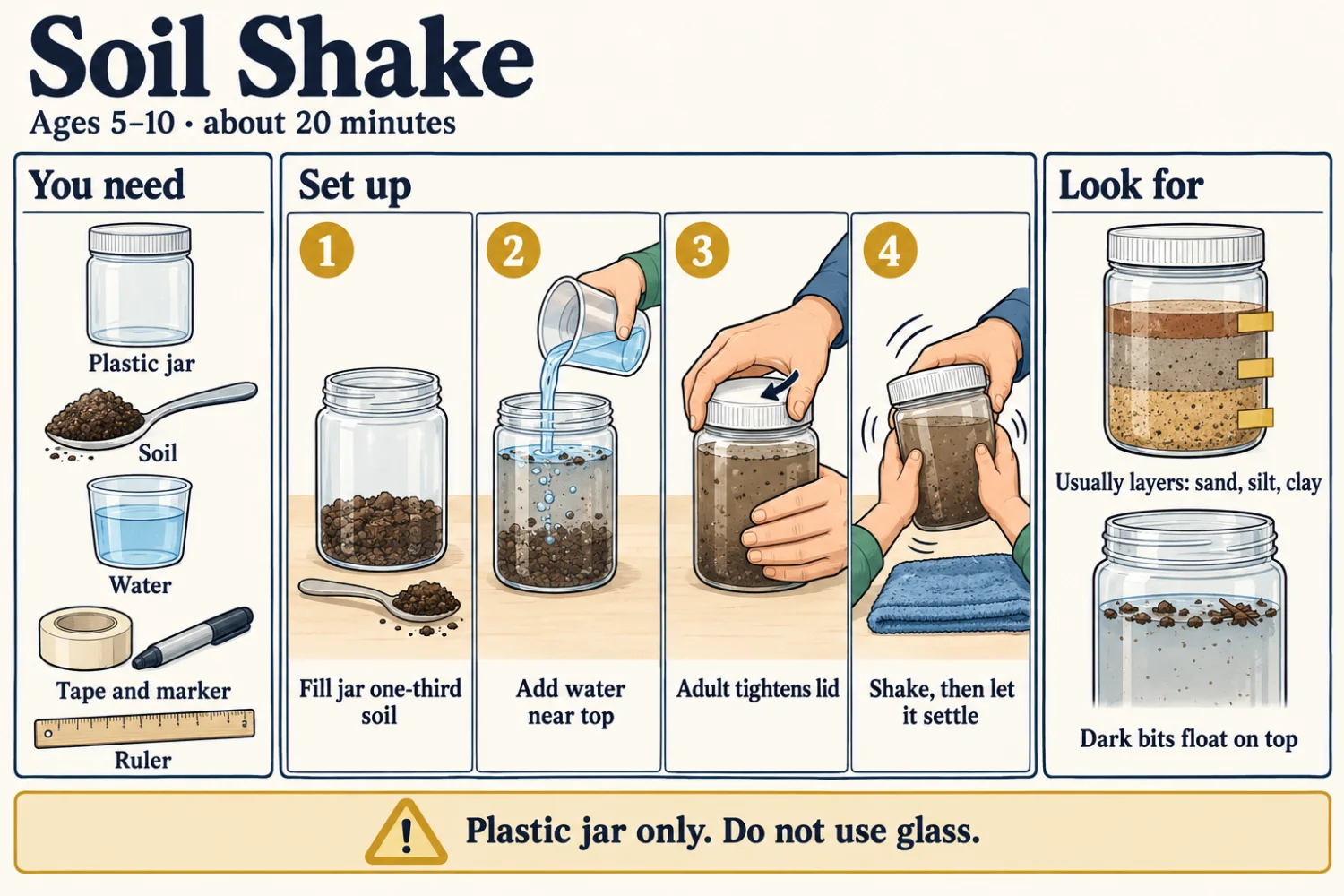
At a glance: print this card or keep it open while you work. The full steps and safety notes are below. AI-generated illustration -
The big idea
-
What to do
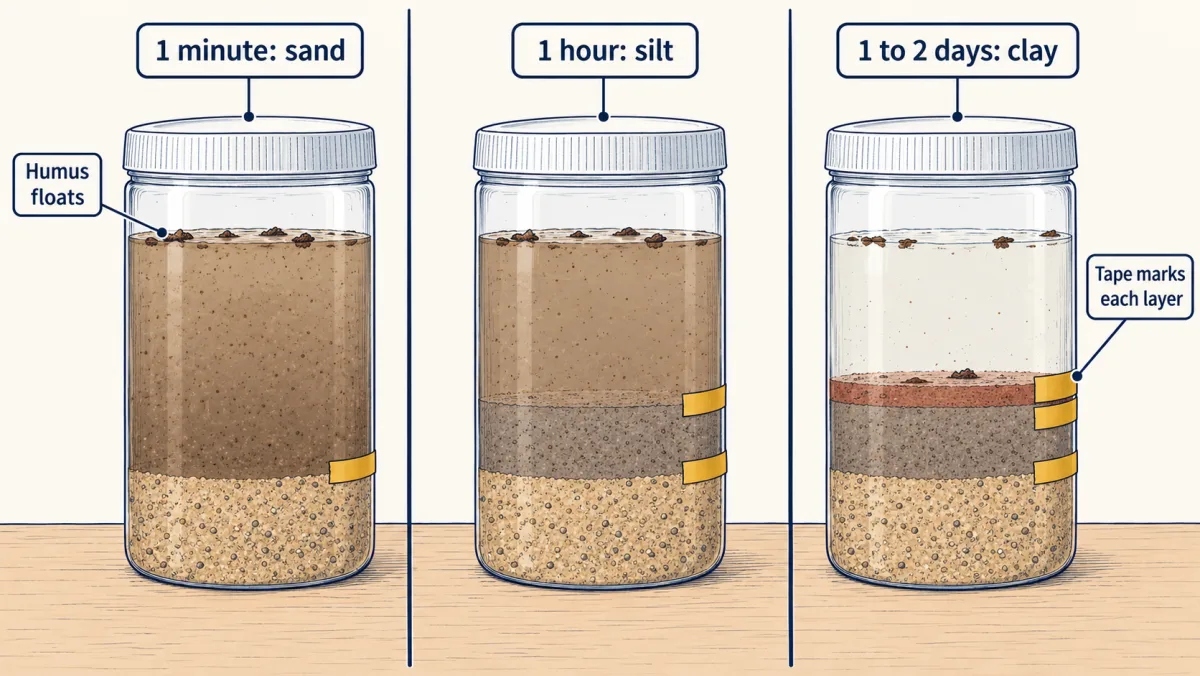
Sand sinks first, then silt, then clay, with bits of old plants floating on top. Layers vary from soil to soil, and a clay-rich jar can stay cloudy for days. AI-generated illustration 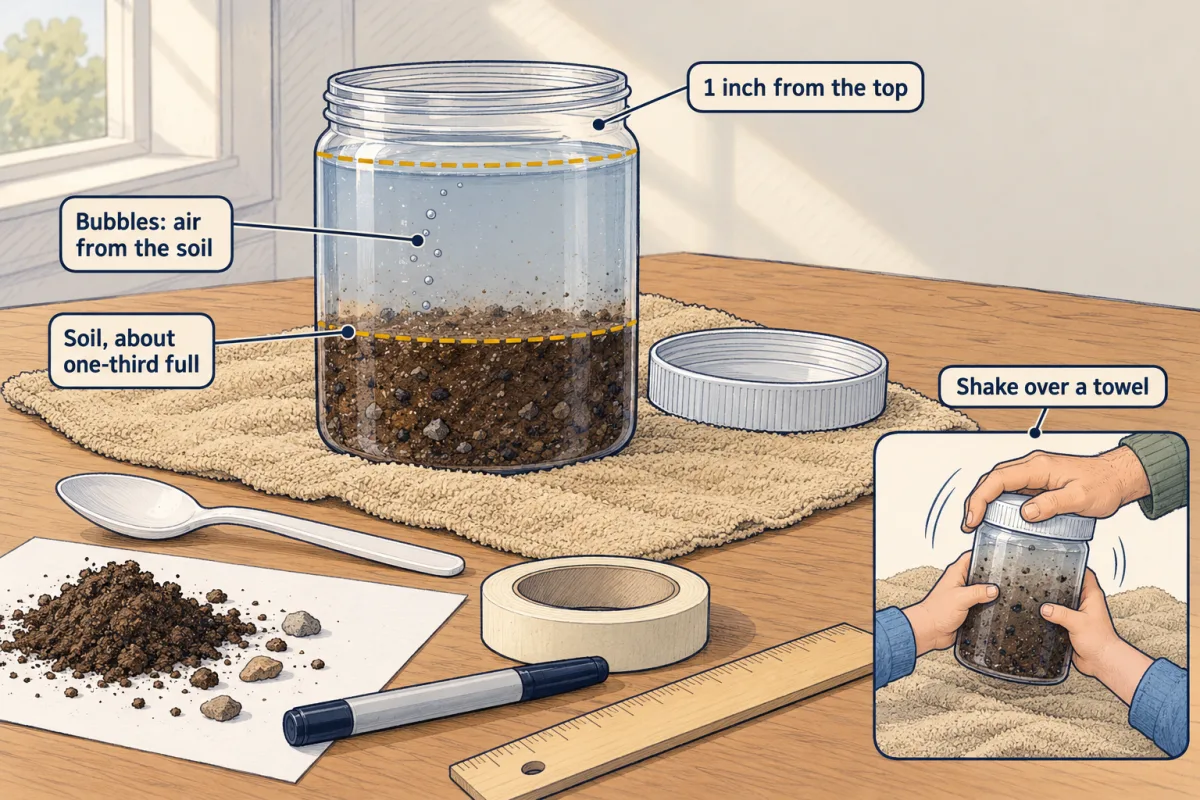
Fill the jar about one-third with soil, then add water to about an inch from the top. Screw the lid on tight and shake over a towel. AI-generated illustration -
Questions to ask while you do it
-
What children often think
-
Why it works
-
Easier and harder
-
If it doesn’t go as planned
-
Observation sheet
Where this lesson fits
After thisStudy next
- Roots Hold the SoilThis course · Lesson 29
Your child sees how soil, now known as a mix, stays in place or washes away when roots grip it.
- What Do Earthworms Like?This course · Lesson 24
Worms live in soil, so your child can ask what kind of soil they choose.
Suggested by an AI model from the lessons themselves, then checked. How we use AI