Biology Together · Skim version
Seeds on the Move
Read the full lesson → Skim the whole course →
The guiding idea
How does a plant that can’t walk get its seeds to new places? A sock walk catches some in the act.
You and your child walk through a weedy patch with an old fuzzy sock over one shoe, then look at what stuck to it.
-
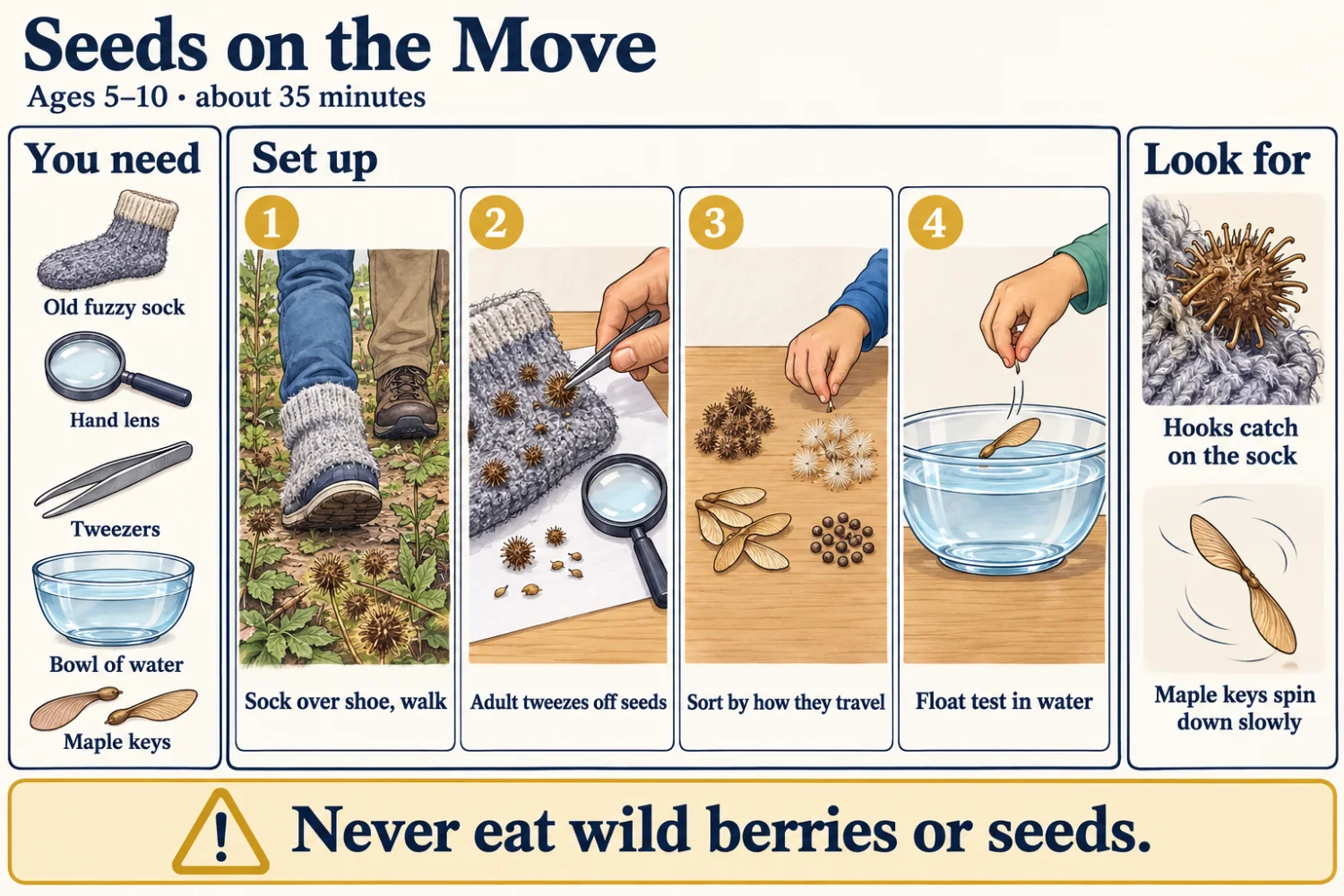
At a glance: print this card or keep it open while you work. The full steps and safety notes are below. AI-generated illustration -
The big idea
-
What to do
-
Questions to ask while you do it
-
What children often think
-
Why it works
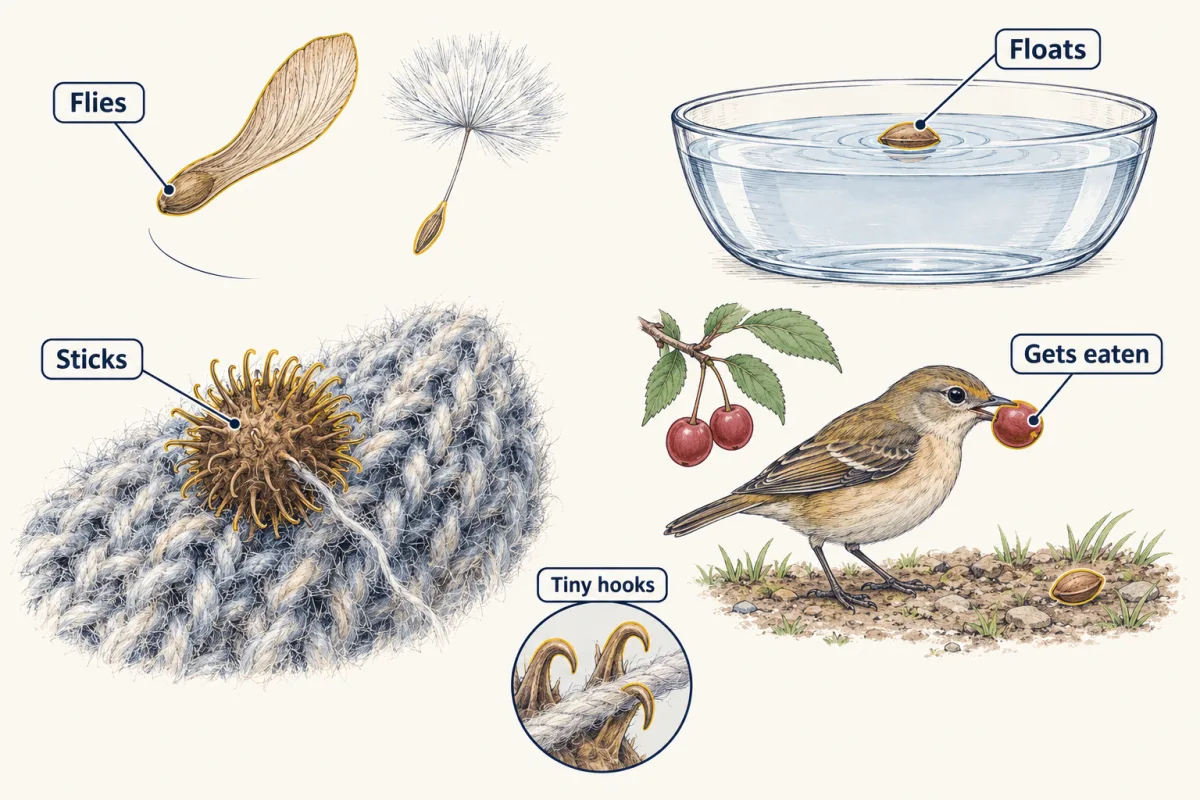
Many seeds have a shape that suits one way of travelling. Winged and fluffy seeds ride the wind, some float on water, hooks catch on fur and clothes, and seeds in juicy fruits are eaten by animals and dropped somewhere else. AI-generated illustration -
Easier and harder
-
If it doesn’t go as planned
-
Observation sheet
Where this lesson fits
Before thisReview first
- Take a Flower ApartThis course · Lesson 11
There you saw where seeds begin inside a flower, so you know what is being carried away here.
After thisStudy next
- Fur, Feathers and ScalesThis course · Lesson 15
Your child can see another body shape that suits a job, as hooks on seeds suit sticking to fur.
- The Camouflage HuntThis course · Lesson 18
It builds on the idea that a trait helps a living thing survive, as seed shapes help seeds spread.
Elsewhere on the siteFilms, simulations and method films in other courses
- Why a White Coat Can Help—and HurtFilm · Life Science
A seed's wing, hook or float is an inherited feature that helps survival, as this film shows.
Suggested by an AI model from the lessons themselves, then checked. How we use AI