Biology Together · Skim version
Plant Parts We Eat
Read the full lesson → Skim the whole course →
The guiding idea
Which part of a plant is a carrot, and what does that part do? A grocery sort onto a drawn plant shows where each food came from and what its part does.
You and your child sort foods from the grocery store onto a big drawing of a plant: roots, stems, leaves, flowers, fruits and seeds.
-
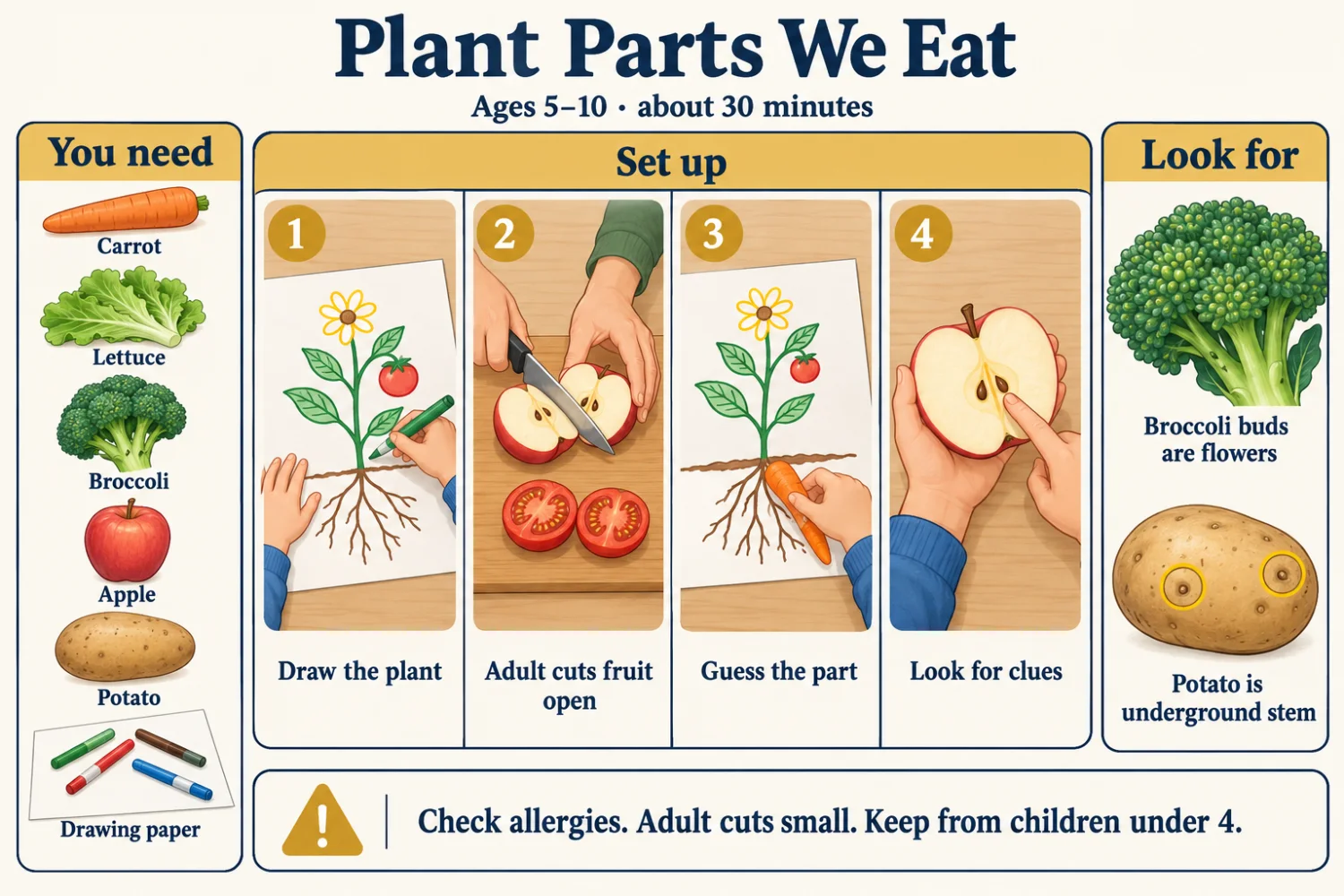
At a glance: print this card or keep it open while you work. The full steps and safety notes are below. AI-generated illustration -
The big idea
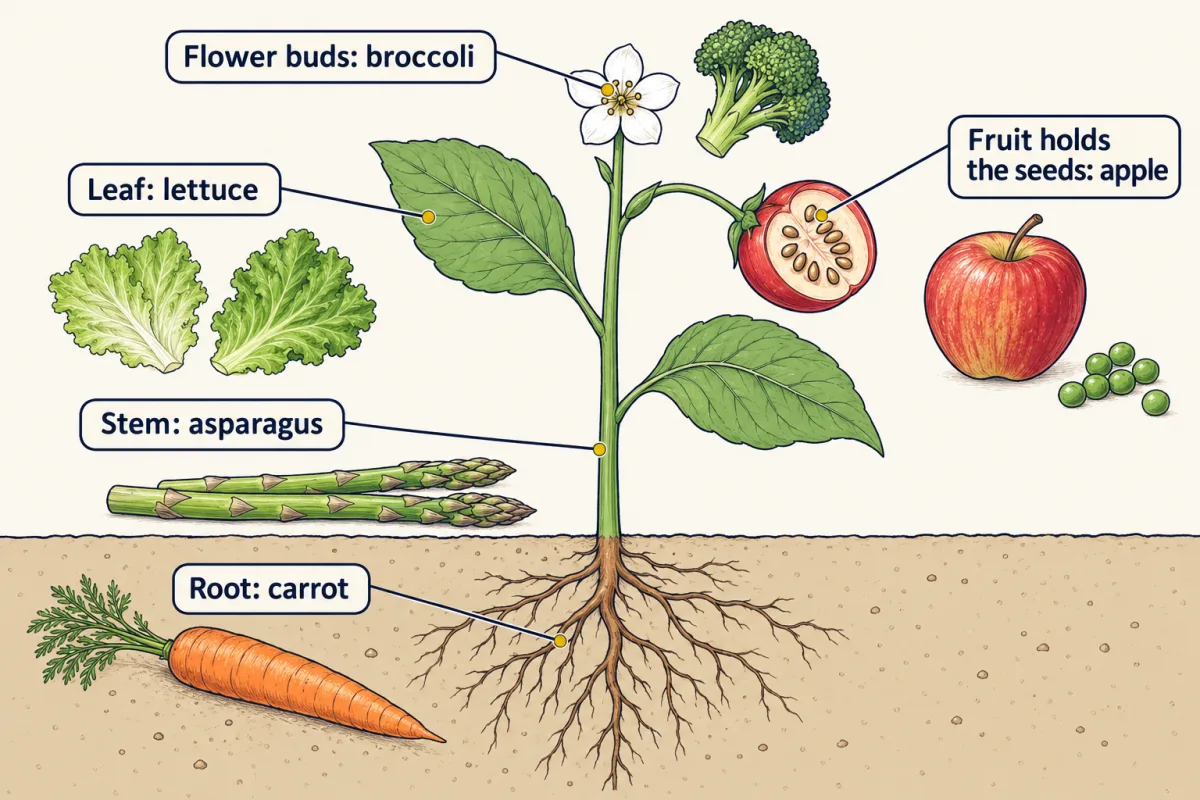
A plant drawing with a food beside each part: root (carrot), stem (asparagus), leaf (lettuce), flower buds (broccoli), and fruit with seeds inside (apple). Peas are the seeds. AI-generated illustration -
What to do
-
Questions to ask while you do it
-
What children often think
-
Why it works
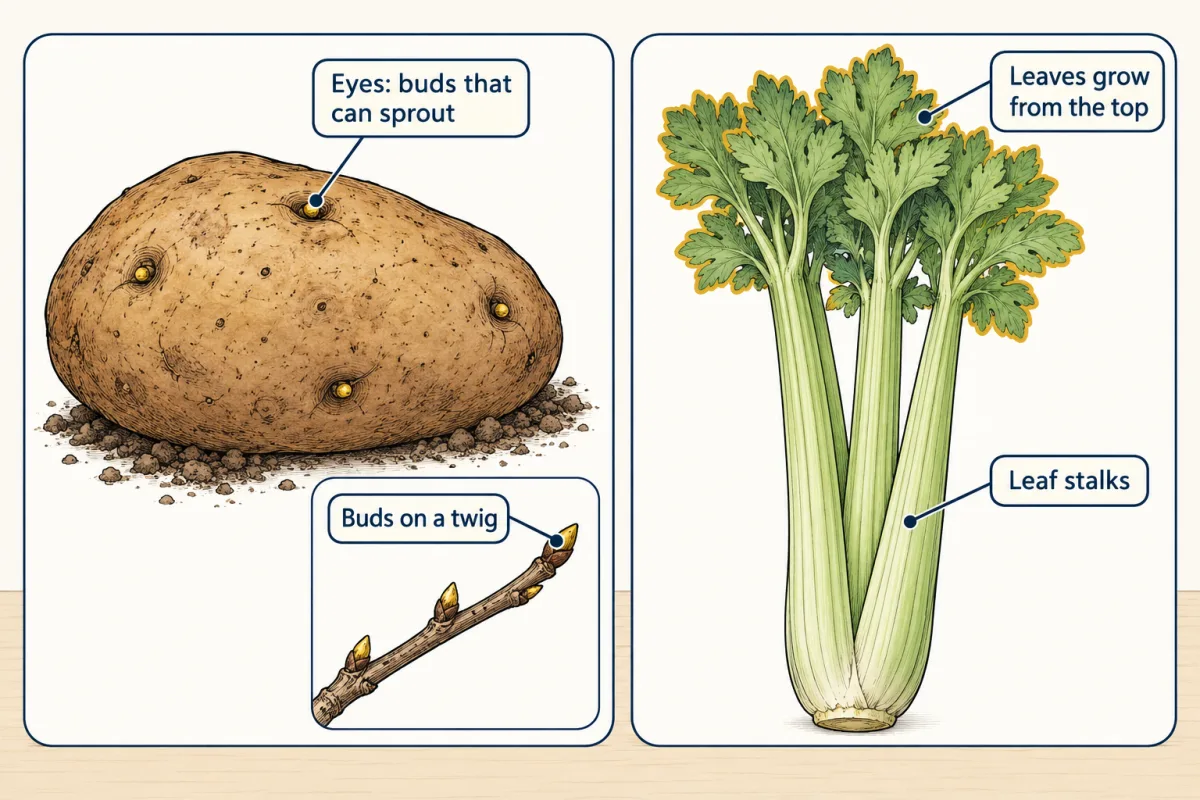
The two trick cards. A potato grows underground, but its eyes are buds like those on a twig, so it is an underground stem. Celery is mostly long leaf stalks, with the leaves at the top. AI-generated illustration -
Easier and harder
-
Going deeper
-
Observation sheet
Where this lesson fits
Before thisReview first
- What Do Plants Need?This course · Lesson 7
Your child has already seen that plants need water and light, which helps explain what roots and leaves are for.
After thisStudy next
- Thirsty CeleryThis course · Lesson 9
Your child follows water up a celery stem, which shows the stem's job of carrying water that was named here.
- Take a Flower ApartThis course · Lesson 11
Your child opens a flower to see where seeds begin, which builds on the idea that a fruit grows from a flower.
- From Bean to BeanThis course · Lesson 12
Your child grows a plant through its roots, stem, leaves, flower and seeds, using the parts sorted here.
Suggested by an AI model from the lessons themselves, then checked. How we use AI