Biology Together · Skim version
The Mystery Feely Bag
Read the full lesson → Skim the whole course →
The guiding idea
Can you tell what something is without looking? A bag of hidden objects lets a child find out what skin can sense.
You hide everyday objects in a pillowcase, and your child finds them using touch alone.
-
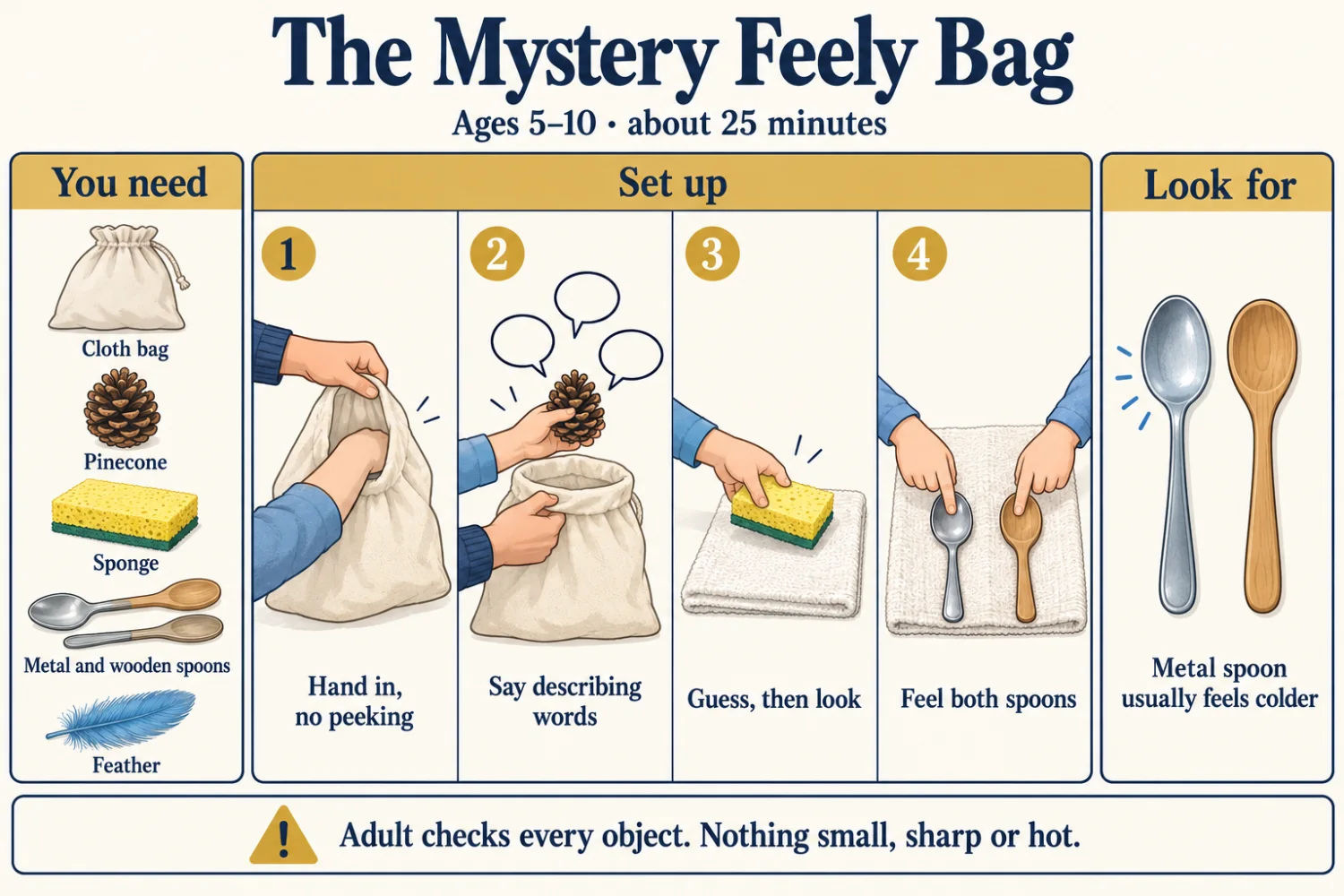
At a glance: print this card or keep it open while you work. The full steps and safety notes are below. AI-generated illustration -
The big idea
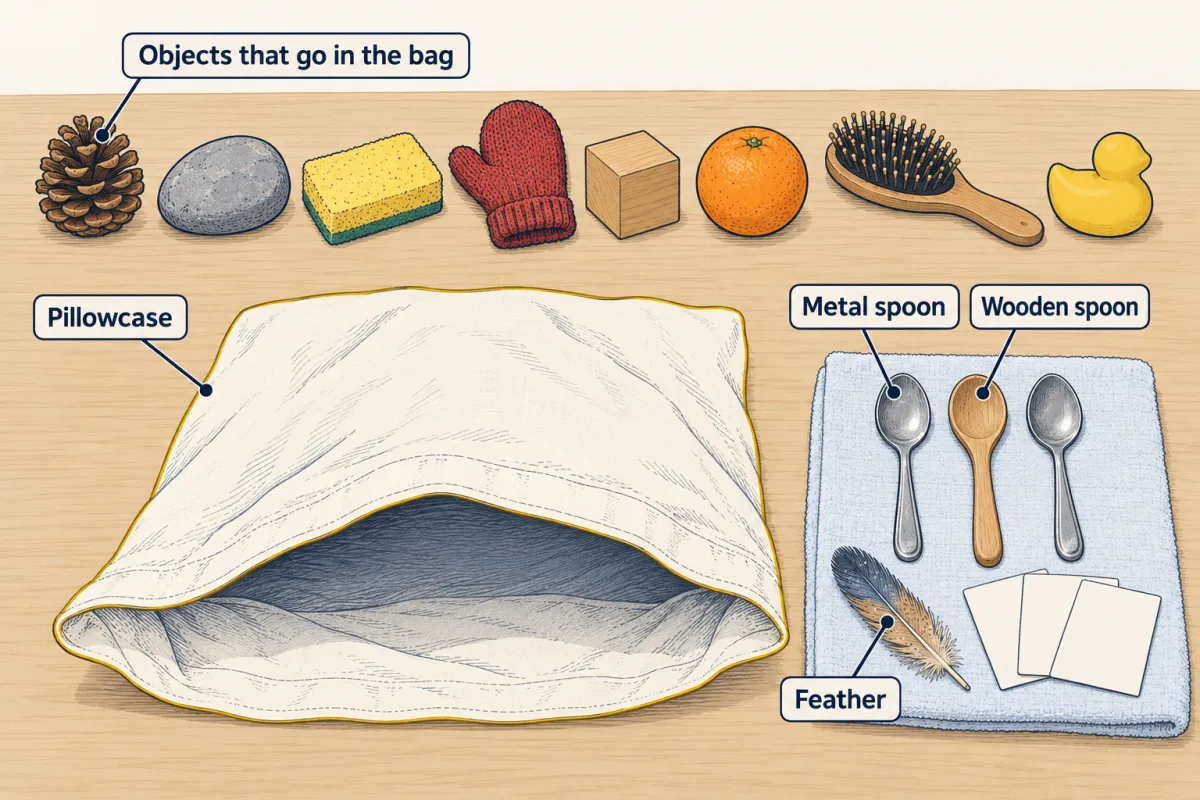
Set up the feely bag. Pack 8 to 10 big objects with different textures in the pillowcase, and keep the spoons, the feather and the index cards aside for later steps. AI-generated illustration -
What to do
-
Questions to ask while you do it
-
What children often think
-
Why it works
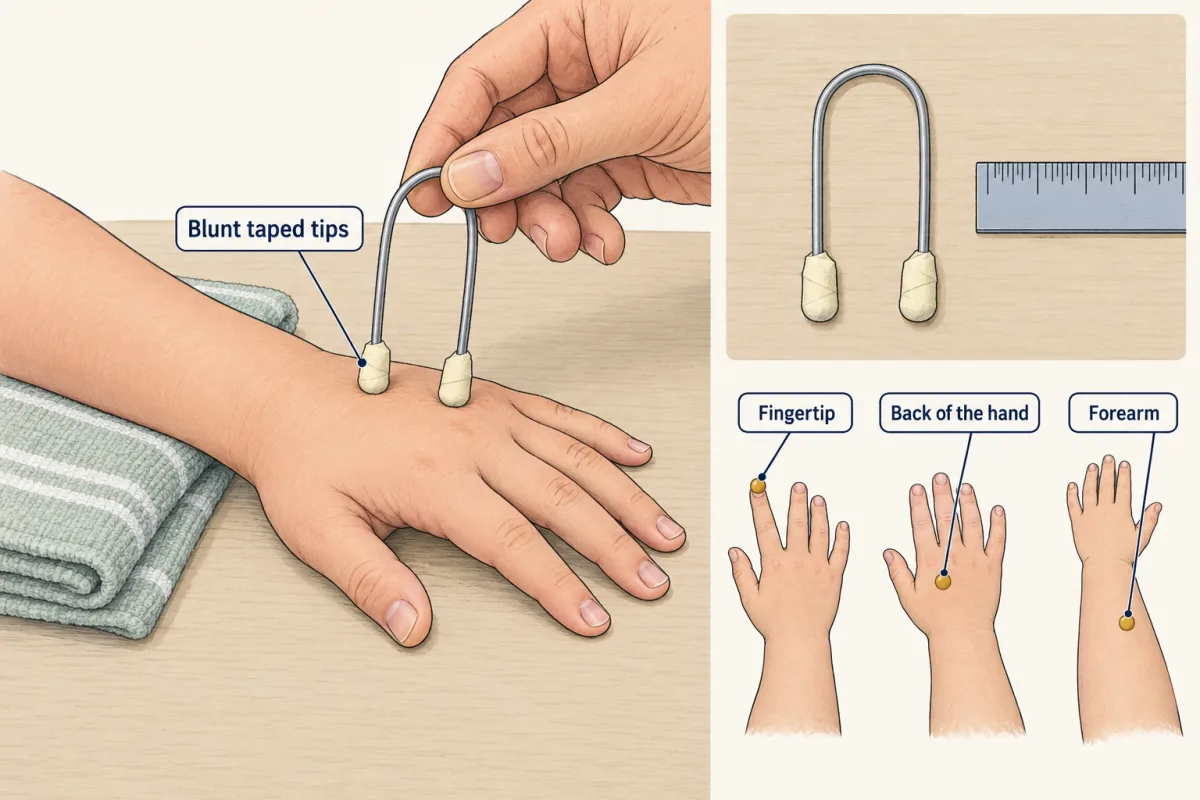
The two-point test for ages 8 to 10. An adult bends a large paper clip into a U, tapes over both ends so they are blunt, and touches one end or both to the fingertip, the back of the hand and the forearm. AI-generated illustration -
Easier and harder
-
If it doesn’t go as planned
-
Going deeper
-
Observation sheet
Where this lesson fits
After thisStudy next
- Smell DetectivesThis course · Lesson 5
Your child uses a second sense, smell, the same way: test it alone, then describe what it tells them.
- The Listening WalkThis course · Lesson 6
Your child uses hearing, another of the five senses, and describes what it detects on its own.
Suggested by an AI model from the lessons themselves, then checked. How we use AI